The Problem With Calling Everything AI-Powered in Recruiting Software
We describe our own product as AI-native. This page exists so you can check whether that claim means anything.
Every recruiting platform now describes itself as AI-powered, which has made the term useless as a buying signal. The label covers keyword matching relabelled as intelligence, a general model called through an API on a feature nobody uses, and capability genuinely built into the data model. Those are very different products at similar prices, and the marketing does not distinguish them.
Last reviewed August 2026. Written from the vendor side, about vendor practice including our own.
Key takeaways
- The label spans three very different things. Relabelled statistics, a thin wrapper, and capability built into the data model.
- A wrapper is not automatically bad. It is bad when it is priced as something structural.
- The test is where the capability sits in the workflow. Bolted onto the edge, or in the path everything travels through.
- Ask what the product did before the AI feature. If the answer is the same thing, you have found a relabel.
The three things sold as AI
Relabelled statistics. Keyword matching, weighted scoring and rules that existed for a decade, renamed. Frequently useful and not new. The tell is that the feature predates the marketing.
A thin wrapper. A general model called through an API for a discrete feature: summarising a CV, drafting an outreach message. Genuinely new, genuinely limited, and replicable by any competitor in weeks.
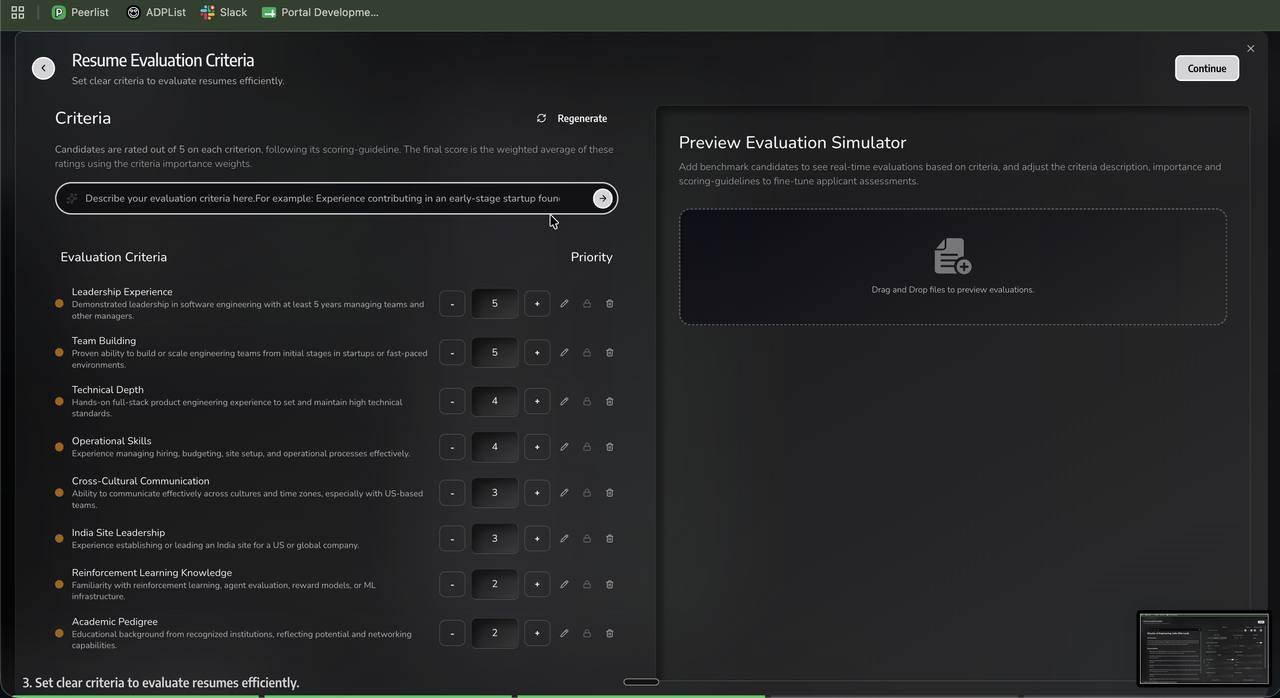
Native capability. Where the model is in the path that data travels through: search that resolves meaning rather than keywords, screening that runs a conversation, evaluation that generates criteria from a brief. Harder to build and harder to copy.
Why the distinction is commercial rather than technical
A wrapper is fine. The problem is when it is priced as though it were structural.
If a vendor's AI capability is a summarisation feature, its competitors will ship the same thing shortly and nobody has an advantage. If it is a screening engine in the middle of the workflow, that is a different investment with a different defensibility.
Buyers pay a premium for the second and frequently receive the first, which is the whole reason the term stopped carrying information.
Four questions that separate them
What did this product do before the AI feature existed? If the answer is the same thing with different labels, it is a relabel.
Which workflow breaks if you switch the AI off? A wrapper degrades gracefully. Native capability breaks, because it is load-bearing.
Is it on a separate tier? Capability priced as an add-on is usually bolted on, because architecture rarely ships as an upsell.
Show me a case nobody configured. The clearest test, and the same one that separates agents from workflows.
What AI-native should actually mean
Used honestly, it should mean the product was designed around the assumption that the model exists, rather than having capability added afterwards.
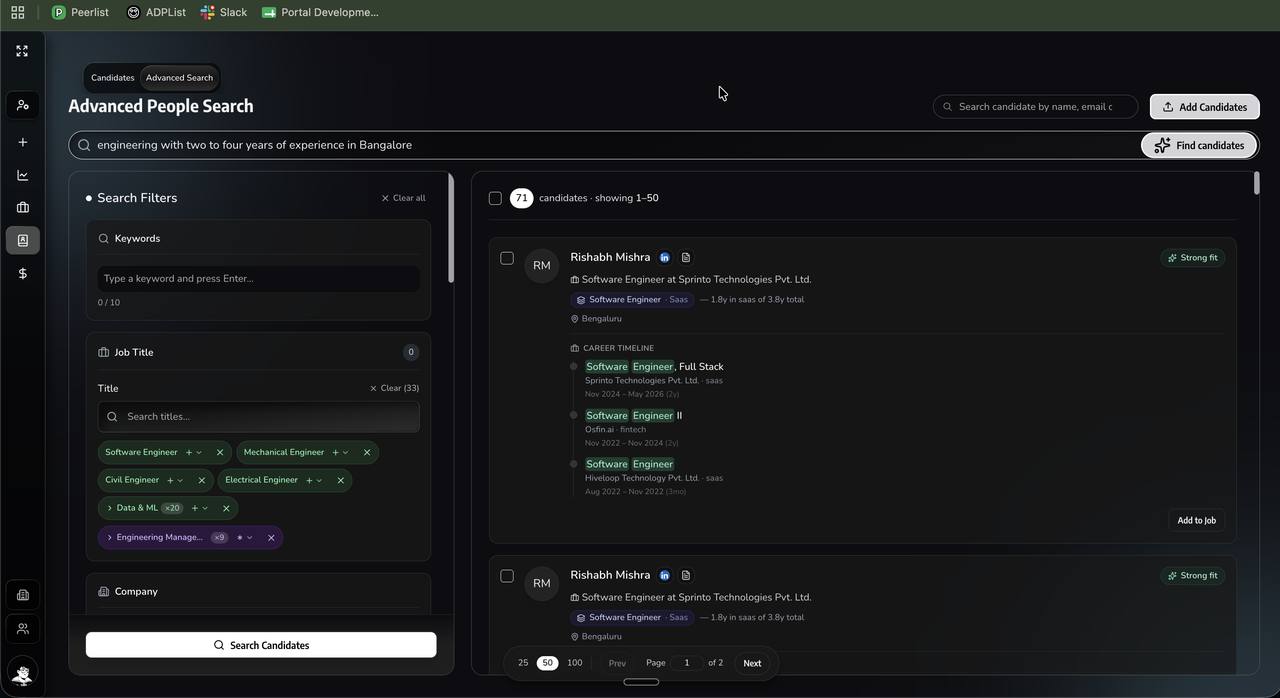
Concretely: search that takes a description rather than a query, so no Boolean is required anywhere. Screening that happens as a conversation in the platform rather than a recruiter's task. Criteria generated from a brief rather than selected from a template. Records that write themselves from calls and messages rather than being typed.
Those are architectural rather than featural. A product with all four looks different from a conventional ATS in ways that are visible in two minutes, which is why the demo test in why your ATS demo lied is more informative than any datasheet.
Applying this to us
Fair to turn the argument around, since we make the claim.
Switch the AI off in our platform and screening stops, search reverts to filters, criteria are not generated and notes are not written. Those are load-bearing rather than decorative, which is the test we are asking you to apply to everyone.
Where we are a wrapper like everyone else: message drafting. It is a general model called for a discrete task, competitors will match it, and it should not influence anyone's purchase decision. Saying so costs us nothing that honesty was not already going to cost.
Frequently asked questions
What does AI-native actually mean in recruiting software?
That the product was designed assuming the model exists rather than having capability added later. Concretely: search that takes a description rather than a query, screening that runs as a conversation, criteria generated from a brief, and records that write themselves.
How do you tell real AI from AI washing?
Ask what the product did before the AI feature, which workflow breaks if the AI is switched off, whether the capability sits on a separate tier, and to see a case nobody configured for. Load-bearing capability breaks; a wrapper degrades gracefully.
Is a thin AI wrapper a bad thing?
Not inherently. It is a problem when priced as something structural, because a wrapper can be replicated by competitors in weeks while capability built into the data model cannot.
Why is AI capability often on a higher pricing tier?
Because architecture rarely ships as an upsell. When a capability is genuinely in the path that data travels through, it tends to be part of the product. Capability priced as an add-on is more often bolted on.
What is the fastest way to test an AI claim?
Ask the vendor to demonstrate the system handling something nobody configured for, such as an ambiguous candidate reply. A workflow escalates to a human; genuine capability acts on it.
Should AI features influence a software purchase?
Only the load-bearing ones. Message drafting and CV summarisation are general model calls that every competitor will match. Search, screening and evaluation built into the data model are a different investment.
The question to ask about any AI claim
Which workflow stops working if the AI is switched off? Ask it of every vendor on your shortlist, including us.
If nothing stops, the AI is decoration and you should price the product as a conventional ATS with a good interface, which is a reasonable thing to buy at a reasonable price.
Test whether the AI is load-bearing
Bring a role and we will show you which parts of the workflow stop working without the model.
Book a demoFounder of Sortinghat, an AI-native ATS and CRM for staffing, search and RPO firms. Writes about recruiter capacity, sourcing economics and what actually changes when AI reaches a delivery desk. More about the author
Related reading
Agentic AI Versus Automation Rules in Recruitment: What Actually Differs
OpinionWhy Your ATS Demo Lied to You, and the Eight Questions That Expose It
OpinionMost AI Recruiting Tools Do Nothing. Here Is What Actually Moves the Numbers
AI ImpactAI Made the Inbound Applicant Problem Worse, Not Better