Agentic AI Versus Automation Rules in Recruitment: What Actually Differs
Three different technologies are being sold under one word, and the difference decides whether the tool does work or just moves it.
A rule fires when a condition is met. A workflow chains several rules in a defined order. An agent decides what to do next given a goal. Those are three different things and vendors describe all of them as automation, which makes evaluation nearly impossible. The distinction matters because only one of them handles a situation nobody anticipated when the system was configured.
Last reviewed July 2026. Definitions are standard; applications drawn from Sortinghat delivery.
Key takeaways
- A rule executes a decision somebody already made. If stage equals submitted, send this email. Predictable, useful and completely inflexible.
- A workflow is rules in sequence. More capable, still limited to paths that were designed in advance.
- An agent is given a goal, not a path. It decides the next action from context, which is why it handles cases nobody configured.
- Most recruiting AI is workflows with better copywriting. Which is fine, and it should not be priced as something else.
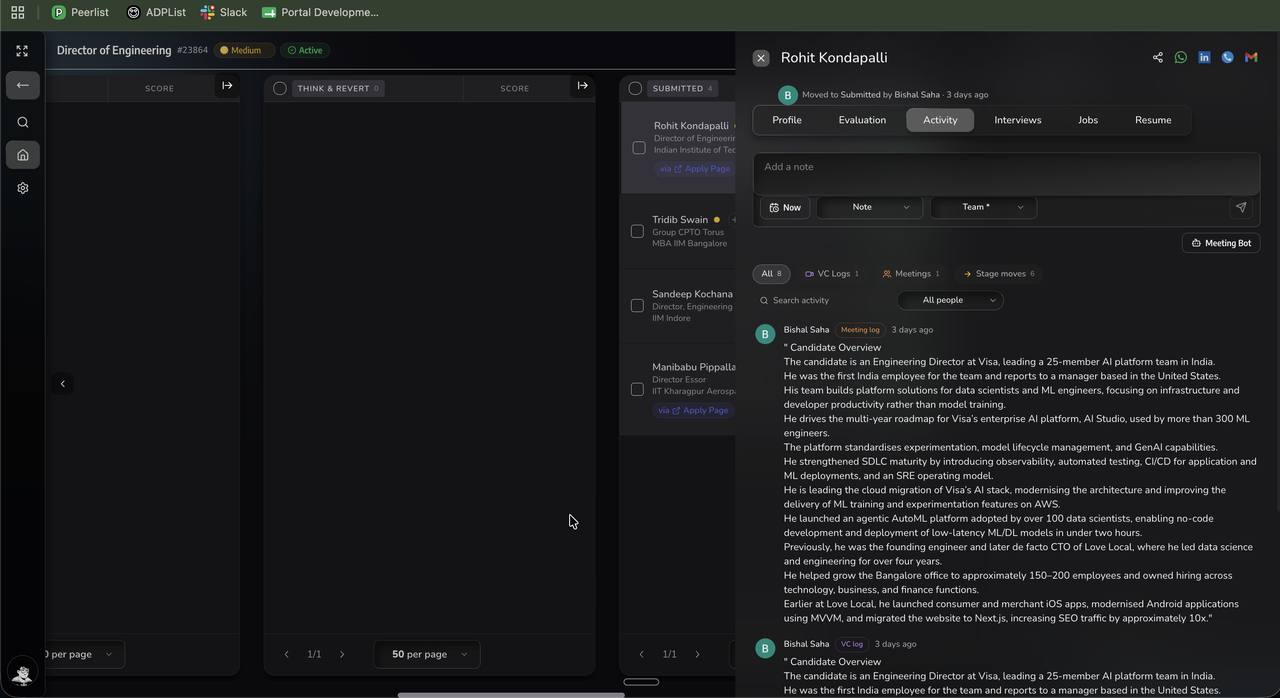
The three, with recruiting examples
Rule. When a candidate moves to submitted, notify the client contact. It fires reliably every time and it does nothing else. If the client contact left the company last week, it still fires.
Workflow. When a candidate is added to a role, check availability, send the outreach sequence, wait four days, escalate to a call if no reply. Genuinely useful, entirely predetermined. Every branch was designed by somebody in advance.
Agent. Given the goal of producing a shortlist for this role, decide which search to run, which candidates merit contact, which channel to use for each, and what to do when a reply arrives that does not fit any expected pattern.
The difference is not intelligence in the abstract. It is who decided the path.
Why the distinction matters commercially
A workflow handles the cases it was built for. Recruiting produces cases nobody builds for constantly: a candidate replies asking about something unrelated, a role changes mid-search, a client goes quiet, an interview is cancelled twice.
Every one of those falls out of a workflow and lands on a recruiter's desk as an exception. Firms with heavy workflow automation frequently discover that exception handling has become the job, which is not what they bought.
An agent given a goal can act on cases outside the configured path. That is the whole argument, and it is also where the honest limitations sit.
Three things an agent does that a rule cannot
Choose between actions. Given a candidate who has not replied, deciding whether to call, message, wait or drop, based on channel history and role urgency rather than on a fixed schedule.
Interpret an unexpected reply. A response that is neither yes nor no, which a rule cannot classify and therefore escalates.
Work backwards from a goal. Given a requirement to produce a shortlist, deciding what the search should be rather than executing a search somebody wrote.
All three are genuinely useful and none of them is magic. They are the difference between a system that follows instructions and one that pursues an objective.
Where agents fail
Stating this plainly is what separates an evaluation from a pitch.
They are less predictable. A rule does the same thing every time, which is a feature in a compliance context. An agent may reasonably choose differently in similar situations, and that is uncomfortable when somebody has to explain a decision.
They need a clear goal. Given a vague objective, an agent produces confident action in an unhelpful direction. A badly briefed role is worse with an agent than with a rule, because the wrong thing happens faster.
They still need a human checkpoint. Under the EU AI Act's high-risk classification for recruitment, human oversight of automated decisions is an obligation rather than a preference.
How to evaluate what you are actually being sold
Four questions that cut through the label.
Show me a case nobody configured. Ask the vendor to demonstrate the system handling something not in the workflow. A workflow will escalate; an agent will act.
Who decided the path? If the answer is an implementation consultant, it is a workflow.
What happens on an unexpected candidate reply? The most common real-world case and the clearest test.
Where is the human checkpoint? If there is not one, that is a compliance problem before it is a product one.
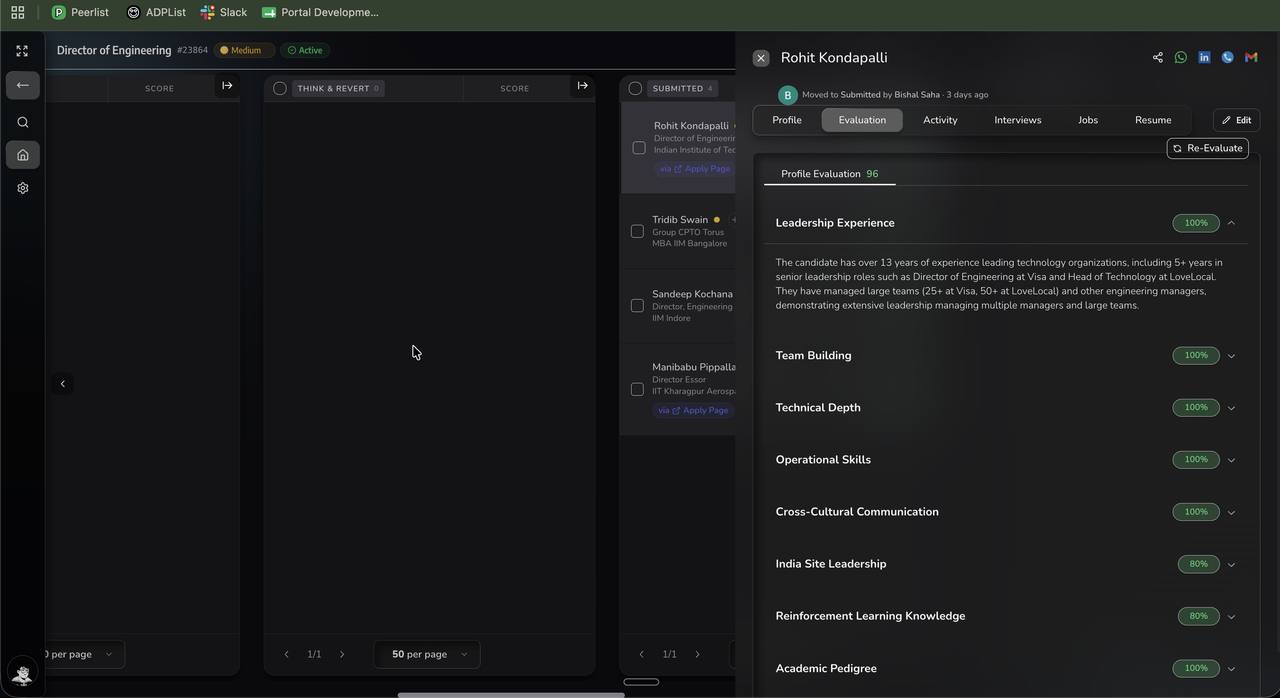
Frequently asked questions
What is agentic AI in recruitment?
A system given a goal rather than a path, which decides its own next action from context. This differs from a rule, which executes a decision somebody already made, and from a workflow, which chains rules along a route designed in advance.
What is the difference between automation and AI in recruiting?
Automation executes predetermined steps. A rule fires on a condition and a workflow chains rules in a designed sequence. An agent chooses what to do given an objective, which is why it can handle situations nobody configured.
Is agentic AI better than workflow automation?
For handling cases outside the configured path, yes. For predictability and auditability, workflows are stronger. Recruiting produces unanticipated cases constantly, which is where workflow automation quietly turns exception handling into the recruiter's main job.
Where does agentic AI fail in recruitment?
It is less predictable than a rule, which matters in compliance contexts. It needs a clear goal, so a badly briefed role produces confident action in the wrong direction. And it still requires human oversight of decisions.
How do you tell whether a vendor has agents or workflows?
Ask them to demonstrate the system handling a case nobody configured, and ask who decided the path. A workflow escalates to a human when something unexpected happens; an agent acts on it.
Do AI agents need human oversight in hiring?
Yes. Under the EU AI Act's high-risk classification for recruitment systems, human oversight of automated decisions is a legal obligation rather than a matter of good practice.
The demo question that settles it
In your next vendor demo, ask them to show you what happens when a candidate replies with something the system was not expecting. Not a yes, not a no, something ambiguous.
A workflow will route it to a recruiter, which is honest and useful. An agent will do something with it. The answer tells you which product you are actually buying, regardless of what the pricing page calls it.
See what happens on an unexpected reply
Bring a live role and we will show you how the system handles the cases nobody configured for.
Book a demoFounder of Sortinghat, an AI-native ATS and CRM for staffing, search and RPO firms. Writes about recruiter capacity, sourcing economics and what actually changes when AI reaches a delivery desk. More about the author
Related reading