CXO and Leadership Search: The Process, End to End
Executive search is not recruitment with a bigger fee. The work is different, the failure modes are different, and volume habits actively damage it.
A leadership search takes months, involves a handful of candidates, and fails for reasons that have nothing to do with sourcing. The people you want are not looking, will not respond to a template, and are deciding on trust rather than on opportunity. Firms that arrive from a volume background apply volume habits and lose the mandate in the first fortnight, usually before anyone realises.
Last reviewed August 2026. Process observations from Sortinghat customer base, stated as directional.
Key takeaways
- The first conversation is a sell, not a qualification. A senior candidate contacted like a volume prospect concludes the role is not serious.
- Mapping matters more than searching. The output of week one is a picture of the market, not a shortlist.
- Confidentiality is frequently the brief. Which rules out most of the channels a staffing desk would normally use.
- The failure mode is late-stage, not early. Searches collapse at offer and reference stage, where volume processes have no coverage at all.
What the first two weeks should produce
Not candidates. A map.
The output of the opening phase is a picture of where the person could come from: which companies have people at the right level doing the right thing, who has moved recently, which organisations are under pressure, and what the compensation reality is at that level.
Clients frequently expect names in week one and the firms that supply them are usually supplying whoever answered the phone. A map presented in week two, with reasoning, changes the relationship and buys the time the search actually needs.
Approaching people who are not looking
A senior candidate receives outreach constantly and ignores nearly all of it. Three things separate an approach that works.
Somebody credible made it. At this level the messenger matters as much as the message, and a junior researcher sending a template is a signal about the client.
It says something specific and true. Not about them, about the role. What the mandate actually is, why it exists now, and what the honest difficulty is.
It respects that the answer is probably no. A first approach seeking a conversation rather than an application converts far better, and preserves the relationship for the next mandate.
This is why the channel numbers from volume desks do not transfer. The phone still wins, but the reason is different.
Confidentiality, and what it rules out
A large share of leadership searches are confidential, either because the incumbent does not know or because the client does not want the market to know.
That removes job advertising, most database outreach that mentions the client, and any process where a candidate could reasonably work out who is hiring. It also constrains how many people can be approached, because every approach is a disclosure risk.
The practical consequence is that the search is narrower by design and the mapping work matters more, because you cannot compensate for a poor list with volume.
Where leadership searches actually fail
Rarely at sourcing. Four late-stage failures account for most of it.
The client's process is slower than the candidate's patience. Four rounds over ten weeks loses people who have alternatives.
The brief changes mid-search. Frequently because the mapping revealed something the client had not considered, which is a good outcome handled badly.
Compensation was never realistic. Discovered at offer stage, after months of work.
References and counter-offers. The final fortnight is where placements die, and volume processes have no coverage of it at all.
How the commercials should work
Contingency terms on a leadership search are a bad trade for both sides. The firm invests months against a probability of payment, which either produces a rushed search or an abandoned one.
Retained or container terms align the work with the payment. They also change client behaviour: a client with money committed engages more seriously with the process, which is frequently worth more to the search than the fee structure itself.
The argument for retained terms is not that the work is more valuable. It is that the work cannot be done properly under contingency risk, and saying so plainly is more persuasive than a capability pitch.
What automation does and does not help with
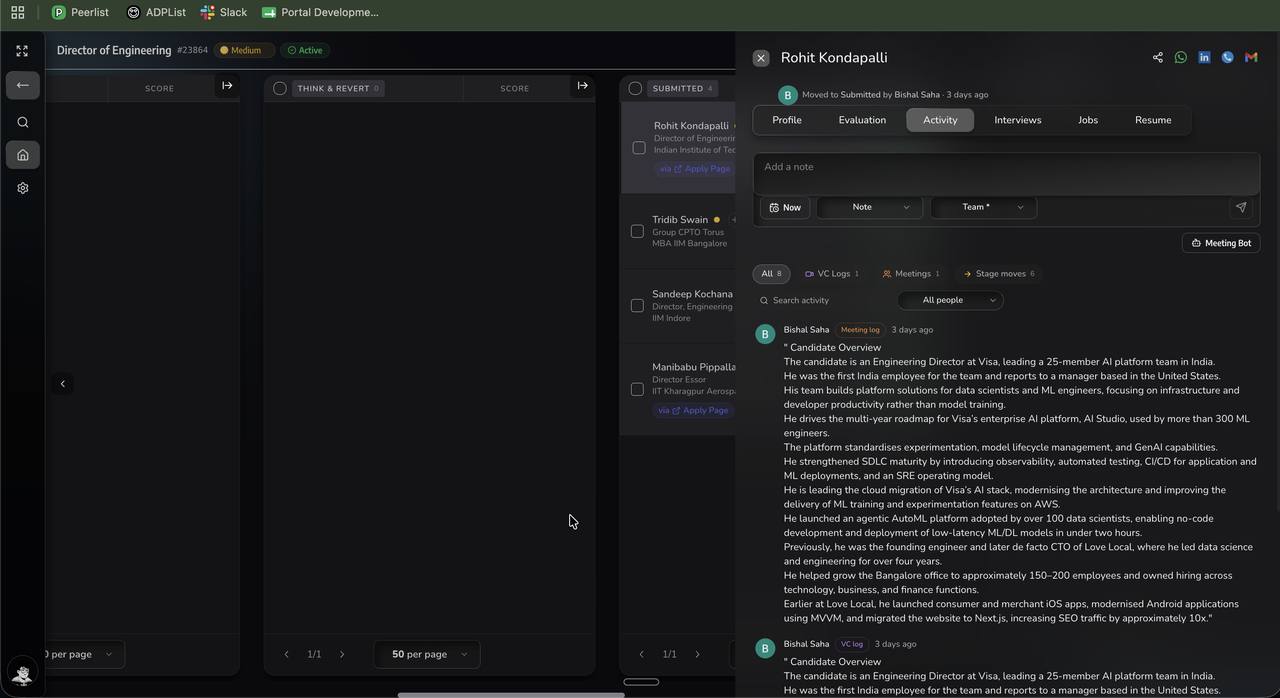
Helps: mapping and market research, keeping a long process documented so nothing is lost between conversations, and capturing what was said across months of intermittent contact.
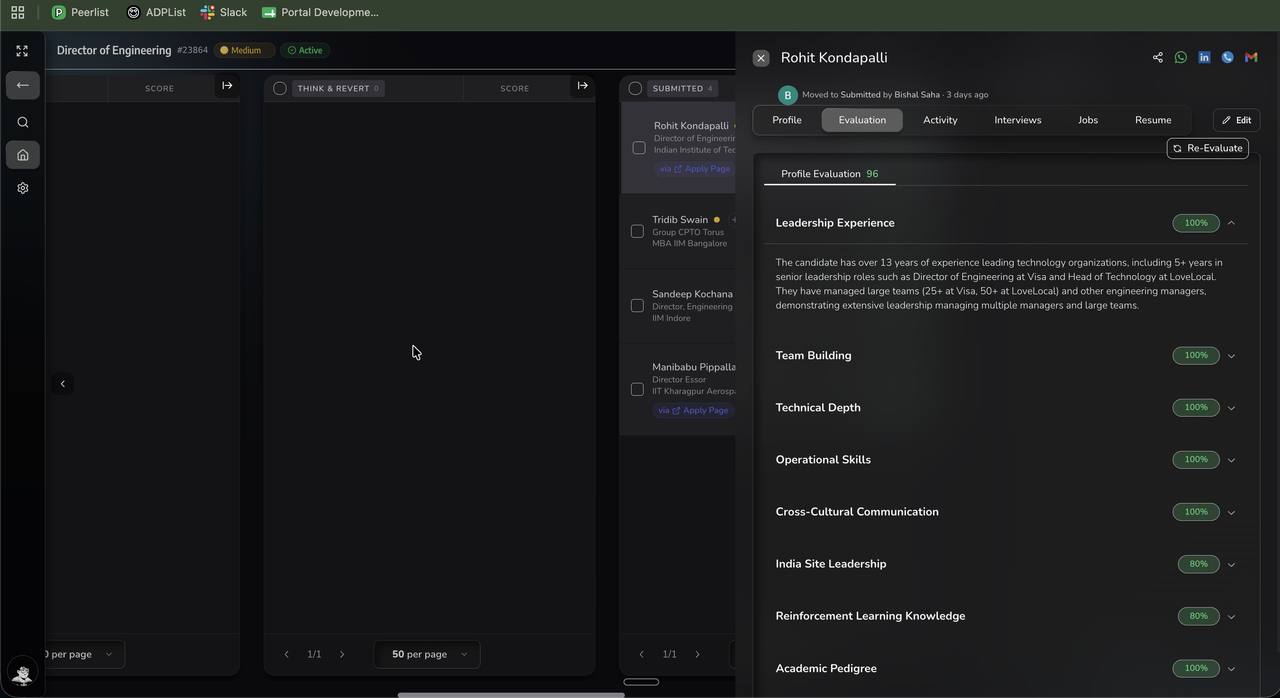
Does not help: the approach, the persuasion, the reference conversations and the offer stage. All four are relationship work and running them at volume signals exactly the wrong thing.
The honest position is that leadership search is the segment where software does the least, and where losing the conversation history is most expensive.
Frequently asked questions
How is executive search different from recruitment?
The first conversation is a sell rather than a qualification, the timeline runs months rather than weeks, the candidate pool is a handful rather than a shortlist, and the failure modes are late-stage around offer, references and counter-offers.
What should the first two weeks of a leadership search produce?
A map of the market rather than a list of names: which organisations have people at the right level, who has moved recently, which are under pressure, and what compensation actually looks like at that level.
How do you approach senior candidates who are not looking?
With a credible person making the approach, something specific and true about the mandate rather than flattery about them, and an ask for a conversation rather than an application. The answer is usually no and the relationship is the asset.
Why do executive searches fail?
Rarely at sourcing. Usually because the client's process outlasts the candidate's patience, the brief changes mid-search, compensation was never realistic, or the search loses the candidate at reference and counter-offer stage.
Should executive search be retained or contingency?
Retained or container terms align the work with the payment, since months of effort against a probability of payment produces either a rushed search or an abandoned one. Committed fees also change client engagement with the process.
Does AI help with executive search?
With mapping, market research and keeping a long intermittent process documented, yes. With the approach, the persuasion, references and the offer stage, no. This is the segment where software does the least.
The question that qualifies a leadership mandate
Ask the client what happened to the last person in this role, and what they would do differently. The answer tells you whether the role is real, whether the brief is honest, and whether the organisation has understood why the position is open.
A client who cannot answer it clearly is not ready to hire, and taking the mandate anyway is how months of work end in nothing.
See a long search stay documented
Bring a live mandate and we will show you how months of intermittent conversation stay on one record.
Book a demoFounder of Sortinghat, an AI-native ATS and CRM for staffing, search and RPO firms. Writes about recruiter capacity, sourcing economics and what actually changes when AI reaches a delivery desk. More about the author
Related reading