Most AI Recruiting Tools Do Nothing. Here Is What Actually Moves the Numbers
We sell one of these. That is precisely why this list is worth reading, because the incentive runs the other way.
The AI recruiting category has produced an enormous number of features and a small number of things that change a staffing firm's P&L. We build in this category, which makes the following list commercially awkward and more useful than the alternative. Four capabilities move a number. Most of the rest are demos.
Last reviewed August 2026. Assessment based on Sortinghat delivery data and customer observation.
Key takeaways
- Four capabilities move a measurable number. Search over your own database, screening at volume, criteria generated per role, and automatic record capture.
- Most of the rest is a better interface on the same work. Which is worth something and should not be priced as transformation.
- The test is whether a number changes. Placements, portal spend, time to shortlist or recruiter capacity. If none move, nothing happened.
- Adoption decides outcomes more than capability does. A mediocre tool used daily beats an excellent one nobody opened.
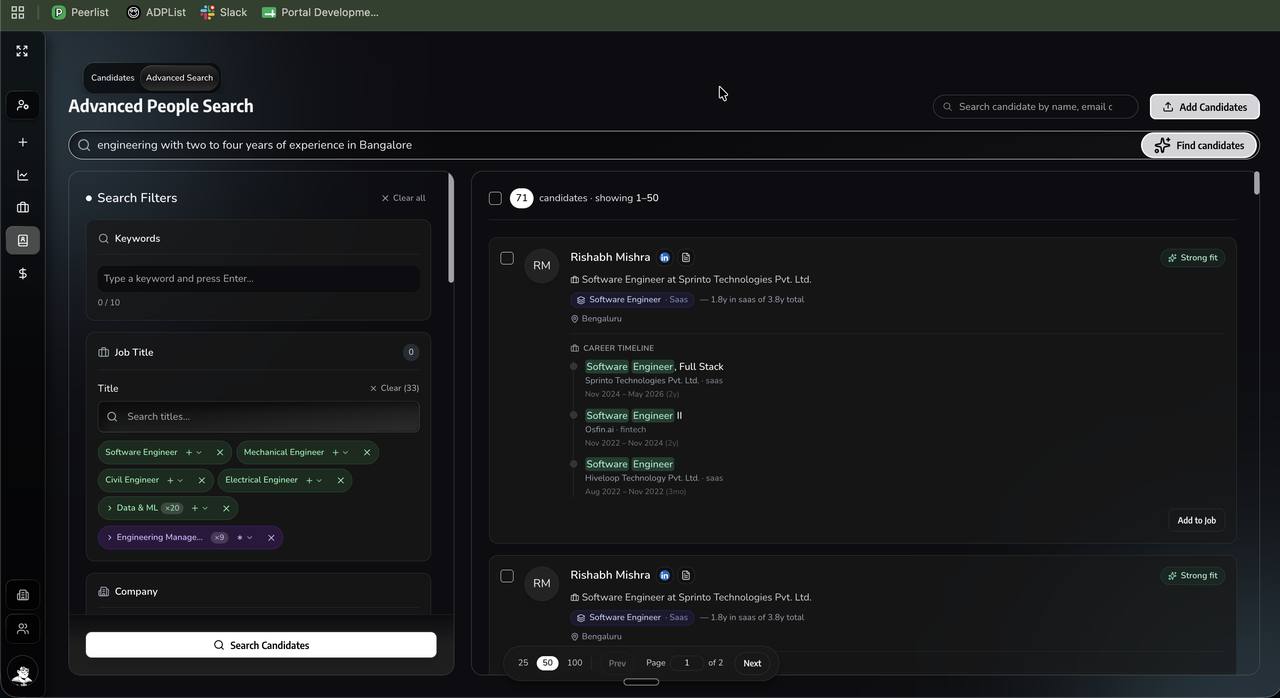
What actually moves a number
Search over your own database. An audit of one firm's 3 million records found roughly 80 percent were real people with out-of-date records. Making them findable took portal spend from about $100 a role to $60. That is a line on a P&L, not a productivity claim.
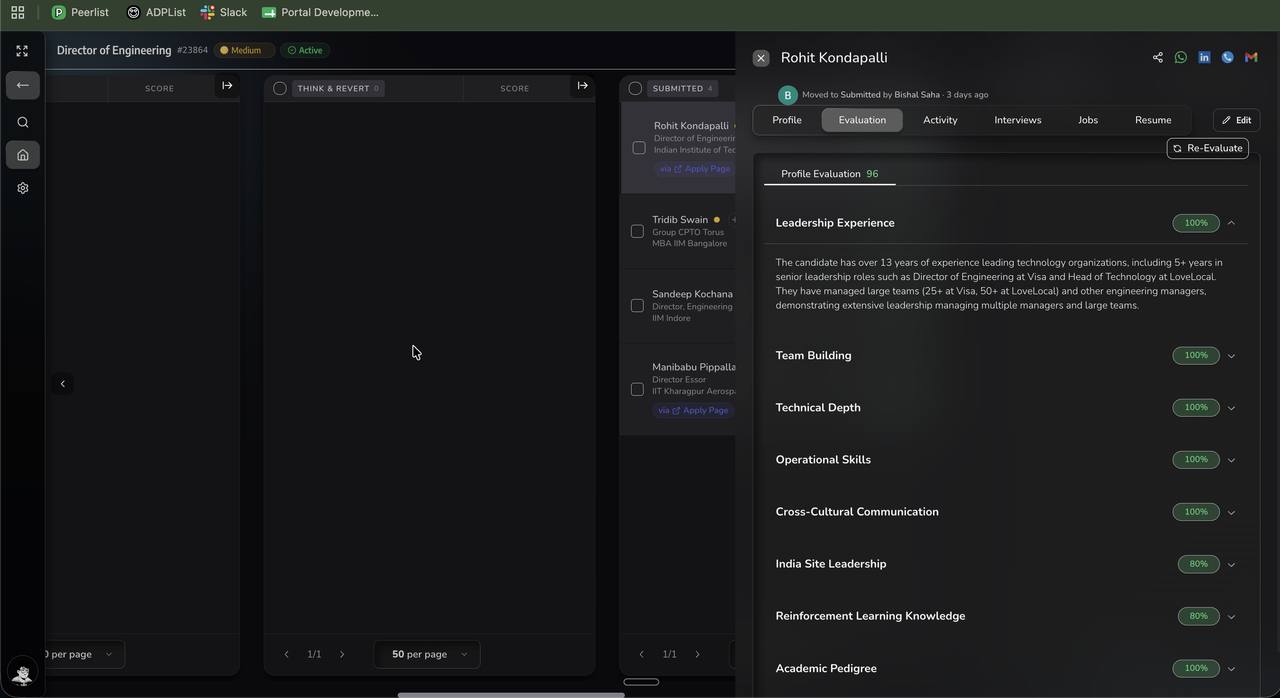
Screening at volume. A recruiter manually manages around 40 calls a day and finds three or four people worth submitting. Filtering first produces roughly 10 submission-ready profiles in hours. That changes how many roles a recruiter can carry.
Criteria generated per role. Fewer wrong submissions, which shows up as a submission-to-interview ratio rather than as a feature.
Automatic record capture. Removes re-entry and, more importantly, means a desk survives a resignation.
What does not move a number
None of these are useless. They are just not what they are priced as.
AI-written outreach. Personalisation at scale became free, which is exactly why it stopped working. Covered in what changed about outbound.
Chatbots on a careers page. They deflect questions. They do not produce candidates.
Resume parsing improvements. Real and incremental. Parsing was rarely the bottleneck.
Sentiment analysis on candidate messages. A demo that has never changed a hiring decision we have seen.
Predictive attrition scoring. Interesting, rarely actionable, and frequently just tenure with extra steps.
Why so much of it does nothing
Three structural reasons rather than vendor dishonesty.
The bottleneck was misidentified. Most recruiting tools optimise sourcing, and on most desks sourcing was never the constraint. Qualification was.
The output lands on a human anyway. A tool that produces a transcript, a summary or a score somebody still has to read has moved work rather than removed it.
It was built for internal talent teams and sold to agencies. Different economics, different volumes, different definition of success. Much of the category does this.
The test to apply to any tool
One question: which number on your P&L or operating report will be different in ninety days, and by how much?
Acceptable answers are placements per recruiter, job portal spend, time from brief to shortlist, submission-to-interview ratio, or receivables ageing. Unacceptable answers are engagement, efficiency, insights and experience.
If a vendor cannot name a number, the honest reading is that they have not found one either. That is a fair question to ask us as much as anyone.
The uncomfortable part
The largest determinant of whether recruiting software produces a result is not the software.
Industry reporting consistently shows a wide gap between firms claiming AI usage and firms with it genuinely embedded in daily work. A capable platform nobody opened produces exactly the same outcome as no platform, and the money is spent either way.
That is a management problem and no vendor can solve it for you, which is why we publish a ninety-day adoption plan rather than claiming the product drives its own usage.
Frequently asked questions
Which AI recruiting features actually work?
Four move a measurable number: search over your own database, screening at volume, evaluation criteria generated per role, and automatic capture of calls and messages onto the record. Most other capabilities are a better interface on the same work.
Why do most AI recruiting tools disappoint?
Usually because they optimise sourcing when the actual constraint was qualification, because the output still lands on a human who has to read it, or because the product was built for internal talent teams and sold to agencies.
How do you evaluate an AI recruiting tool?
Ask which number on your operating report will be different in ninety days and by how much. Placements per recruiter, portal spend, time to shortlist, submission-to-interview ratio and receivables ageing are acceptable answers. Efficiency and insights are not.
Does AI-written candidate outreach work?
Less well than it did. Personalisation at scale became free to produce, which removed the signal it carried. Candidates recognise a template with a data source attached, and relevance rather than wording is what now earns a reply.
What is the biggest factor in whether recruiting software succeeds?
Adoption rather than capability. Industry reporting shows a wide gap between firms claiming AI usage and firms with it embedded in daily work, and a capable platform nobody opens produces the same result as no platform.
Is predictive attrition scoring useful?
Rarely actionable in a staffing context. It is frequently tenure data presented differently, and knowing somebody may leave does not tell a recruiter what to do about it on a live desk.
The question to ask every vendor, including us
Which number will be different in ninety days, and by how much? Write the answer down before you buy, then check it at day ninety.
Most firms never do the second part, which is why the same disappointing purchase gets made repeatedly across the industry with different logos on it.
Name the number before you buy
Bring one operating metric you want to move and we will tell you honestly whether we can move it.
Book a demoFounder of Sortinghat, an AI-native ATS and CRM for staffing, search and RPO firms. Writes about recruiter capacity, sourcing economics and what actually changes when AI reaches a delivery desk. More about the author
Related reading