Why Most Staffing Firms Will Not Survive the Next Five Years
Not because of AI specifically. Because the position most firms occupy was only ever defensible while throughput was expensive.
The staffing industry has always had a large middle: generalist firms of twenty to two hundred people, competing on speed and relationships across several verticals. That position worked because delivery capacity scaled with headcount, which meant size bought something. It no longer does, and a position that depends on an advantage that has disappeared is not a position.
Last reviewed August 2026. Structural argument, informed by Sortinghat delivery data and market observation.
Key takeaways
- The generalist middle is the exposed position. Squeezed by specialists who know more and by scale operators who cost less.
- Size stopped buying throughput. A small team with good tooling delivers volume that used to need a floor of recruiters.
- Speed stopped being a differentiator. When everyone can submit in hours, submitting in hours is the entry requirement.
- The survivors are smaller and more specialised, or much larger. Both ends are defensible. The middle is not.
What the middle was actually selling
A mid-sized generalist firm sold capacity and coverage. It could work more roles than a boutique and it knew the client better than a large operator with a call centre.
Both halves of that depended on headcount being the delivery constraint. Working more roles required more recruiters, so a firm with forty could do things a firm with six could not, and that was the moat.
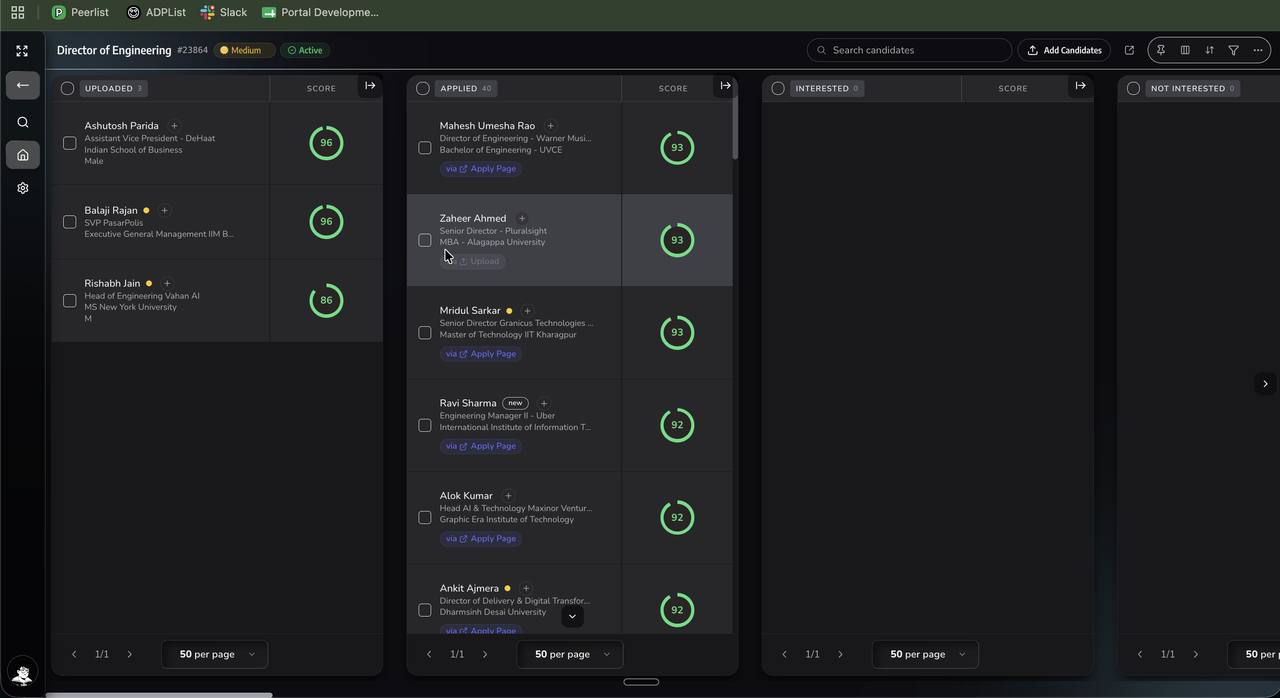
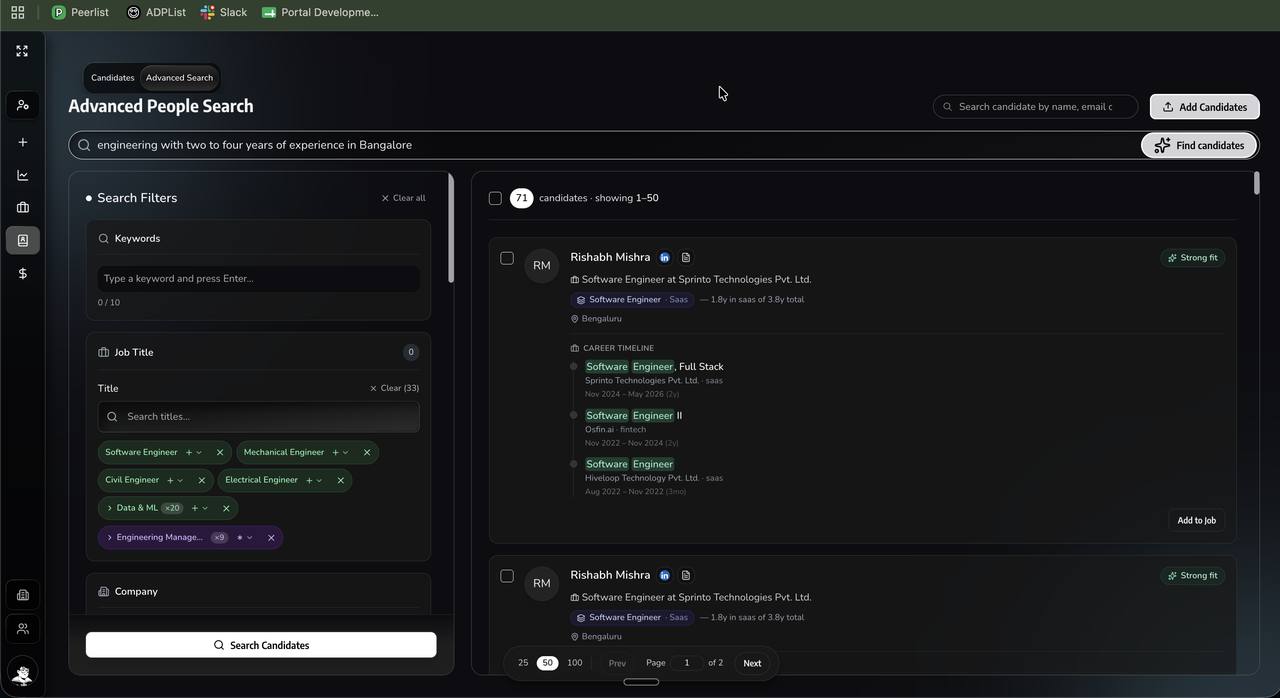
When a filtered screening day produces around ten submission-ready profiles from roughly 300 contacts, the six-person firm delivers what the forty-person firm delivered. The moat did not narrow; it stopped being a moat.
Squeezed from both directions
From below, by specialists. A firm that owns one vertical knows the market better, has a deeper database in it, and can qualify a brief better than the client wrote it. That is a knowledge position and tooling does not erode it.
From above, by scale. Large operators have back office, balance sheet, geographic coverage and the ability to sit on enterprise panels. That is an infrastructure position and it also holds.
The middle has neither. It knows less than the specialist and costs more per unit than the scale operator, and it used to compensate with speed. Speed is now free.
Why this is not primarily an AI argument
Worth separating, because AI is a convenient explanation for a slower structural change.
Fee compression predates the current technology. Client internal talent teams have been getting better for a decade. Vendor management programmes have been standardising suppliers and squeezing margin for longer than that, as covered in VMS margin compression.
What the technology did was remove the last differentiator the middle had. It accelerated something that was already happening rather than causing it, which matters because the response is strategic rather than technological.
What survival actually looks like
Three routes, and they are genuinely different businesses.
Become the specialist. Pick one vertical, go deep enough that a client learns something from every conversation, and decline work outside it. The declining is the hard part and it is the credibility mechanism.
Become infrastructure. Build back office, capital and coverage that support volume at low margin. Capital intensive and not available to most.
Sell. A legitimate answer, and one worth planning three years ahead of, because the things that raise a valuation take that long. Covered in what staffing firms sell for.
Staying in the middle and working harder is the fourth option and it is the one most firms will choose.
Why this prediction might be wrong
Two honest counterarguments.
The industry has absorbed this before. Job boards, LinkedIn, applicant tracking systems and programmatic advertising were each going to eliminate agencies. Each removed work and the industry grew, because hiring volume grew faster than efficiency.
Relationships are stickier than models predict. Clients stay with suppliers they trust for longer than any efficiency argument suggests, and a mid-sized firm with genuine relationships can persist well past the point at which its position stopped being structurally defensible.
Both are real. Neither changes the direction, and a firm relying on the second is relying on inertia rather than on a plan.
Frequently asked questions
Why are mid-sized staffing firms under pressure?
Because their position depended on headcount being the delivery constraint. Size bought throughput, which is what let a forty-person firm do things a six-person firm could not. Tooling removed that advantage without replacing it with another.
Is AI causing staffing firms to fail?
It accelerated a change already underway. Fee compression, improving internal talent teams and vendor management programmes were squeezing the middle for a decade. The technology removed the last differentiator rather than creating the problem.
Which staffing firms are best positioned?
Specialists who own a vertical deeply enough that clients learn from every conversation, and large operators with back office, capital and geographic coverage. Both are defensible positions; the generalist middle is not.
Can a mid-sized agency become a specialist?
Yes, and the hard part is declining work outside the chosen vertical. That refusal is the credibility mechanism, and it is what most firms cannot afford to do, which is precisely why it works for those who can.
Has technology threatened staffing before?
Repeatedly. Job boards, LinkedIn, applicant tracking systems and programmatic advertising were each expected to eliminate agencies. Each removed some work while the industry grew, because hiring volume grew faster than efficiency did.
Should a staffing firm owner consider selling?
It is a legitimate strategic answer and it needs roughly three years of preparation, because reducing client concentration, moving relationships from individuals to the firm and producing clean data all take that long to show in the numbers.
The question to answer honestly
Write down, in one sentence, why a client chooses your firm over the other three on the panel. If the sentence is about speed, service or relationships, every competitor would write the same one.
If you cannot write a different sentence, that is the strategic problem, and no amount of operational improvement addresses it.
See what a smaller team can deliver
Bring a volume requirement and we will show you what a filtered screening day produces against it.
Book a demoFounder of Sortinghat, an AI-native ATS and CRM for staffing, search and RPO firms. Writes about recruiter capacity, sourcing economics and what actually changes when AI reaches a delivery desk. More about the author
Related reading