Why Generalist Agencies Struggle and How to Pick a Niche
Everyone advises specialisation. Almost nobody explains that the mechanism is declining work you could have done.
A generalist agency competes on speed and service against firms competing on the same things, which means the only remaining variable is price. Specialisation is the standard advice and it is correct. What the advice usually omits is that a niche is not a positioning statement, it is a set of decisions to turn down revenue, and that is why so few firms actually execute it.
Last reviewed August 2026. Assessment drawn from Sortinghat customer observation, stated as directional.
Key takeaways
- A niche is a data position as much as a knowledge one. If a search in your chosen area returns forty profiles, you do not have one yet.
- The mechanism is declining work. A firm that accepts every requirement is a generalist with a specialist slide.
- Depth shows up in the brief conversation. Asking the question the client had not considered is what earns exclusivity.
- Niche does not mean small. It means defensible, and defensible positions support better fees.
What actually happens to a generalist
The problem is not that generalists are worse. It is that they are indistinguishable.
A client comparing three agencies who all claim speed, service and quality has no basis to choose except price and availability. So the fee compresses, and the firm responds by working more roles, which reduces the attention each one gets, which makes the service claim less true.
This is the middle position described in why most staffing firms will not survive, squeezed by specialists who know more and scale operators who cost less.
What a niche actually consists of
Four things, and a claim without them is marketing.
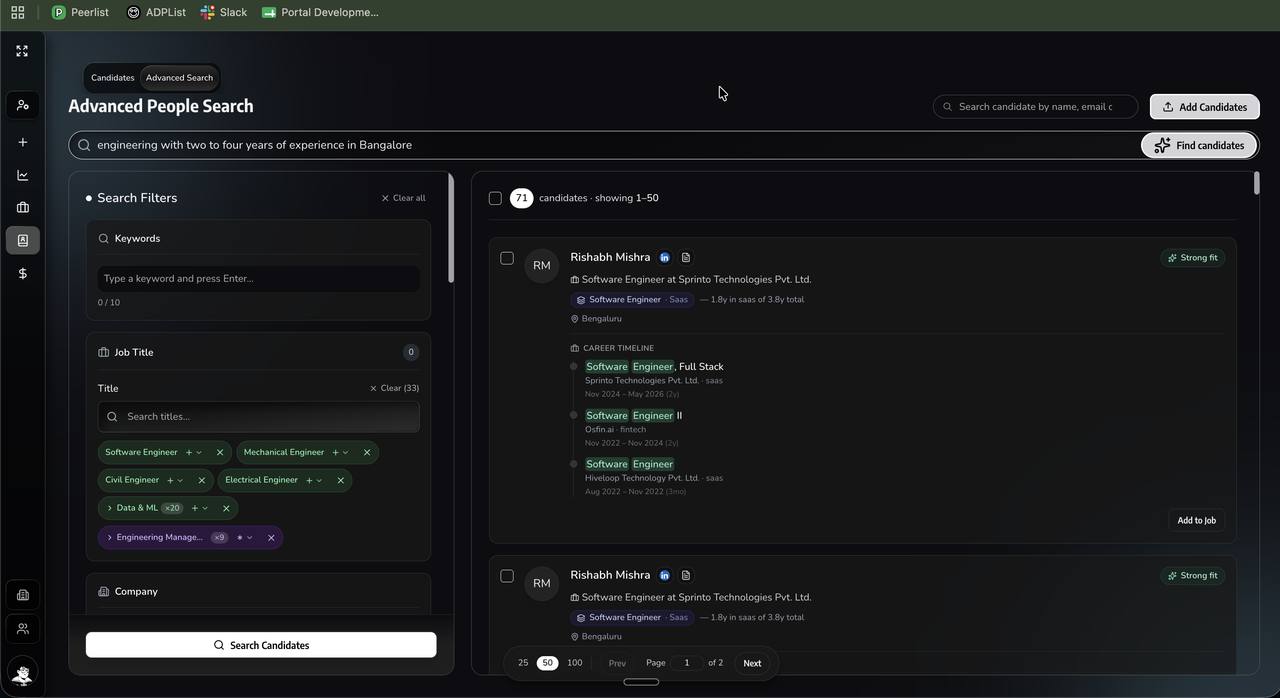
Database depth. If a search in your chosen area returns forty profiles, you have a target rather than a niche. Depth is what lets you respond in hours rather than starting a search.
Market knowledge. What roles pay, who is hiring, which companies people leave and why. This is what makes the first client conversation different.
A track record you can name. Not a number of placements, the actual roles. Clients ask.
The ability to qualify better than the client wrote the brief. The clearest signal of depth and the one that cannot be faked.
How to choose one
Not by picking the most attractive market. By finding the overlap between three things.
Where you have already placed. Look at your last hundred placements and find the cluster. Most firms have an accidental specialism they have never named.
Where your database is genuinely deep. Run the searches. The answer is empirical rather than aspirational.
Where demand is growing. A defensible position in a shrinking market is still shrinking.
The intersection is usually narrower than founders expect and considerably more viable than the market they were considering entering from scratch.
Declining work, and why it is the whole mechanism
A firm that accepts every requirement offered is a generalist regardless of what its website says, and clients can tell.
Declining does three things at once. It concentrates capacity on roles you can actually fill, which raises fill rate. It signals confidence, which is commercially persuasive in a way a capability deck is not. And it forces the market knowledge to deepen, because you are working the same territory repeatedly.
It is also the reason most firms do not specialise. Turning down revenue in a month where the number is short is genuinely hard, and it is the entire decision.
Niche does not mean small
The common objection is that a niche limits the addressable market. Two responses.
First, your addressable market is not the size of the sector, it is the share you can credibly win. Ten percent of a defensible niche beats one percent of everything, and the second is what most generalists actually have.
Second, a niche supports better economics. Roles that are hard to fill support fees that commodity roles do not, and exclusivity is genuinely available when the client believes you know something they do not, per what clients actually pay you for.
How to transition without a revenue gap
Nobody can switch overnight, and firms that try create a hole.
Name the niche before you restrict. Start positioning, publishing and prospecting in the chosen area while still serving existing accounts.
Stop accepting new work outside it, rather than dropping current clients. The mix shifts over a year without a cliff.
Deepen the database deliberately. Every search in the niche should leave the pool better than it found it, per database-first sourcing.
Publish something. Market knowledge you cannot demonstrate is indistinguishable from market knowledge you do not have.
Five checks worth running on your own desk
Everything above is context. These five turn it into something you can act on, and each takes under an hour.
1. Where did your last twenty placements come from?
Split them by source: your own database, a job portal, a referral, outbound sourcing. Most firms are surprised by how much they paid a portal for people already in their records. An audit of one firm's 3 million candidates found roughly 80 percent were real people whose records had simply gone out of date, covered in the database-first audit.
2. What is your actual time from brief to shortlist?
Measured from when the client briefed you, not from when the requisition was created in your system. In contingency work the firm that submits first usually gets paid, so this is a direct predictor of fill rate. Whether that bet still works is a separate question.
3. What share of gross profit sits with your largest client?
Concentration is the most common structural weakness in a staffing firm and the one founders notice last, usually when the account moves. It is also the single biggest discount on a valuation.
4. What is your response rate by channel?
Against your own baseline rather than a published benchmark. On strong roles we see roughly 40 responses per 100 contacted by phone, 25 on WhatsApp and 12 to 15 by email, broken down in our channel benchmarks. The ordering surprises teams who assumed messaging had replaced calling.
5. How many roles can one recruiter genuinely carry?
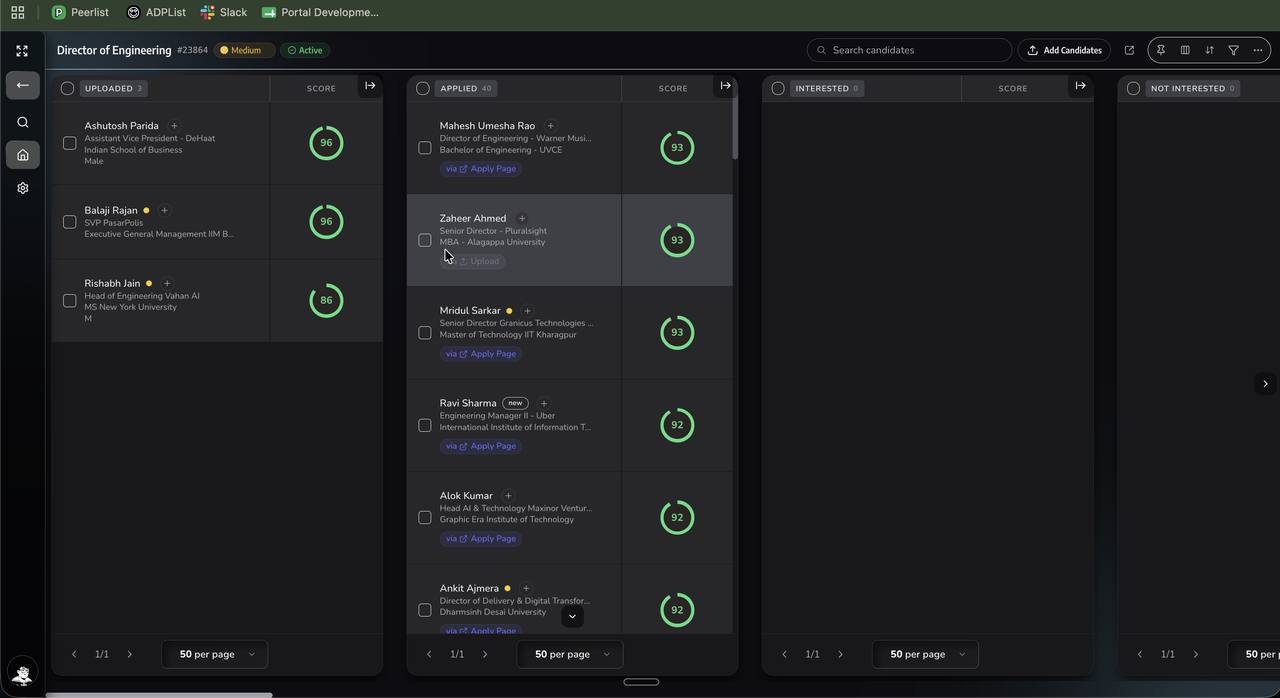
Not how many they are assigned, how many they can work properly. A recruiter running manual screening manages around 40 calls a day and finds three or four people worth submitting. That is the ceiling, and every growth plan sits on top of it. Filtering before dialling changes the arithmetic.
Frequently asked questions
Why do generalist staffing agencies struggle?
Because they are indistinguishable rather than worse. A client comparing three agencies all claiming speed, service and quality has no basis to choose except price, which compresses fees and pushes firms to work more roles with less attention each.
What does a genuine recruitment niche require?
Database depth in the area, market knowledge covering pay, hiring activity and attrition patterns, a nameable track record of actual roles, and the ability to qualify a brief better than the client wrote it.
How do you choose a niche?
From the overlap of where you have already placed, where your database is genuinely deep when you run the searches, and where demand is growing. Most firms have an accidental specialism they have never named.
Why is declining work central to specialisation?
Because a firm accepting every requirement is a generalist whatever its website says. Declining concentrates capacity on fillable roles, signals confidence commercially, and forces market knowledge to deepen through repetition.
Does specialising limit your market?
Your addressable market is the share you can credibly win rather than the size of the sector. Ten percent of a defensible niche beats one percent of everything, which is what most generalists actually hold.
How do you transition to a niche without a revenue gap?
Name and position the niche first while still serving existing accounts, stop accepting new work outside it rather than dropping current clients, deepen the database deliberately, and publish something that demonstrates the knowledge.
The analysis to run on your last hundred placements
Sort them by vertical, function and seniority, and find the largest cluster. Then run a search in that area against your own database and see how deep it actually goes.
Most firms discover they already have a niche and have simply never claimed it, which makes the transition considerably easier than starting one.
Test how deep your niche really is
Bring your chosen area and we will search your own database to show you what depth you actually have.
Book a demoFounder of Sortinghat, an AI-native ATS and CRM for staffing, search and RPO firms. Writes about recruiter capacity, sourcing economics and what actually changes when AI reaches a delivery desk. More about the author
Related reading
Why Most Staffing Firms Will Not Survive the Next Five Years
AI ImpactWhat Clients Actually Pay Agencies For Now That AI Does the Sourcing
Talent PoolTalent Pool Software: How to Rank Your Own Database Before You Pay a Job Portal
SegmentsFilling Niche Engineering Roles When Forty People in the Country Can Do the Job