Return to Office Versus Remote: What It Does to Your Candidate Pool
An office mandate is a sourcing constraint before it is a culture decision, and most clients set it without seeing the arithmetic.
A client deciding on five days in the office is making a workplace policy decision. They are also, without usually intending to, removing a large share of their candidate pool and changing the composition of who remains. That arithmetic is knowable before the requisition is written, and telling a client what their policy costs them in supply is one of the more useful conversations an agency can have.
Last reviewed August 2026. Assessment drawn from delivery observations; figures deliberately omitted where unverified.
Key takeaways
- An office mandate is a geographic filter applied before any skills filter. And it is usually the more restrictive of the two.
- It changes who applies, not just how many. Composition shifts in ways clients rarely anticipate.
- Hybrid definitions vary enough to be meaningless. Two days in office and two days a month are both called hybrid.
- The cost is visible before sourcing starts. Which makes it a conversation at intake rather than a complaint at week six.
The arithmetic clients do not see
A fully remote role draws from a national pool. A five-day office role in a specific city draws from people already in commuting distance plus the small number willing to relocate for it.
That is not a marginal reduction. On a specialist requirement it can be the difference between a workable search and a genuinely scarce one, which changes the commercial structure of the mandate as described in genuinely scarce roles.
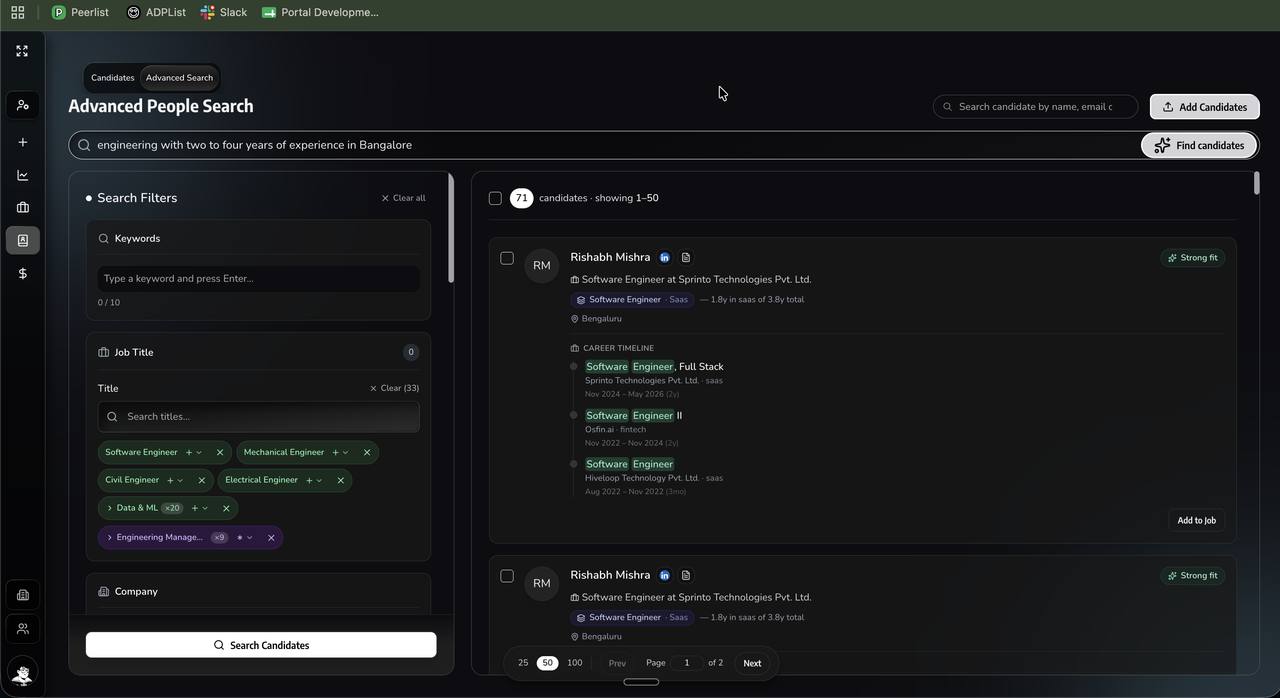
The useful thing an agency can do is run the search both ways before the requisition is finalised and show the client the two numbers. That is a ten-minute exercise and it reframes the conversation from policy to supply.
Composition, not just volume
The pool does not shrink evenly. An office mandate filters disproportionately on caregivers, people with long commutes, people managing health conditions and people who relocated during the remote period and have since settled.
Clients with stated diversity objectives frequently have an office policy working directly against them and have never connected the two, which is worth raising carefully. It is a factual observation about supply rather than an argument about policy, and it belongs alongside the requirements review described in diversity hiring.
Why hybrid means nothing without a number
Hybrid describes arrangements ranging from four days in office to two days a month. Candidates have learned this and now discount the word entirely.
The practical consequence is that a posting saying hybrid without specifying days produces both wasted applications and lost candidates, because the people who would accept two days do not apply when they suspect four.
Capture the actual number at intake: days per week, whether they are fixed or flexible, and whether there is any exception process. A recruiter who can answer that in the first conversation converts materially better than one who says it is hybrid.
What candidates actually trade
Compensation is the obvious lever and it is not the only one, or even the strongest.
Candidates trade office attendance against commute time more than against salary. A one-hour each-way commute is roughly two working days a month, which most people price higher than a modest compensation difference.
Fixed days also matter more than the count. Three predictable days beats two unpredictable ones for anybody organising childcare or travel, and clients frequently have flexibility on predictability even when they have none on the number.
How to have the conversation with a client
Not as an argument about remote work, which is a topic where everybody has already decided.
Show two search results. The pool with the location constraint and without it. Numbers rather than opinions.
Name the composition effect factually. Who the constraint removes, without editorialising about whether that matters.
Ask what the mandate is actually for. Collaboration, supervision, culture or property commitments. Some of those have alternatives and some do not.
Offer the middle option. Fixed days, predictable, with a stated exception process, usually costs the client nothing and recovers a meaningful share of the pool.
Frequently asked questions
How does a return to office mandate affect hiring?
It applies a geographic filter before any skills filter, reducing the pool to people within commuting distance plus the few willing to relocate. On specialist requirements that can turn a workable search into a genuinely scarce one.
Does an office mandate change who applies or just how many?
Both. The pool filters disproportionately on caregivers, people with long commutes, people managing health conditions and those who relocated during the remote period, which shifts composition as well as volume.
Why is hybrid a problematic term in job postings?
Because it covers arrangements from four days in office to two days a month. Candidates discount the word entirely, so a posting that does not specify days produces both wasted applications and lost candidates.
What do candidates trade against office attendance?
Commute time more than salary. A one-hour each-way commute is roughly two working days a month, which most people price above a modest compensation difference. Predictability of days also matters more than the number of them.
How should an agency raise workplace policy with a client?
With two search results rather than an opinion: the pool with the location constraint and without it. Then name the composition effect factually and ask what the mandate is actually for, since some purposes have alternatives.
Can workplace policy conflict with diversity objectives?
It frequently does without anyone connecting the two, since an office mandate filters disproportionately on groups a diversity objective is trying to reach. Raising it as a factual observation about supply is more useful than framing it as a policy argument.
The ten-minute exercise before the requisition is signed
Run the search twice, once with the location constraint and once without, and show the client both numbers.
Most clients have never seen what their workplace policy costs them in supply, and a number is considerably more persuasive than an opinion about the future of work.
Run the search both ways
Bring a role with a location constraint and we will show you the pool with it and without it.
Book a demoFounder of Sortinghat, an AI-native ATS and CRM for staffing, search and RPO firms. Writes about recruiter capacity, sourcing economics and what actually changes when AI reaches a delivery desk. More about the author
Related reading
Filling Niche Engineering Roles When Forty People in the Country Can Do the Job
SegmentsDiversity Hiring: What Works, What Is Theatre, and What Agencies Can Change
MarketTier-2 City Hiring in India: Where Capacity Is Actually Moving
Talent PoolTalent Pool Software: How to Rank Your Own Database Before You Pay a Job Portal