Tier-2 City Hiring in India: Where Capacity Is Actually Moving
Bengaluru is the most contested talent market in the country. The new capacity is opening where almost no agency has a presence.
Bengaluru holds the largest single share of India's global capability centre units, which makes it the most crowded talent market in the country and the place where your fee pressure is highest. The capacity growth is moving outward. Firms with a bench only in Bengaluru are competing hardest where competition is fiercest, while newer sites open in cities where very few agencies have any relationship at all.
Last reviewed July 2026. City distribution from NASSCOM and Zinnov GCC reporting.
Key takeaways
- Bengaluru is where competition is highest, not where growth is fastest. The largest share of units also means the largest share of agencies chasing them.
- Tier-2 markets are relationship markets. Fewer agencies, fewer candidates, and a much higher weight on knowing people.
- Salary bands differ and the gap is narrowing. Pricing a tier-2 role from a Bengaluru benchmark loses the mandate or loses the candidate.
- Your database is almost certainly Bengaluru-weighted. Which means your search returns nothing useful the first time you work a tier-2 role.
Why capacity is moving outward
Three pressures, all of them structural rather than temporary.
Attrition in the primary markets. A centre losing people at a high rate to competitors three kilometres away is expensive to run, and the calculation eventually favours a city where the alternative employer is not next door.
Cost. Salary and real estate both sit lower outside the primary hubs, and at several hundred seats that difference is material.
Availability. The engineering talent exists in tier-2 cities. What did not exist was the employer, and once one credible centre opens, others follow because the talent stops relocating away.
What changes about sourcing
A tier-2 market is smaller, less liquid and considerably more relationship-driven.
The candidate pool is finite in a way a metro pool is not, which means the same people appear in every search and get contacted by every agency working the city. Reply rates fall fast once a market has been worked hard.
Referral matters more than anywhere else. In a smaller professional community, an introduction from a former colleague carries weight that a cold approach does not, and the good candidates are frequently not visible on any platform.
Relocation becomes a live variable in both directions. People who left for a metro will return for the right role and the right city, and that pool is invisible to anyone searching by current location.
The salary question, and how firms get it wrong
Tier-2 bands sit below metro bands and the gap has been narrowing as credible employers arrive.
Two failure modes follow. Pricing a tier-2 role from a Bengaluru benchmark makes the mandate uncompetitive, and the client goes elsewhere. Pricing it from an outdated tier-2 assumption makes the offer uncompetitive, and the candidate declines after three weeks of process.
The only reliable input is what has actually been offered and accepted in that city in the last two quarters, which is data your own placements hold and most firms never look at.
Why your database will disappoint you
Most Indian staffing databases are heavily weighted to the metros, because that is where the work has been.
So the first tier-2 search returns very little, and the conclusion firms draw is that the market is thin. Usually the market is fine and the database is not. Two things help.
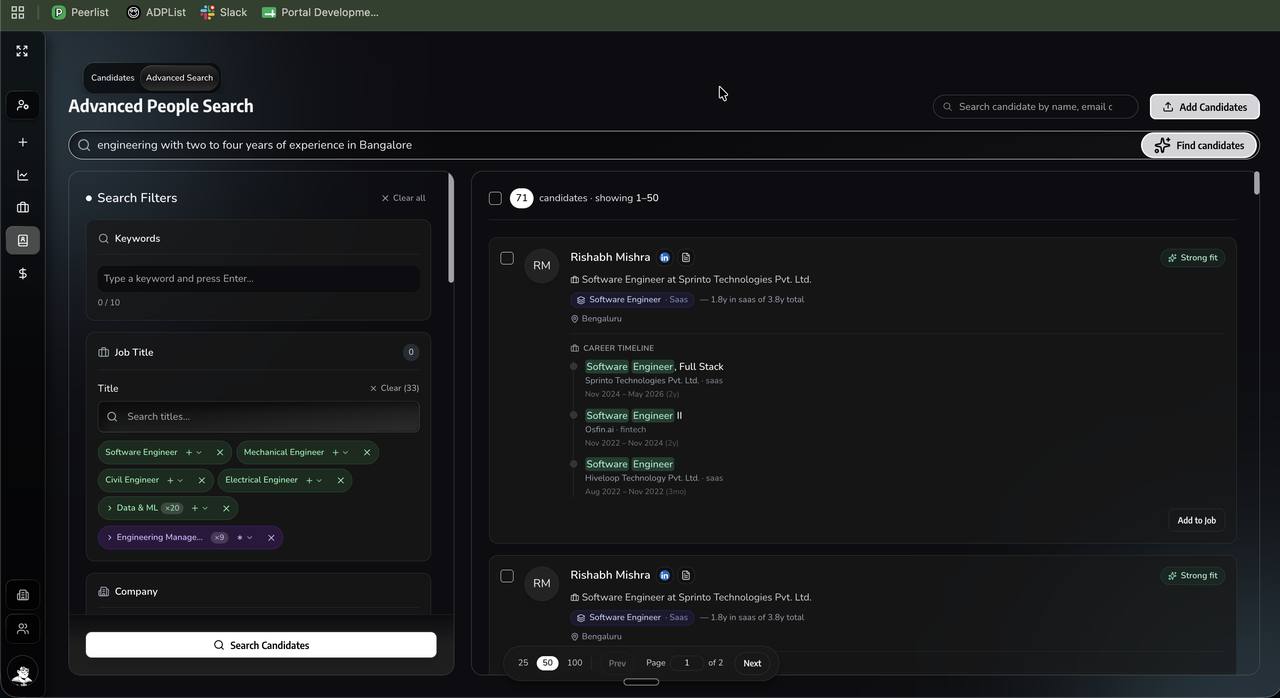
Search by origin, not just current location. People from a city who are working elsewhere are the strongest relocation pool available and they do not appear in a location filter.
Build deliberately. A tier-2 pool is built by working a market rather than harvested from one. That takes two or three mandates before it pays, which is why firms that arrive early stay ahead.
When tier-2 expansion is the wrong bet
Two honest caveats.
Thin verticals stay thin. Not every skill exists at depth outside the metros. A specialist requirement in a tier-2 city may genuinely have twenty candidates in it, and no amount of process fixes that.
It is a commitment, not a campaign. A firm that works one tier-2 mandate and leaves gets none of the relationship benefit and all of the setup cost. The economics only work if you intend to stay.
Frequently asked questions
Which Indian cities are growing fastest for GCC hiring?
Bengaluru holds the largest share of units, which makes it the most contested market. New capacity is opening beyond the primary hubs, where fewer agencies have an established presence and competition for candidates is lower.
Why are companies moving hiring to tier-2 cities in India?
Attrition in the primary hubs is expensive when the competing employer is nearby, salary and real estate costs sit lower, and the engineering talent already exists in these cities even where the employers previously did not.
How do salaries compare between metro and tier-2 cities?
Tier-2 bands sit below metro bands and the gap has been narrowing as credible employers arrive. The only reliable input is what has actually been offered and accepted in that city recently, which is data your own placements hold.
Why does my database return nothing for tier-2 searches?
Most Indian staffing databases are heavily weighted towards the metros because that is where the work has been. The market is usually fine; the database is thin. Searching by origin rather than current location surfaces the relocation pool.
Is referral hiring more important in tier-2 cities?
Considerably. In a smaller professional community an introduction from a former colleague carries weight a cold approach does not, and strong candidates are frequently not visible on any platform.
Should a staffing firm expand into a tier-2 city?
Only as a commitment rather than a campaign. Working one mandate and leaving incurs all the setup cost and none of the relationship benefit. The economics need two or three mandates before they turn positive.
Where to start if you are metro-only today
Pick one tier-2 city where a client you already serve has announced or is building a site. Search your existing database for people whose education or early career was in that city and who are now working elsewhere. That is your relocation pool and it is invisible to every competitor filtering on current location.
Then check what you have actually placed in that city in the last year. If the answer is nothing, price the first mandate as a market entry rather than as a margin opportunity.
Search by origin, not just location
Bring a tier-2 requirement and we will show you the relocation pool sitting inside your own database.
Book a demoFounder of Sortinghat, an AI-native ATS and CRM for staffing, search and RPO firms. Writes about recruiter capacity, sourcing economics and what actually changes when AI reaches a delivery desk. More about the author
Related reading