Tech Hiring in 2026: What Actually Changed
Technical recruiting has been through three years of noise. Three things genuinely changed and most of the rest was cyclical.
Technical hiring absorbed more commentary than any other segment over the last three years, most of it describing a cycle rather than a change. Three things genuinely shifted: job titles stopped describing the work, evaluation moved towards demonstrated capability, and the AI skill premium reshaped compensation at the top of the market. Everything else was hiring going up and down.
Last reviewed August 2026. Market observations informed by NASSCOM sector reporting and Sortinghat delivery data.
Key takeaways
- Titles stopped being reliable identifiers. Two people with identical titles can be doing unrelated work, which breaks title-based sourcing.
- Evaluation moved towards demonstrated capability. What somebody built and owned, verified, rather than what the CV claims.
- The AI skill premium distorted the top of the market. And created an adjacent-skill pool most firms are not searching.
- Decision cycles compressed and then stretched. Clients move fast when they are certain and stall completely when they are not.
Why job titles stopped working
An engineer with the title of platform engineer might build internal tooling, manage cloud infrastructure, run deployment pipelines, or do all three depending on the company.
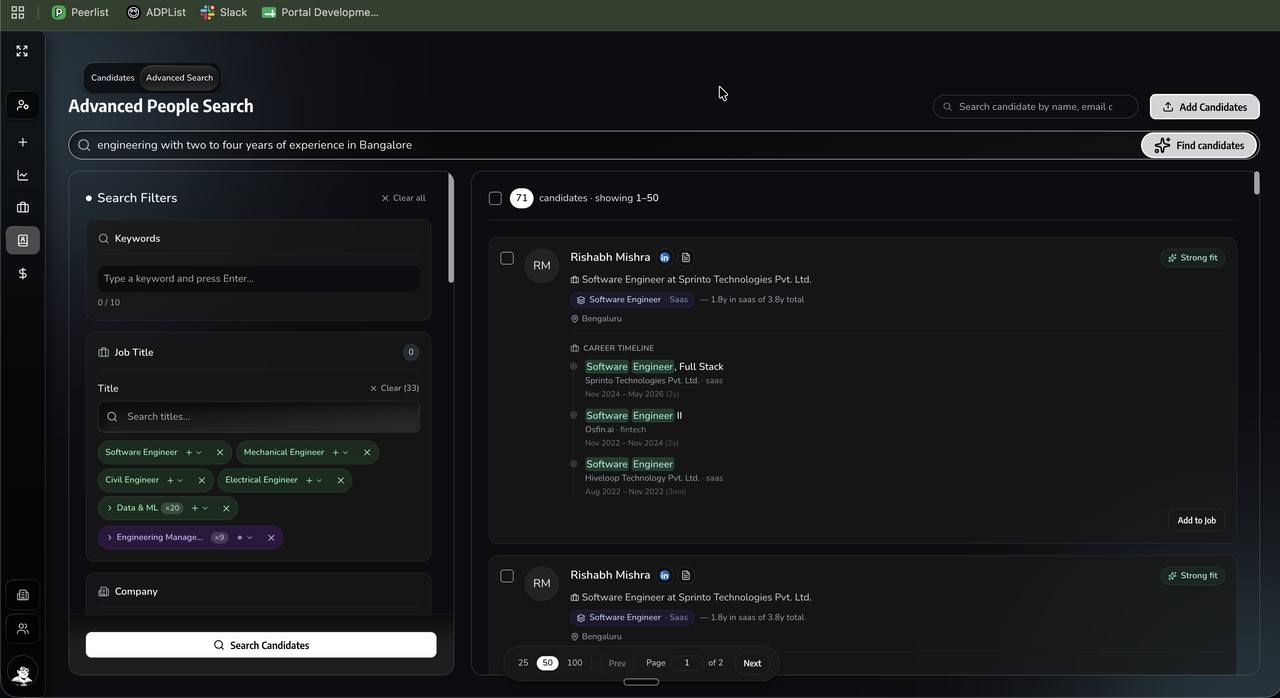
Filtering on title and years therefore returns a set where a large share are unqualified for the specific requirement, and Boolean refinement does not fix it because the distinguishing information is not in the title. It is in what the person actually built.
The workaround is describing the work rather than the role, which is the argument in natural language search. A query that specifies stack, scale and ownership returns a usable set where a title filter does not.
Verification became the differentiating work
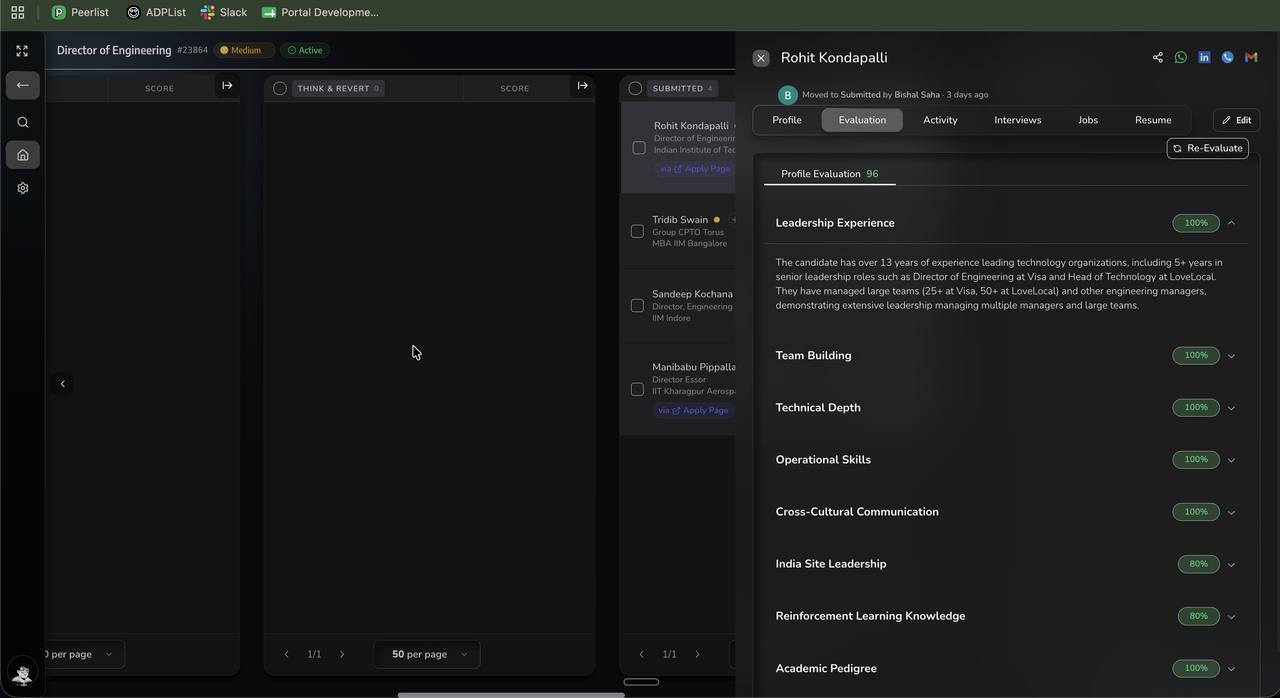
Technical CVs now carry quantified claims as standard, because every piece of career advice recommends it. Improved latency by a percentage. Scaled a system to a stated volume. Reduced cost by a figure.
Those are the claims that fail most often under a second question about baseline, period and personal contribution. Catching that at screening costs a few minutes. A client catching it in their technical interview costs the slot and some credibility.
This is why the screening standard rather than sourcing reach is what wins repeat technical mandates, and why what reaches the record matters more than call volume.
The AI premium and the adjacent pool
Demand for AI and machine learning roles has grown far faster than the supply of people who have genuinely built and shipped these systems, covered in India's AI talent gap.
The consequence for technical hiring generally is a distortion at the top. Strong engineers move towards AI roles because compensation is higher, which thins supply in adjacent areas and raises the price of experienced backend and data engineering talent.
The opportunity is the reverse direction. Data engineers and backend engineers working on inference infrastructure are frequently better hires for AI-adjacent roles than people with the title, because engineering fundamentals are harder to teach than the domain.
What client decision cycles look like now
The pattern is bimodal rather than slow. A client that is certain moves in days. A client that is uncertain does not move at all, and the requisition sits open for months while everyone assumes the market is difficult.
That changes qualification. The important question is not whether the budget exists but whether the decision has been made. A role where three people still need convincing internally will consume your effort and produce nothing.
Firms that qualify the decision process as carefully as the requirement work fewer roles and fill more of them.
What did not change
Worth listing, because a lot of commentary implied otherwise.
Good engineers are still found through networks. Referral remains the highest-yield channel at the top of the market and no tooling has displaced it.
Compensation is still the most common reason offers fail. Not culture, not process, not title. A band set below market fails at offer stage regardless of how well the search ran.
Counter-offers still work more often than anyone admits. Which makes the period between acceptance and joining as important as the search itself.
Frequently asked questions
What changed in tech hiring in 2026?
Three things: job titles stopped reliably describing the work, evaluation moved towards verified demonstrated capability rather than CV claims, and the AI skill premium distorted compensation at the top while thinning adjacent supply.
Why does searching by job title not work for technical roles?
Because the same title covers unrelated work depending on the company. Filtering on title and years returns a largely unqualified set, and the distinguishing information sits in what the person built rather than in what they were called.
Which technical CV claims fail verification most often?
Quantified impact claims. Latency improvements, scale figures and cost reductions stated as percentages or absolute numbers. They collapse under questions about baseline, time period and what the candidate personally owned versus the team.
Where is the least contested technical talent?
In adjacent skills. Data engineers and backend engineers working on inference infrastructure are frequently better hires for AI-adjacent roles than people carrying the title, because engineering fundamentals are harder to teach than the domain.
Why do technical requisitions stay open for months?
Usually because the decision has not been made rather than because the market is thin. Client behaviour is bimodal: certain clients move in days, uncertain ones do not move at all while the role remains technically open.
What still works in technical recruiting?
Referral remains the highest-yield channel at senior levels. Compensation remains the most common reason offers fail. And counter-offers still succeed often enough that the period between acceptance and joining deserves as much attention as the search.
The query worth rewriting this week
Take your three hardest open technical roles and rewrite each search to describe the work rather than the title. Stack, scale, what the person owned, and the domain context you would actually reject somebody over.
Then run both versions and compare the result sets. On most technical roles the difference is not marginal, and it explains why the market felt thin.
Search by what people built
Bring a technical requirement and we will run it as a description rather than a title filter.
Book a demoFounder of Sortinghat, an AI-native ATS and CRM for staffing, search and RPO firms. Writes about recruiter capacity, sourcing economics and what actually changes when AI reaches a delivery desk. More about the author
Related reading
India's AI Talent Market: Sharp Demand Growth Against a Large Skills Deficit
Talent PoolNatural Language Candidate Search: Five Real Queries, and Why Vague Ones Fail
WorkflowAI Screening Calls: What Gets Asked, Verified and Written to the Record
SegmentsBFSI Hiring in India: What the GCC Shift Actually Changed