Twelve Things AI Still Cannot Do in Recruitment
A vendor listing what its product does not do is unusual. It is also the fastest way to work out whether the rest is true.
Almost every claim made about AI in recruitment is about what it can do. The more useful list is the other one, because it tells you where your recruiters still have to be good and where buying software will not help. Some of these are temporary limitations and some are structural, and the difference matters when you are planning headcount.
Last reviewed July 2026. Limitations drawn from Sortinghat delivery experience.
Key takeaways
- Most of what fails is not a technology problem. Badly written briefs, human decisions and relationships account for the majority of it.
- Automation makes a bad brief worse, not better. The wrong thing happens faster and with more confidence.
- The offer-to-joining gap remains entirely human. This is where placements actually die and no workflow addresses it.
- Knowing the limits is how you deploy the strengths. Firms that automate the wrong things conclude the technology does not work.
What it cannot do about the brief
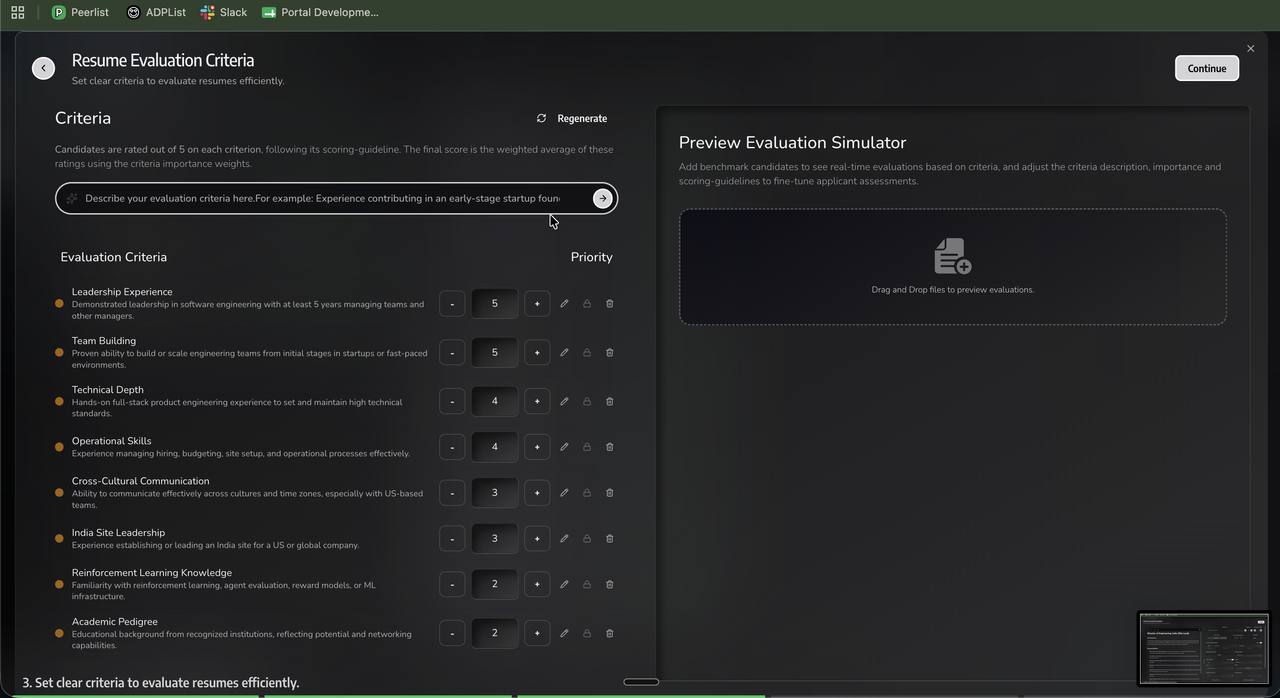
1. Extract a requirement the client has not articulated. The information that decides most rejections was never written down. Getting it requires asking a hiring manager an uncomfortable question, and nothing automates that conversation.
2. Know that a requisition is not real. Budget unapproved, role internally contested, or a manager gathering market information. A system will search diligently against a role that was never going to be filled.
3. Tell you the client is wrong. An unrealistic combination of skill, salary and location is a conversation, not an output. The system will simply return nothing and let you conclude the market is thin.
What it cannot do about candidates
4. Persuade a reluctant senior candidate. Someone with three options is deciding on trust and judgement. This never got automated and it is the highest-value thing a recruiter now does.
5. Read a hesitation. A candidate who says yes without meaning it sounds like a candidate who means it, on paper and often on a call. Experienced recruiters catch this and cannot fully explain how.
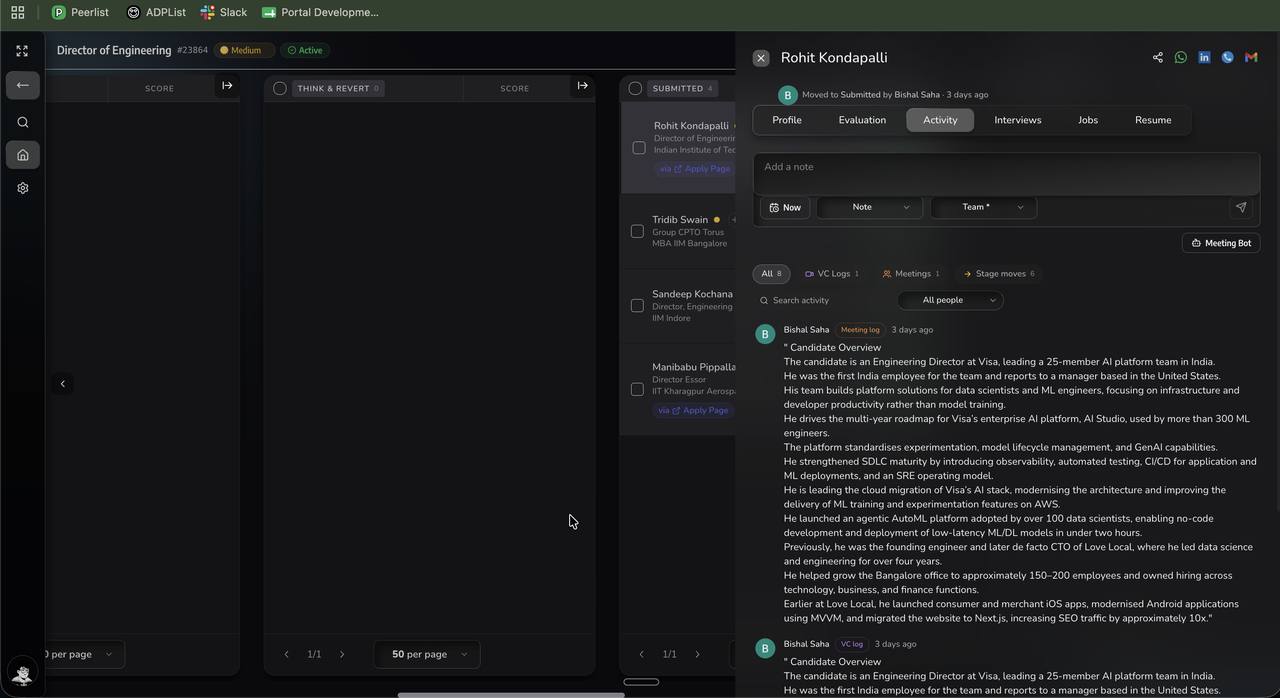
6. Manage the offer-to-joining gap. Counter-offers, family opinions and cold feet. This is where placements die, and it is entirely relationship work.
7. Repair a bad candidate experience. Once somebody feels mishandled, an automated apology makes it worse.
What it cannot do about your firm
8. Make your team use it. Industry data consistently shows a wide gap between firms claiming AI usage and firms with it genuinely embedded. Adoption is a management problem and software does not have the conversation for you.
9. Fix a database nobody maintained. It can find what is there. An audit of one firm's 3 million records found 10 percent duplicates and 10 percent unusable, and no search recovers information that was never captured.
10. Compensate for a weak fee structure. If the margin was wrong at contract signature, efficiency delivers the loss on time rather than preventing it.
What it cannot do about accountability
11. Take responsibility for a decision. Under the EU AI Act's high-risk classification for recruitment, human oversight of automated decisions is an obligation. Beyond compliance, a client rejecting a shortlist wants a person to explain it.
12. Guarantee it is not wrong. A score is a judgement expressed as a number. If a system cannot show the reasoning underneath, recruiters ignore it, and they are right to. This is the argument for evidence being visible on every score rather than a confidence figure standing alone.
Which of these will change
Being honest about direction matters as much as being honest about the present.
Likely to improve: reading hesitation from conversation patterns, and identifying unrealistic requirements by comparing a brief to market data. Both are pattern problems with enough signal to learn from.
Unlikely to change: anything requiring accountability, anything where the value is that a person chose to spend time on you, and the offer-to-joining gap. These are not technical limits. They are what the relationship is for.
What this changes on a staffing desk
Market analysis is only useful if it changes something on Monday. Four practical consequences that follow from everything above.
Your prospect list is probably built from history
Most staffing firms sell to the accounts they already know, which means the client list reflects where demand was five years ago rather than where it is now. Rebuilding a prospect list against current hiring activity rather than past relationships is unglamorous and it is usually the highest-return week a founder can spend.
Speed matters more than it used to
In contingency and RPO, the firm that submits first usually gets paid. A recruiter working manually manages around 40 calls a day and finds three or four people worth submitting. Filtering before dialling changes that arithmetic: a pool search on a volume role surfaces around 1,200 relevant profiles, narrows to a ranked 300 contacted across call, WhatsApp and email in parallel, and produces roughly 10 submission-ready profiles in hours.
Your own database is the cheapest source you have
An audit of one firm's 3 million records found roughly 10 percent duplicates, 10 percent unusable and 80 percent real people whose records were simply out of date. Making that 80 percent findable took job portal spend from about $100 a role to $60. Most firms are paying to source strangers while sitting on people who already know them.
Definition beats effort
Most wasted submissions are a briefing failure that surfaced three weeks later, not a sourcing failure. Generating weighted evaluation criteria from the job description, and agreeing them with the client before the search starts, removes more waste than any increase in activity.
Frequently asked questions
What can AI not do in recruitment?
Extract requirements a client never articulated, recognise a requisition that was never real, persuade a reluctant senior candidate, manage the offer-to-joining gap, drive its own adoption inside your team, or take accountability for a decision.
Does AI fix a badly written job brief?
No, it makes the consequence arrive faster. Screening candidates against the wrong criteria produces a confident, quick and wrong shortlist. Getting the real requirement out of a hiring manager remains a human conversation.
Why do placements still fall apart at the offer stage?
Counter-offers, family opinions and cold feet are relationship problems rather than workflow problems. A candidate going quiet between acceptance and joining needs a person, and this is where most placements are lost.
Can AI make a recruitment team more productive on its own?
Only if the team uses it. Industry data consistently shows a large gap between firms claiming AI usage and firms with it genuinely embedded in the workflow. Adoption is a management problem that software does not solve.
Will these limitations change over time?
Some will. Reading hesitation from conversation patterns and flagging unrealistic briefs against market data are pattern problems with enough signal to improve. Accountability and relationship value are not technical limits and will not.
Should a candidate score be trusted without explanation?
No, and recruiters are right to ignore scores that cannot show their reasoning. A score is a judgement expressed as a number, and it is only usable if the evidence behind it can be opened and read.
The useful way to read this list
Go through the twelve and mark which ones your firm is currently failing at. Most firms find the failures cluster in the first three, which are all about the brief.
That is worth knowing before buying anything, because a firm whose problem is briefing will not be helped by better sourcing, and will conclude the technology does not work when the actual problem was upstream of it.
See where the automation stops
Bring a live role and we will show you exactly which parts the platform handles and which stay with your recruiter.
Book a demoFounder of Sortinghat, an AI-native ATS and CRM for staffing, search and RPO firms. Writes about recruiter capacity, sourcing economics and what actually changes when AI reaches a delivery desk. More about the author
Related reading