How to Hire Recruiters Now That AI Does the Sourcing
Most staffing firms are still hiring recruiters against a job description written for a job that no longer exists.
If sourcing and first-pass screening are automated, the recruiter's day is triage, judgement, selling and client conversations. That is a substantially different job from the one most staffing firms are still recruiting for, and the criteria that used to predict success now predict very little. Boolean fluency, dialling stamina and CV formatting speed have all become close to irrelevant.
Last reviewed July 2026. Hiring criteria drawn from Sortinghat customer delivery, stated as directional.
Key takeaways
- Boolean fluency is no longer a sensible hiring criterion. Describing a profile precisely is the scarce skill now, and it takes a session to teach rather than a quarter.
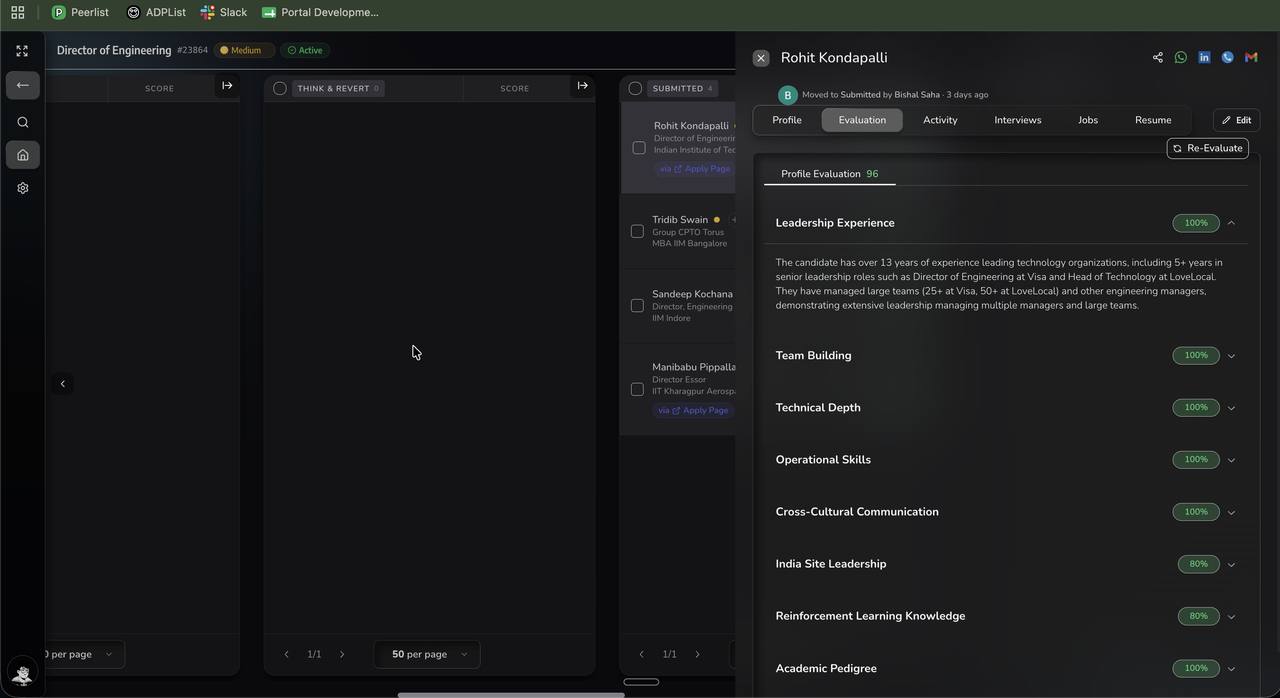
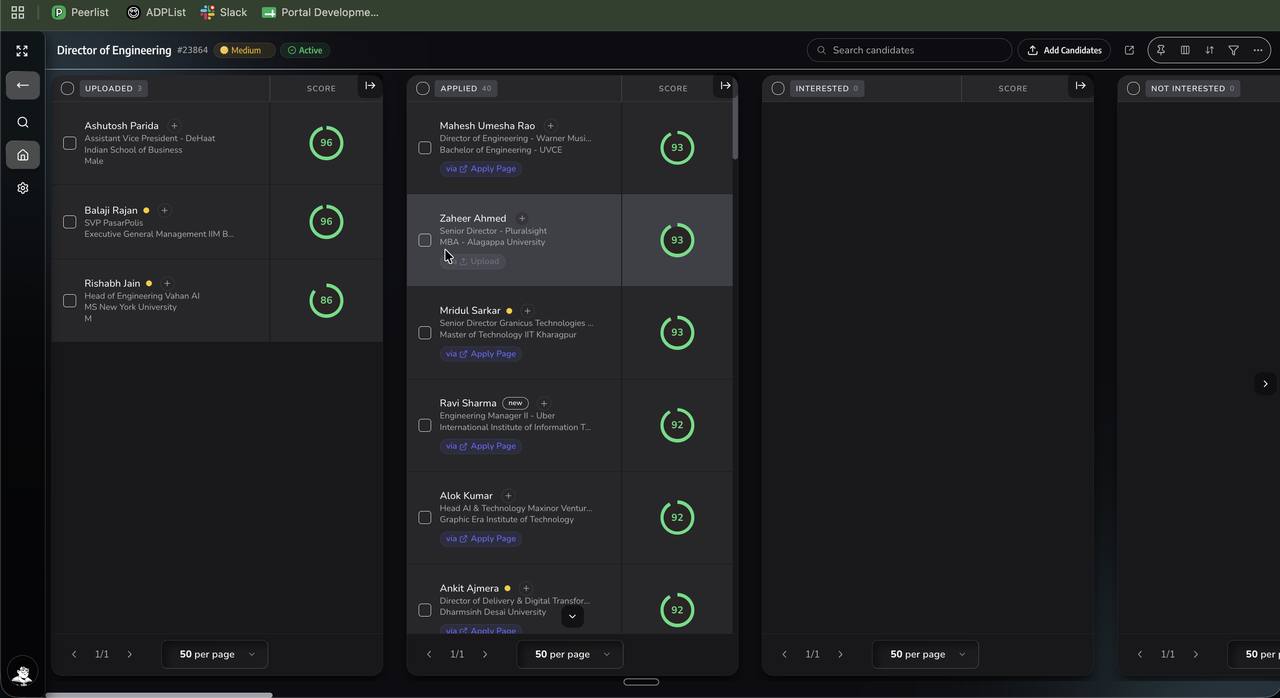
- Triage speed matters more than dialling stamina. The job is deciding what to do with results as they arrive, in under a minute each.
- Selling seniors is the skill that did not get automated. And it is the one most firms never test for in an interview.
- Judgement under ambiguity is the whole job now. Everything with a clear rule has been automated away from the role.
What actually stopped mattering
Boolean fluency. A sourcer who could write a five-level nested string had something rare. On a platform where the query is a sentence, that skill has no application, and hiring for it screens out capable people for no reason.
Dialling stamina. The ability to make 40 calls without losing energy was a genuine differentiator when 40 calls was the job. It is now a proxy for endurance in a role that rewards discrimination.
CV formatting speed. Real work, entirely automatable, and never a predictor of anything except willingness.
Firms still testing for these are selecting against the people who would be best at the current role.
What matters more than it did
Specification. Can this person describe exactly what a good candidate looks like, including the things that never appear on a CV? This is the scarce skill now and it is testable in an interview by handing someone a real job description and asking what they would reject on.
Triage judgement. Results arrive continuously and each needs a decision in under a minute. That is a different cognitive skill from persistence, and some excellent traditional recruiters are poor at it.
Selling. A strong candidate on a competitive role needs persuading. This never got automated and it is the highest-value thing a recruiter now does.
Client conversation. Qualifying a brief, pushing back on an unrealistic requirement, reading an unstated concern. All judgement, none of it automatable.
How to test for it in an interview
Hand them a real brief and ask what they would reject on. A strong candidate names disqualifiers rather than requirements. A weak one recites the job description back.
Give them five candidate summaries and sixty seconds each. Advance, reject or flag, with a reason. This tests triage directly and it is uncomfortable in a way that reveals a lot.
Role-play a candidate who has a competing offer. This is the selling skill and it cannot be prepared for in the way a competency question can.
Ask them to explain a market they know. Who is hiring, what it pays, where the supply sits. Domain knowledge is harder to fake than process knowledge.
What this does to your hiring pool
The useful consequence is that the pool widens considerably.
If the job is judgement, specification and selling rather than syntax and stamina, then people from adjacent backgrounds become viable. Sales, account management, consulting and domain specialists moving into recruitment all bring the skills that now matter and lack only the process knowledge, which is teachable.
Firms competing for experienced recruiters are competing in the tightest pool available, for people trained on a job that is changing. Firms hiring for judgement and teaching the process have a materially larger field.
What does not change
Two things, worth saying so this does not read as an argument that experience is worthless.
Resilience. Recruitment involves being told no repeatedly by both sides. No amount of automation changes that, and it remains the most common reason people leave the profession.
Follow-through. The gap between offer and joining is where placements die, and it is entirely human work. A candidate who goes quiet needs a person, not a workflow.
Frequently asked questions
What skills should a recruiter have in 2026?
Specification, triage judgement, selling and client conversation. If sourcing and first-pass screening are automated, the remaining job is deciding what to do with results and persuading people, both of which are judgement rather than process.
Is Boolean search still a useful hiring criterion?
No. On platforms where a query is a sentence, Boolean fluency has no application, and testing for it screens out capable candidates for no reason. Describing a profile precisely is the scarce skill and it takes a session to teach.
How do you test a recruiter in an interview?
Hand them a real brief and ask what they would reject on, give them five candidate summaries with sixty seconds each to triage, role-play a candidate with a competing offer, and ask them to explain a market they claim to know.
Can you hire recruiters from outside recruitment?
Increasingly, yes. If the job is judgement, specification and selling rather than syntax and stamina, then sales, account management and domain specialists bring what matters and lack only process knowledge, which is teachable.
What has not changed about recruiting as a job?
Resilience and follow-through. Recruitment involves being told no repeatedly by both sides, and the gap between offer and joining is entirely human work where a candidate going quiet needs a person rather than a workflow.
Should experienced recruiters be worried about AI?
The parts of the role that were process are being automated, and the parts that were judgement are becoming more valuable. Recruiters whose value was throughput should be concerned. Recruiters whose value was judgement have more leverage than before.
Rewrite one job description this week
Take your current recruiter job description and cross out every requirement that describes a task the platform now performs. Most firms find half the document goes.
Then write what remains as a description of decisions rather than activities. That version will attract different candidates, and they will be better suited to the job that actually exists.
See what the recruiter's day looks like
Bring a live role and watch what a filtered screening day actually asks of a recruiter.
Book a demoFounder of Sortinghat, an AI-native ATS and CRM for staffing, search and RPO firms. Writes about recruiter capacity, sourcing economics and what actually changes when AI reaches a delivery desk. More about the author
Related reading