When to Hire Your Next Recruiter, and How to Know
The instinct to hire arrives when people feel busy. Busy and at capacity are different states with different remedies.
A recruiter costs salary from month one and produces from month four to six. Hiring too early consumes cash a growing firm does not have; hiring too late costs client relationships that took years to build. The decision is usually made on how busy the team feels, which is a poor signal, when four measurable numbers give a considerably better one.
Last reviewed August 2026. Framework drawn from Sortinghat customer observation, stated as directional.
Key takeaways
- Busy and at capacity are different states. One is fixed by hiring, the other by removing manual work.
- Four numbers indicate genuine capacity limits. Roles per recruiter, time to first submission, decline rate and fill rate trend.
- Fix capacity before adding headcount. Hiring onto an inefficient desk scales the inefficiency.
- Ramp time is the cost nobody models. Four to six months of salary against no production is the real investment.
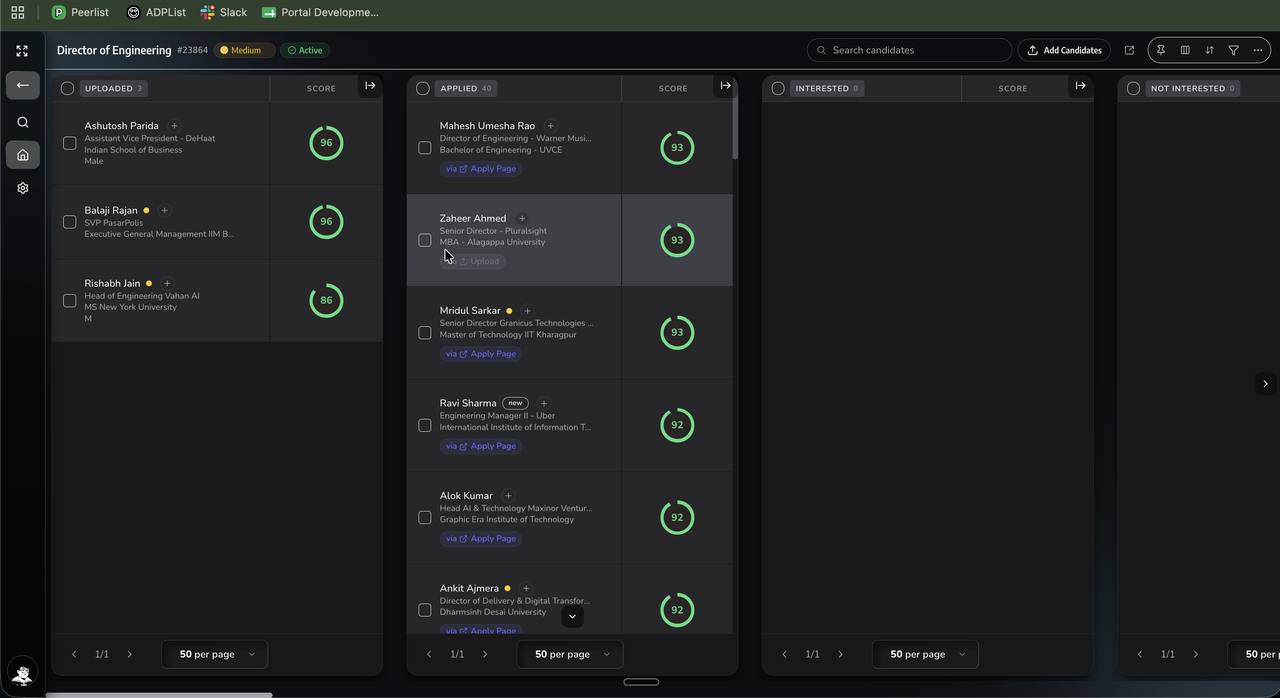
Busy is not the same as at capacity
A recruiter working ten hours a day may be at capacity or may be spending six of those hours on work the platform should be doing.
The distinction matters because the remedies are different and one of them costs a salary. A recruiter running manual sourcing and screening manages around 40 calls a day and finds three or four people worth submitting, which is a qualification ceiling rather than an effort ceiling, per what one screening day produces.
Hiring somebody to do the same manual work in parallel doubles the cost and doubles the ceiling. Removing the manual work raises the ceiling without the cost. The first is sometimes right and it should be the second decision rather than the first.
The four numbers
Roles carried per recruiter, and whether they are being worked. Assigned is not the same as worked. If roles sit untouched for a week, the desk is over capacity regardless of the count.
Time from brief to first submission. If this is lengthening month over month, capacity is binding. This is also the number clients notice first.
Decline rate. If the team has stopped declining anything, they are either desperate for pipeline or too busy to qualify, and both are signals.
Fill rate trend. Falling fill rate with steady activity means roles are being started and abandoned, which is the clearest capacity symptom there is.
What to fix before hiring
Three checks, each cheaper than a salary.
Are recruiters starting roles on a job portal? If new requirements begin with a portal search rather than the internal database, you are paying twice for candidates you already own, per database-first sourcing.
How much of the day is qualification? If most conversations end in ninety seconds because somebody was ineligible, that is filtering being done by the most expensive resource available.
Are they working unwinnable roles? Eight suppliers, no exclusivity, low fee. Declining these releases capacity immediately, per the recruiter productivity myth.
Modelling the actual cost
Most firms budget the salary and forget the rest.
A new recruiter costs salary from month one and typically produces from month four to six. During ramp they also consume senior time for training, which is capacity removed from a producing desk. And there is a real probability they do not work out, which needs to be in the model rather than assumed away.
Run it honestly: fully loaded cost for six months, plus the senior hours, divided by the probability they stay and perform. That number is what the hire actually costs, and it is usually larger than the conversation assumed.
When the answer genuinely is hire
Four situations where headcount is the right lever rather than a reflex.
Capacity is already efficient and demand exceeds it. The straightforward case, and rarer than firms assume.
You are entering a new vertical or geography. Where the constraint is knowledge and relationships rather than hours.
Concentration risk. One person holding too many client relationships is a structural risk that hiring addresses, per how relationships actually drive revenue.
A specific capability you lack. A contract specialist, a back office lead, somebody who can sell.
Who to hire, given the job has changed
If sourcing and first-pass screening are automated, the role you are hiring for is judgement, specification and selling rather than dialling stamina and Boolean fluency.
That widens the pool considerably. People from sales, account management, consulting and domain backgrounds bring what now matters and lack only process knowledge, which is teachable, per hiring recruiters now.
Firms competing for experienced recruiters are competing in the tightest pool available for people trained on a job that is changing.
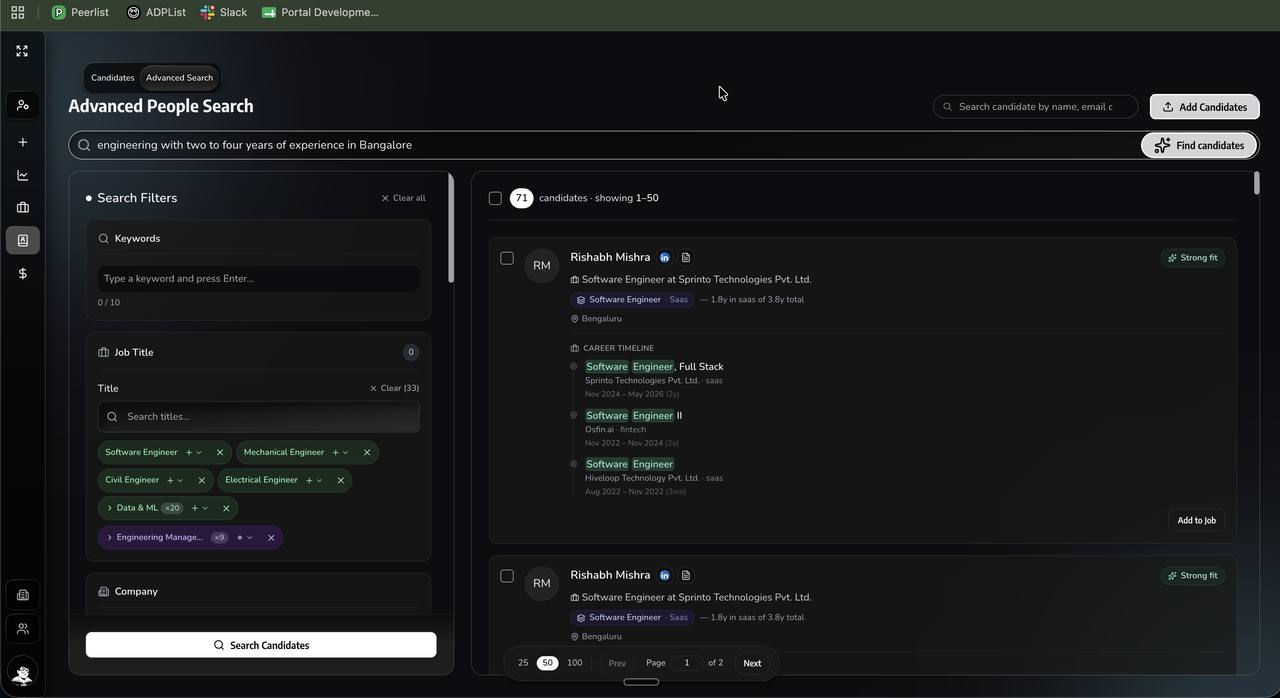
Five checks worth running on your own desk
Everything above is context. These five turn it into something you can act on, and each takes under an hour.
1. Where did your last twenty placements come from?
Split them by source: your own database, a job portal, a referral, outbound sourcing. Most firms are surprised by how much they paid a portal for people already in their records. An audit of one firm's 3 million candidates found roughly 80 percent were real people whose records had simply gone out of date, covered in the database-first audit.
2. What is your actual time from brief to shortlist?
Measured from when the client briefed you, not from when the requisition was created in your system. In contingency work the firm that submits first usually gets paid, so this is a direct predictor of fill rate. Whether that bet still works is a separate question.
3. What share of gross profit sits with your largest client?
Concentration is the most common structural weakness in a staffing firm and the one founders notice last, usually when the account moves. It is also the single biggest discount on a valuation.
4. What is your response rate by channel?
Against your own baseline rather than a published benchmark. On strong roles we see roughly 40 responses per 100 contacted by phone, 25 on WhatsApp and 12 to 15 by email, broken down in our channel benchmarks. The ordering surprises teams who assumed messaging had replaced calling.
5. How many roles can one recruiter genuinely carry?
Not how many they are assigned, how many they can work properly. A recruiter running manual screening manages around 40 calls a day and finds three or four people worth submitting. That is the ceiling, and every growth plan sits on top of it. Filtering before dialling changes the arithmetic.
Frequently asked questions
How do you know when to hire another recruiter?
Look at four numbers: roles carried and whether they are actually being worked, time from brief to first submission and whether it is lengthening, decline rate, and fill rate trend against steady activity.
What is the difference between busy and at capacity?
Busy can mean a recruiter is spending most of the day on work the platform should be doing. At capacity means the qualification ceiling is genuinely reached. Hiring fixes the second and doubles the cost of the first.
How long before a new recruiter is productive?
Typically four to six months, during which they cost full salary and consume senior time for training. That ramp, plus the probability they do not work out, is the real investment rather than the salary alone.
What should you fix before hiring a recruiter?
Whether roles start on a job portal rather than your own database, how much of the day goes to qualification that could be filtered earlier, and whether the team is working unwinnable roles that should be declined.
When is hiring genuinely the right answer?
When capacity is already efficient and demand exceeds it, when entering a new vertical or geography where the constraint is knowledge, when client relationship concentration is a structural risk, or when you lack a specific capability.
Should you hire experienced recruiters?
Not necessarily. If sourcing and screening are automated, the job is judgement, specification and selling, which widens the pool to people from sales, account management and domain backgrounds who lack only teachable process knowledge.
The check before the job advertisement
Before writing a job description, pull your time from brief to first submission for the last three months. If it is flat, the team is busy rather than at capacity, and a hire will not change the number.
If it is lengthening month over month, that is the signal, and the client has probably already noticed.
See how many roles are genuinely being worked
Bring your pipeline and we will show you assigned versus actively worked, which are rarely the same number.
Book a demoFounder of Sortinghat, an AI-native ATS and CRM for staffing, search and RPO firms. Writes about recruiter capacity, sourcing economics and what actually changes when AI reaches a delivery desk. More about the author
Related reading