Nobody Needs Another AI Resume Screener
We could ship one this quarter. So could every competitor, which is exactly the point.
Resume screening is the most crowded feature category in recruiting software and one of the least consequential. It optimises reading a document, which was never the constraint on a staffing desk, and it does so on documents that have become considerably less reliable. The category persists because it demos well and because it is the easiest thing to build, not because firms needed another one.
Last reviewed August 2026. Assessment written from the vendor side, about vendor practice including our own.
Key takeaways
- Reading CVs was never the bottleneck. Qualifying people was, and a document cannot be qualified.
- The input got less reliable, not more. Candidates now tailor CVs to any job description in seconds.
- It is the easiest capability to build, which is why everyone has one. A crowded feature category is a signal about difficulty, not about value.
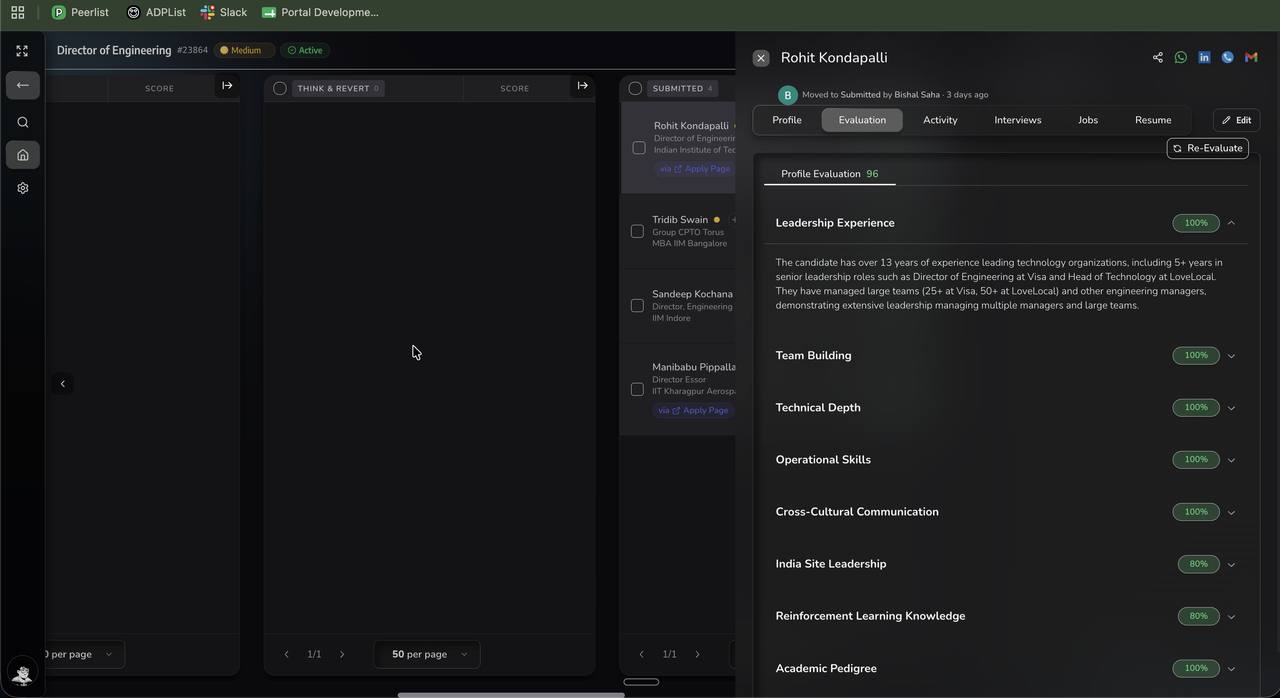
- The useful version scores against role-specific criteria. Not against a generic notion of quality, and it must show its reasoning.
Why reading CVs was never the constraint
Watch where a recruiter's day goes. Reading applications is real work and it is not what caps output.
The constraint is qualification: establishing whether somebody is available, interested, within band, and able to do the specific job. A recruiter running manual screening manages around 40 calls a day and finds three or four people worth submitting, and that ratio is the ceiling on the desk.
A tool that reads 400 CVs faster does not change it. The 400 still have to be spoken to, and the ones who look best on paper are not reliably the ones who survive a conversation.
The input got worse
Resume screening rests on an assumption: that a CV is a reasonable signal of what somebody has done.
That assumption weakened considerably. Tailoring a CV to mirror a job description now takes seconds, which means the document reflects the job posting more than it reflects the candidate. Every application matches, so ranking them becomes an exercise in scoring how well people used the same tools you did.
The full argument is in why inbound got worse. The short version is that better screening applied to worse documents is a better sorter on a worse pile.
Why the category is crowded
Because it is the easiest thing to build in this space.
The input is text, the output is a number, the evaluation is subjective enough that nobody can prove the ranking is wrong, and it demos beautifully. Upload a hundred CVs, watch them sort, everyone nods.
A crowded feature category tells you something about difficulty rather than about value. When every competitor ships the same capability within a quarter, none of them has an advantage and the buyer should not be paying a premium for it, which is the argument in AI washing.
What a useful version looks like
Screening is not worthless. The useful version differs in three ways.
It scores against role-specific criteria, generated from that job description with weights, rather than against a generic notion of a good CV. The same candidate should score differently for the same title at two companies.
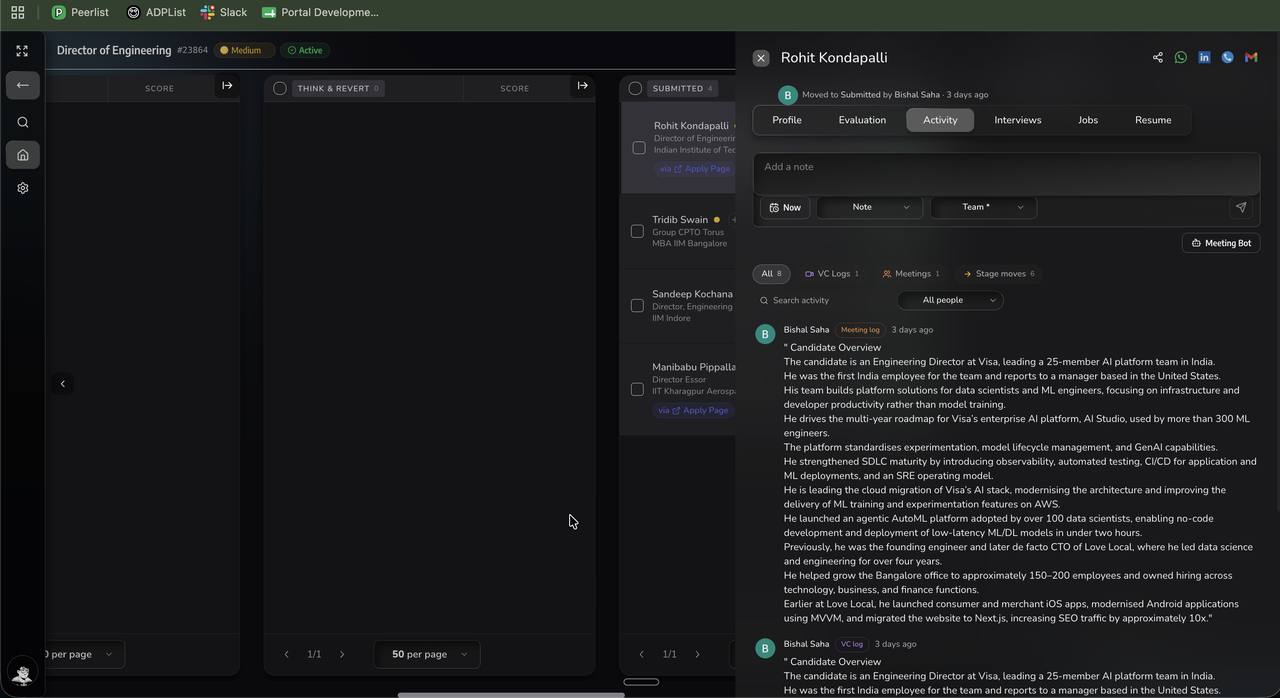
It shows its reasoning. A score you cannot interrogate is a score recruiters will ignore, and under the EU AI Act's high-risk classification for recruitment, explaining an automated decision is an obligation rather than a courtesy.
It is a filter, not a decision. Its job is deciding who gets a conversation, not who gets rejected.
What we would rather firms bought
Given a fixed budget, screening documents is not where it should go.
Making your own database searchable. An audit of one firm's 3 million records found roughly 80 percent were real people with stale details, and making them findable moved portal spend from about $100 a role to $60.
Qualifying at volume by conversation. Because the claims that fail are the ones a document cannot test.
Automatic capture. So a desk survives a resignation.
All three change a number. Ranking CVs faster mostly changes how quickly you reach the same conversation.
Frequently asked questions
Is AI resume screening useful?
In a narrow way. It decides who gets a conversation faster. It does not qualify anybody, because the claims that decide a submission cannot be tested by a document, and reading CVs was never the constraint on a staffing desk.
Why is resume screening a crowded software category?
Because it is the easiest capability to build: the input is text, the output is a number, the ranking is subjective enough that nobody can prove it wrong, and it demos well. Crowding signals difficulty rather than value.
Has AI made CVs less reliable?
Yes. Tailoring a CV to mirror a job description now takes seconds, so the document reflects the posting more than the candidate. Every application matches on keywords, which makes ranking them an exercise in scoring tool usage.
What does a good resume screening tool do differently?
Scores against criteria generated from that specific job description with adjustable weights, shows the reasoning behind every score so a recruiter can interrogate it, and acts as a filter for who gets a conversation rather than as a rejection decision.
Should a resume screener reject candidates automatically?
No. Under the EU AI Act's high-risk classification for recruitment systems, human oversight of automated decisions is an obligation. Beyond compliance, a client rejecting a shortlist wants a person who can explain the reasoning.
What should a staffing firm buy instead of a resume screener?
Search that makes an existing database findable, qualification by conversation at volume, and automatic capture of calls and messages onto the record. All three move a number rather than accelerating the path to the same conversation.
The question worth asking about any screening tool
Ask what happens after it ranks the candidates. If the answer is that a recruiter calls them, the tool has reordered a queue rather than removed work from it.
That may still be worth buying. It is not worth buying at the price the category currently charges.
See qualification, not ranking
Bring a role and we will show you what a structured conversation surfaces that the documents did not.
Book a demoFounder of Sortinghat, an AI-native ATS and CRM for staffing, search and RPO firms. Writes about recruiter capacity, sourcing economics and what actually changes when AI reaches a delivery desk. More about the author
Related reading