Everyone Bought AI. Almost Nobody Uses It. The Adoption Gap in Staffing
The most expensive line in most staffing firms' technology budget is the software nobody opened.
Ask staffing leaders whether their firm uses AI and most say yes. Look at whether it is embedded in how work actually happens and the number collapses. That gap is not vendors overselling, though some do. It is that buying software is a decision one person makes in an afternoon and adopting it is a change forty people have to make over a quarter, and almost nobody plans for the second part.
Last reviewed August 2026. Adoption patterns from Sortinghat implementations and industry reporting.
Key takeaways
- Claimed usage and embedded usage are very different numbers. Widely purchased, narrowly adopted, and the gap is where the money goes.
- The failure is almost never capability. It is that nobody was accountable for a specific habit changing.
- Rollouts fail by changing everything at once. Teams adopt one habit at a time and reject a system that replaces their whole day.
- The top biller decides the outcome. Their public indifference tells everyone else the system is optional.
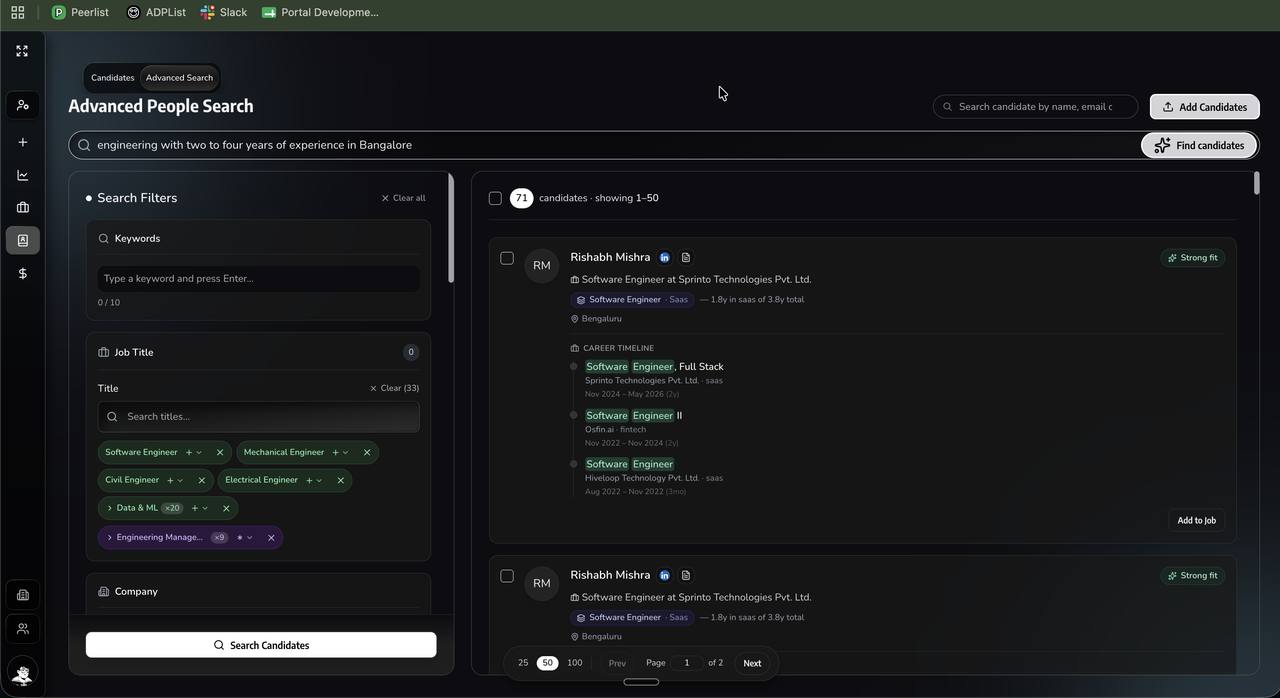
What the gap actually is
Two different questions produce two different numbers. Has your firm used AI, which captures experimentation. Is AI embedded in how your team works, which captures change.
Most firms answer yes to the first and no to the second, and both answers are honest. Somebody trialled a tool, it worked in the demo, licences were purchased, and then everybody went back to what they were doing because nothing forced the change.
The cost is not the licence. It is the year of expected improvement that was budgeted against and did not arrive.
Why rollouts stall
Four causes, in order of frequency.
Everything changed at once. A team asked to move search, screening, notes, reporting and pipeline management in the same week rejects the whole thing.
Nobody was accountable for a habit. A platform owner is not the same as a person with a desk and a target whose number depends on the change.
The old system stayed available. If reporting still accepts numbers from outside the platform, staying outside is free.
The top biller opted out visibly. Which tells everyone else it is optional, and they are correct.
What the top biller is actually saying
Their resistance is usually rational and it is worth hearing rather than overriding.
They have a system that works, they are measured on output, and change costs them billing time immediately for a benefit that arrives later. From their position, waiting to see whether this survives is the sensible move.
Two things work. Give them the first win rather than the first training session, by running their hardest live role through the platform with somebody helping. And ask what would have to be true for it to be worth their time, then build that, which is possible when gaps can be filled during a migration rather than logged on a roadmap.
What closing the gap looks like
The specifics are in a ninety-day plan. The shape is four moves.
Enforce one workflow in month one. Usually search: every new role starts with a database search before anybody opens a job portal. Measurable and enforceable.
Measure leading indicators from week two. Active users, records touched, percentage of roles starting with a search, time to first submission. ROI is invisible for sixty days.
Add the second workflow around week five, not week one.
Make the system the source of truth by week nine. Every report leadership reads comes out of it, or staying outside remains free.
What this means when you are buying
The adoption question should carry more weight in a purchase decision than most feature comparisons.
Ask every vendor what happens in week one, week four and week twelve, who runs the migration, what it costs, and what happens when a recruiter refuses. A vague answer is the answer, and it is a more informative one than any capability demonstration.
It also cuts the other way, which is worth saying from the vendor side: no platform drives its own adoption. A firm that buys without a named owner and a single measurable habit will produce logins rather than change, and ninety days later will conclude the software did not work.
Frequently asked questions
Why do AI tools fail in staffing firms?
Almost never on capability. Rollouts fail because everything changed at once, because nobody was accountable for a specific habit, because the old way stayed available, or because the highest biller opted out visibly and everyone read that correctly.
What is the AI adoption gap?
The difference between firms claiming they use AI, which captures experimentation, and firms where it is embedded in how work actually happens, which captures change. Most firms answer yes to the first and no to the second.
How do you get a staffing team to adopt new software?
Enforce one workflow in month one rather than the whole platform, measure leading indicators from week two, add the second workflow around week five, and make the system the source of truth for reporting by week nine.
What should you do about a top biller who refuses?
Hear the objection first, since it is usually rational and often one fixable thing. Give them the first win rather than the first training session by running their hardest live role through the platform with support.
How long does AI adoption take in a recruitment firm?
Around ninety days to a genuine behaviour change, with one enforced workflow in month one and a second added around week five. The final month is about making the platform the source of truth for reporting.
What should you ask a vendor about adoption?
What happens in week one, week four and week twelve, who runs the migration and what it costs, and what happens when a recruiter refuses to use it. A vague answer is more informative than any capability demonstration.
The two things to decide before you buy anything
Which single workflow you will enforce in month one, and who is accountable for the number that measures it. Not the platform owner, a person with a desk and a target.
Firms that cannot answer both before signing will produce logins rather than change, and the conclusion ninety days later will be that the software did not work.
Plan the first ninety days
Bring your team size and desk structure and we will map the rollout, including which workflow to enforce first.
Book a demoFounder of Sortinghat, an AI-native ATS and CRM for staffing, search and RPO firms. Writes about recruiter capacity, sourcing economics and what actually changes when AI reaches a delivery desk. More about the author
Related reading