India's 2,117 GCCs: What the 2026 Landscape Means for Staffing Firms
India now hosts more global capability centres than any other country, employing 2.36 million people. Almost nobody is translating that into what it means for the firms doing the hiring.
India hosts roughly 2,117 global capability centres across 3,728 units, employing around 2.36 million people and generating close to $98 billion in revenue. That is a market that grew by about a third since FY21 and it is the single largest source of new hiring demand in the country. Most staffing firms are still selling to it as though it were IT services with a different logo on the door.
Last reviewed July 2026. Market figures from NASSCOM and Zinnov GCC landscape reporting.
Key takeaways
- India's GCC market is now larger than most national staffing markets. Roughly 2,117 centres, 3,728 units, 2.36 million people and close to $98 billion in revenue.
- Growth has been about a third since FY21. That is compounding demand rather than a cycle, which changes how a staffing firm should invest against it.
- GCC hiring is structurally different from IT staffing. Higher volume, narrower skill definitions, more stakeholders and a reporting bar set by a multinational parent.
- Bengaluru holds a large share of units and the growth is moving outward. Firms with only a Bengaluru bench are competing hardest in the most crowded market.
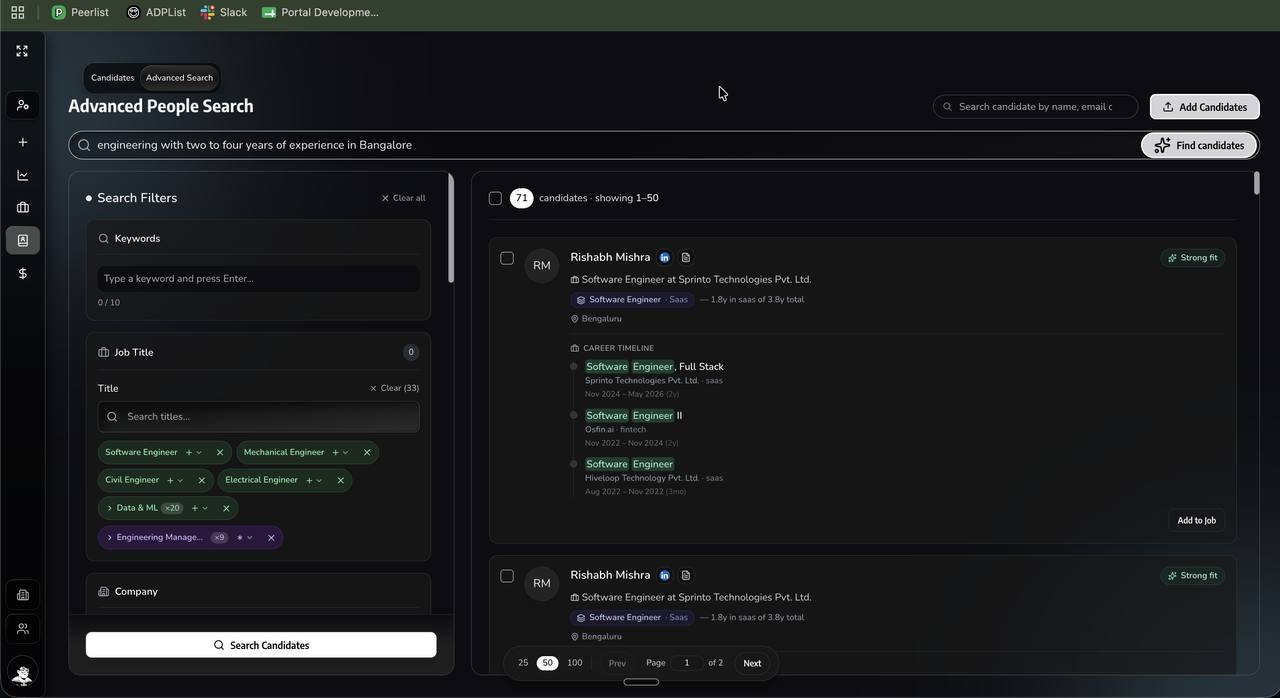
Why GCCs became the largest hiring engine in India
The shift is structural rather than cyclical, which is why it matters more than a good quarter in IT services.
A multinational that once bought a service from an Indian vendor now employs the team directly. The work is the same and the commercial relationship is entirely different. There is no vendor margin, no statement of work and no contract renewal. There is a permanent headcount plan, and somebody has to fill it.
For a staffing firm that changes three things. The buyer is an internal talent function rather than a delivery manager. The volume is committed rather than project-linked. And the standard is set by a parent company that hires the same roles in three other countries and knows what good looks like.
What makes GCC hiring different from IT staffing
Four differences, and each one breaks a habit that works fine on an IT services desk.
Volume and specificity at the same time
A GCC mandate can be 200 seats where each one carries a genuinely narrow requirement. IT staffing desks are used to volume with interchangeable candidates, or niche search with low volume. This is both, and most processes handle one or the other.
More stakeholders, higher reporting bar
A local HR lead, a regional talent head and a parent-company function all want visibility, usually in different formats. An agency that reports by email attachment will lose the account to one that does not.
Skill definitions move quickly
A large share of GCC technology roles carry a skills gap, and the requirement shifts faster than a static scorecard survives. A brief written in January is frequently wrong by April.
Data residency is asked early
A multinational parent asks where candidate data is hosted before it asks what your delivery process looks like. Firms without an answer get filtered before the capability conversation happens.
Where the capacity is actually moving
Bengaluru holds the largest share of GCC units, which makes it the most contested talent market in the country and the one where your fee pressure is highest.
The growth is moving outward. Firms building a bench only in Bengaluru are competing hardest where competition is fiercest, while the newer capacity opens in cities where fewer agencies have any presence at all.
The practical implication is uncomfortable for most firms: your delivery footprint should follow the client's expansion plan rather than your own history. A GCC opening a second site does not want a Bengaluru agency promising to source remotely.
What a staffing firm has to change to win GCC mandates
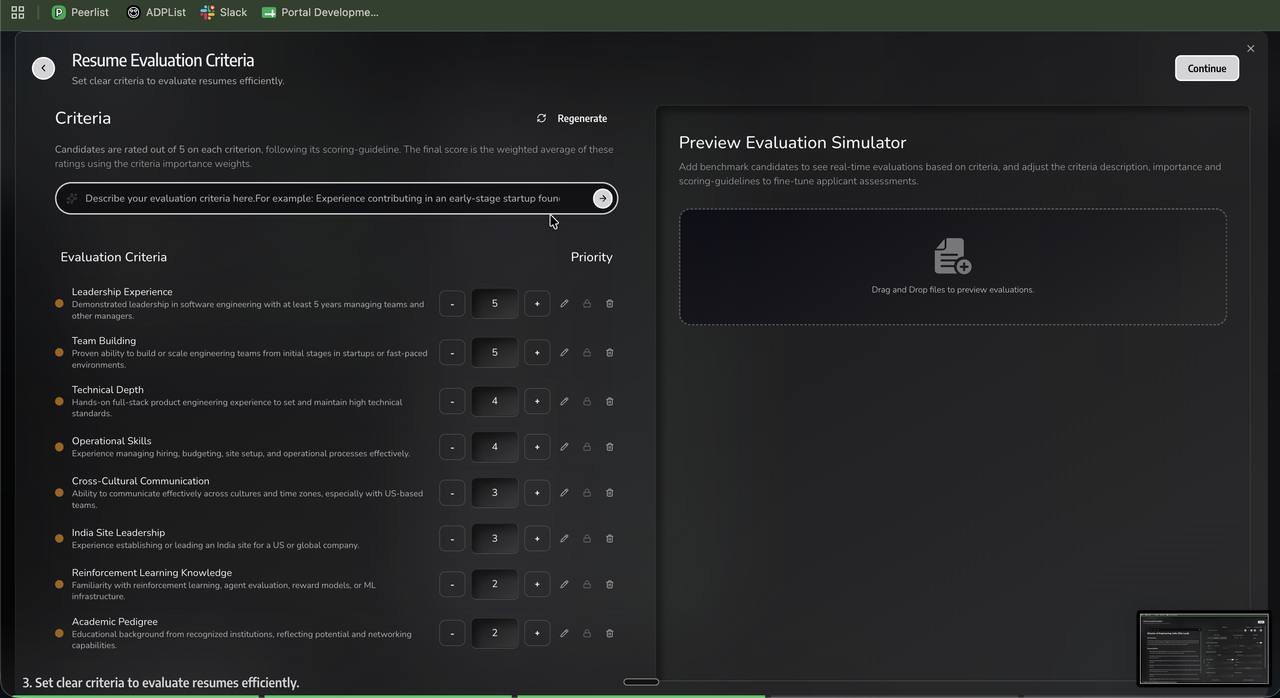
Define roles per client, not per title. The same job title at two GCCs is two different jobs, because company stage, parent expectations and team maturity differ. Evaluation criteria have to be generated per role rather than reused from a template, which is the argument we make in detail in our piece on hiring scorecards.
Build throughput before you bid. A 200-seat mandate delivered with 40 calls a day per recruiter is a mandate you will lose in month two. On a volume role, a pool search surfacing around 1,200 relevant profiles and contacting a ranked 300 in parallel produces roughly 10 submission-ready profiles in hours.
Report on a schedule the client did not have to ask for. SLA performance, pipeline health and time to submit, per account, weekly.
Answer the data question in advance. Where candidate data is hosted, who can see it, and how long it is kept.
The three GCC hiring waves, and where the agency money is
A capability centre does not hire evenly. It moves through phases, and the agency opportunity is concentrated in two of the three.
Wave one: standing up the site
Leadership, the first engineering and operations hires, and the people who will build everything after them. Small volumes, very high stakes, long timelines and genuine willingness to pay for quality. This is search work rather than staffing work, and firms that win here are set up for everything that follows.
Wave two: scaling the functions
The volume phase. Dozens to hundreds of roles across engineering, data, product and support, delivered against a headcount plan with dates attached. This is where most agency revenue sits and where throughput decides whether you keep the account.
Wave three: steady state
Backfills and replacements, largely handled by the internal talent team that wave two funded. Agency share falls sharply, and what remains is niche roles the internal team cannot fill.
The practical implication is that entering at wave two is entering a competitive tender. Entering at wave one is a relationship that carries into it. Firms tracking which multinationals are announcing India sites, rather than which are advertising roles, are working a year ahead of the panel.
How GCC clients evaluate a staffing partner
The evaluation is more structured than most agency buyers, because the person running it usually reports into a global function with a standard.
They ask about your process before your track record
A parent company that hires the same roles in three countries has an opinion about how sourcing and screening should work. Being able to describe your process in specifics, rather than describing your relationships, is what separates a shortlisted supplier from a considered one.
They benchmark your speed against internal recruiting
A GCC has its own talent team. Your submission timeline is compared against what that team achieves internally, not against other agencies. If the internal team fills a role in three weeks, a four-week agency process is a hard sell regardless of quality.
They will ask what happens to candidate data
Where it is hosted, who can see it, how long it is kept and whether it is used for anything else. This is a compliance question with a compliance answer, and improvising it in the meeting is worse than saying you will follow up.
They expect reporting without asking twice
Weekly, in a consistent format, covering pipeline and SLA performance per role. An agency that reports only when chased is telling the client something about how it operates.
Where the GCC opportunity is oversold
Two honest caveats, because the numbers make this look easier than it is.
Not all GCC hiring goes to agencies. Mature centres build internal talent functions precisely so they can stop paying vendor fees. The addressable share is the ramp-up phase, the niche roles and the volume spikes, not the whole 2.36 million.
Fee pressure is real. A client hiring at that volume knows exactly what it should cost, and a parent company benchmarks against three other countries. Firms entering on price will find the floor quickly.
The firms doing well here are winning on speed and specificity rather than on rate, which is a capability question rather than a commercial one.
Three mistakes firms make reading market data
Numbers like the ones above get quoted in strategy decks and then change nothing. Three reasons that happens.
Treating a market size as an addressable market
A sector employing millions of people is not a sector where millions of placements are available to agencies. Internal talent teams, direct applications and referrals take the majority of any mature hiring market. The agency-addressable share is ramp-ups, niche roles and volume spikes, and it is a fraction of the headline.
Confusing a growing market with an easy one
Fast growth attracts suppliers. A segment growing at thirty percent a year usually has more agencies chasing it than one growing at five, which means fee pressure rises alongside demand. Growth tells you where to look, not where it will be comfortable.
Planning around the trend instead of the capability gap
The useful question is not which segment is growing, it is which segment is growing that you can actually serve better than the incumbent supplier. A firm with no history in a domain entering it because the chart looks good will lose to the firm that has placed there for six years.
Frequently asked questions
How many GCCs are there in India?
Roughly 2,117 global capability centres operating across about 3,728 units, employing around 2.36 million people and generating close to $98 billion in annual revenue, according to NASSCOM and Zinnov reporting.
What is a global capability centre?
An offshore unit that a multinational operates directly rather than outsourcing to a vendor. The work is performed in-house by employees of the parent company rather than by a services provider, which removes the vendor margin and creates a permanent headcount plan.
How is GCC hiring different from IT staffing?
Higher volume with narrower skill requirements, more stakeholders across local and parent-company functions, a reporting standard set outside India, and skill definitions that shift faster than a static scorecard survives.
Which cities are growing fastest for GCC hiring?
Bengaluru holds the largest share of units and is therefore the most contested market. Newer capacity is opening beyond it, which is where fewer agencies have an established presence and fee pressure is lower.
Is GCC hiring worth pursuing for a mid-sized staffing firm?
The addressable share is ramp-up phases, niche roles and volume spikes rather than the full headcount, since mature centres build internal talent functions. Firms winning here compete on speed and specificity rather than rate.
What do GCC clients ask staffing partners about technology?
Where candidate data is hosted, who can access it, how long it is retained, and whether SLA reporting comes out of the system rather than a spreadsheet. These questions usually come before any discussion of delivery capability.
What to do about it this quarter
Pick one GCC account you already serve and ask the local talent lead what their parent company measures them on. That answer, rather than the job description, is what your delivery should be built around.
Then check whether your search can find the people you have already placed into that account. If a role at that client would start on a job portal today, the market size in this post is irrelevant to you, because you cannot serve it profitably at volume.
See a GCC mandate run end to end
Bring a live GCC role and a sample of your database. We will run the search, generate the criteria and build the shortlist.
Book a demoFounder of Sortinghat, an AI-native ATS and CRM for staffing, search and RPO firms. Writes about recruiter capacity, sourcing economics and what actually changes when AI reaches a delivery desk. More about the author
Related reading