Staffing Firms Do Not Lose Clients Over Delivery
Ask a departing client why and you get a polite answer about fit. The real reasons are more mundane and considerably more fixable.
When a staffing account goes quiet, the assumption inside the firm is usually that a submission missed or a candidate underperformed. That is rarely it. Clients leave because they stopped hearing from you, because somebody else came back faster three times running, or because the person who held the relationship left and the replacement started from nothing. All three are operational failures and none of them is about candidate quality.
Last reviewed August 2026. Retention patterns from Sortinghat customer delivery, stated as directional.
Key takeaways
- The stated reason and the real reason are usually different. Fit is a polite answer. Silence, slowness and staff turnover are the causes.
- Silence is the most common and the least noticed. Progress happens, nobody reports it, and the client concludes nothing is happening.
- Losing three roles in a row ends accounts. Not one bad submission. A pattern of arriving third.
- A resignation can remove a client's entire history. If the record lived in one person's memory and phone.
Why the stated reason is misleading
A client ending a relationship has no incentive to be candid. Fit, direction and internal changes are polite, unfalsifiable and avoid a difficult conversation.
The recruiter usually knows something closer to the truth and rarely reports it upward, because the honest version involves things they did or did not do. So the firm records a reason that prevents anyone learning anything.
The useful diagnostic is not the exit conversation. It is the six weeks before the client went quiet, which is almost always visible in the activity record if anyone looks.
Silence, and why it happens to good recruiters
Client updates are the task recruiters skip most reliably, and it is rarely neglect.
Writing one means gathering information from several places, and by Friday afternoon it can wait until Monday. Repeat for six weeks and a client with an open role concludes nothing is happening, whatever was actually happening.
The structural fix is that the update should not require writing. Progress already exists in the system: sourced, contacted, screened, submitted, scheduled. A report that assembles itself and sends on a schedule removes both the task and the excuse, which is the argument in what actually keeps a client.
Comparative slowness
A client briefing three agencies notices which one comes back first, every single time.
That impression accumulates independently of who eventually places the candidate. A firm that is consistently third is being evaluated as slow before anybody reads a CV, and after three roles the conclusion is formed.
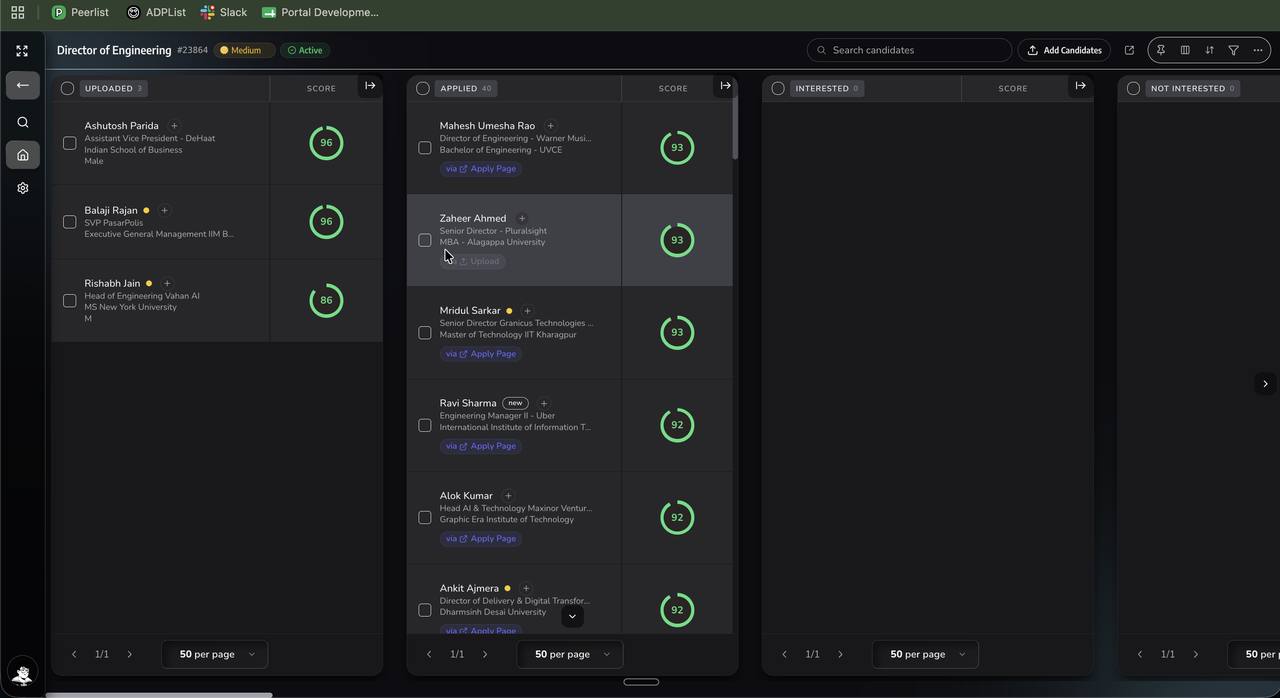
The lever is not effort. A recruiter running manual screening manages around 40 calls a day and finds three or four worth submitting. Filtering first produces roughly ten submission-ready profiles in hours, which is the difference between arriving first and arriving third.
The resignation problem
The most expensive retention failure in staffing is a recruiter leaving a firm that logged manually.
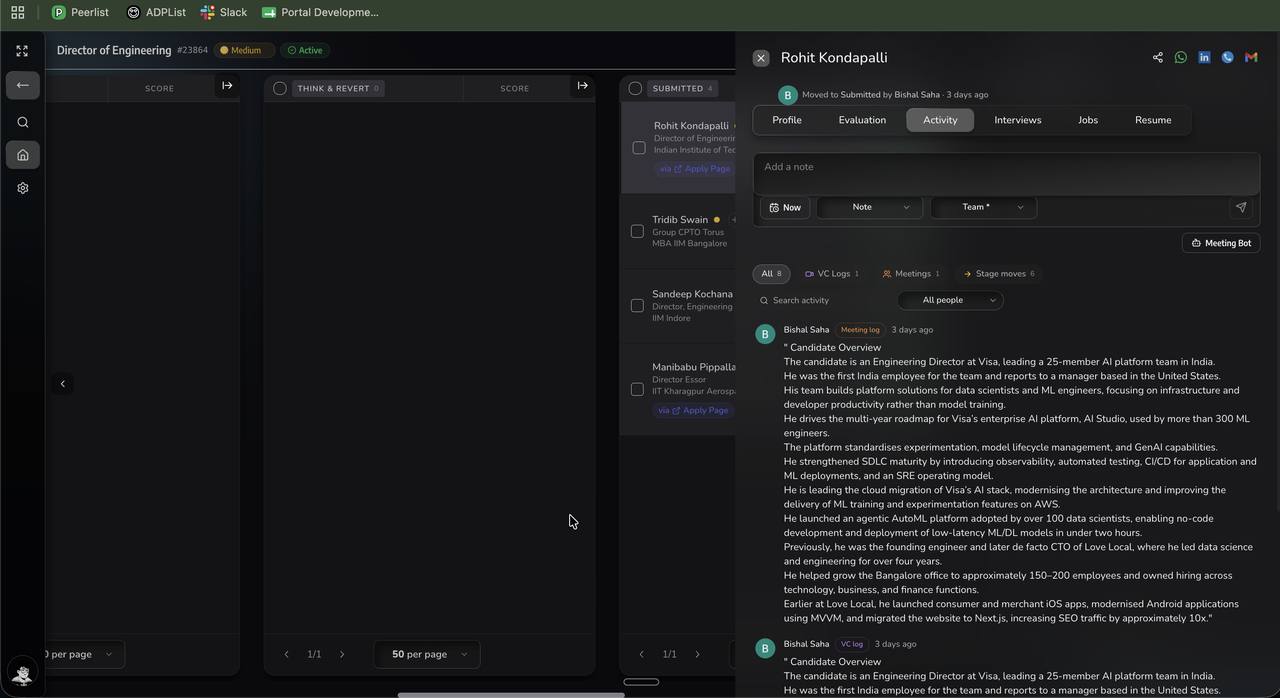
Some of the client history was in their head and most of it was on their phone. The replacement starts cold, asks questions the client already answered twice, and the client draws an accurate conclusion about how the firm operates.
The fix is capture rather than discipline. Calls, meetings, emails and WhatsApp threading onto the client record automatically means the firm keeps the relationship history even when it loses the relationship holder, which is covered in recruiter admin time.
The one that genuinely is delivery
To be fair to the counterargument, one delivery failure does end accounts: submitting somebody the client has already rejected.
It signals that the firm does not read its own records, and it is almost always a data problem rather than a carelessness problem. Somewhere there is a note explaining that this client rejected this person and why, and it was lost in a merge, sat on a duplicate record, or was never written down.
This is the practical argument for taking record hygiene seriously, and it is the reason a merge that loses notes is more expensive than it looks.
Frequently asked questions
Why do clients leave staffing agencies?
Rarely over candidate quality. The common causes are silence when progress was not reported, being consistently slower than competitors across several roles, and the departure of the person who held the relationship.
How often should you update a staffing client?
Weekly, on a schedule, without being asked. The practical requirement is that the update assembles itself from pipeline data, because manually written updates are the task recruiters most reliably skip when the week gets busy.
Does slow submission cost you clients?
Yes, cumulatively rather than in a single instance. A client briefing several agencies notices which returns first every time, and after three roles that impression becomes a conclusion regardless of who won any of them.
What happens to a client relationship when a recruiter resigns?
In a firm that logs manually, the history leaves with them. The replacement starts cold and re-asks questions the client has already answered, which tells the client something accurate about how the firm operates.
Is candidate quality ever the reason a client leaves?
One delivery failure does end accounts: submitting someone the client already rejected. That is usually a data problem, where the note explaining the rejection was lost in a merge or sat on a duplicate record.
How do you diagnose why an account went quiet?
Look at the six weeks before it went quiet rather than at the exit conversation. The exit reason is polite and unfalsifiable; the activity record usually shows the gap in contact or the pattern of slow submissions.
The audit worth running on your top five accounts
For each of your five largest clients, answer two questions. When did they last receive a progress update they did not request? And if the person who owns that account resigned tomorrow, could somebody else read the record and know where every conversation stood?
Those two answers predict which accounts you will still have in eighteen months more reliably than any satisfaction survey.
See a client record that survives a resignation
Bring one account and we will show you what automatic capture puts on the record without anyone typing.
Book a demoFounder of Sortinghat, an AI-native ATS and CRM for staffing, search and RPO firms. Writes about recruiter capacity, sourcing economics and what actually changes when AI reaches a delivery desk. More about the author
Related reading
AI and Client Retention: What Actually Keeps a Staffing Account
WorkflowRecruiter Admin Time: Where the Hours Actually Go, and What Automatic Capture Removes
Talent PoolDuplicate Candidate Records: Why They Happen, What They Cost, and How to Prevent Them
MarketThe US Staffing Market in 2026: What Indian Firms Serving US Clients Need to Know