A 90-Day AI Adoption Plan for a Staffing Firm
Buying the software is the easy part and everyone knows it. Almost nobody writes down what the first ninety days should actually look like.
The most common failure in recruitment technology is not a bad platform. It is a good platform that nobody switched to. Industry reporting consistently shows a wide gap between firms claiming AI usage and firms with it genuinely embedded in the workflow, and that gap is a management problem rather than a product one. This is the plan that closes it.
Last reviewed July 2026. Adoption approach drawn from Sortinghat implementations.
Key takeaways
- Enforce one workflow first, not the whole platform. Teams adopt one habit at a time and reject a system that changes everything at once.
- Give the top biller the first win, not the first training. Their objection is usually rational and their veto usually decides the rollout.
- Measure leading indicators from week two. ROI is invisible for sixty days and waiting for it means finding out too late.
- Reporting has to come from the new system. If leadership accepts numbers from outside it, staying outside becomes free.
Weeks 1 to 2: migration and one workflow
The migration itself should not involve your team beyond validation. Export, field mapping and validation happen while everyone keeps billing, and the data is reviewed in a dedicated environment before anyone signs off.
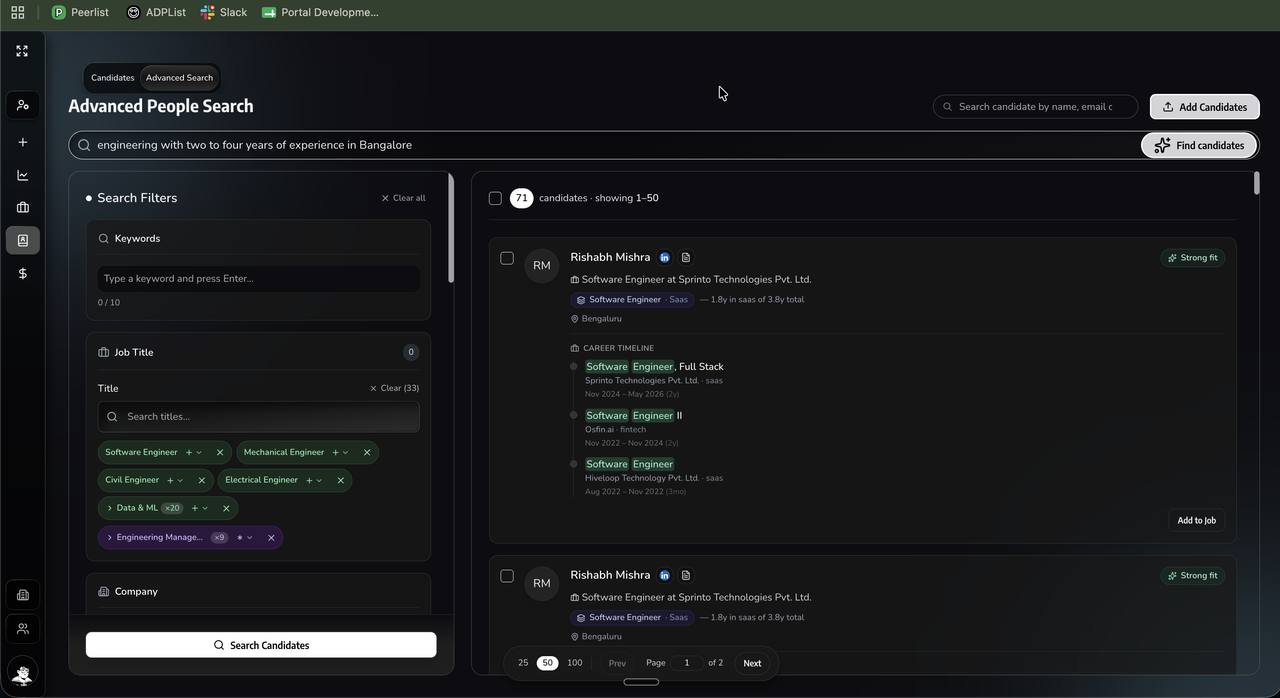
Then pick one workflow to enforce. Not the platform, one workflow. Search is usually the right choice, because it produces an immediate benefit and it is the habit everything else depends on.
The instruction is specific: every new role starts with a search of your own database before anybody opens a job portal. That single rule is measurable, it is enforceable, and it produces a visible result in days.
Weeks 3 to 4: the top biller
Every rollout has one person whose adoption decides everyone else's, and it is usually the highest biller. Their resistance is normally rational: they have a system that works, they are measured on output, and change costs them billing time in the short term.
Two things work. Give them the first win rather than the first training session, which means running their hardest live role through the platform with somebody helping. And ask them what would have to be true for this to be worth their time, then build that.
What does not work is mandating it and hoping. A top biller who publicly ignores the system tells everyone else it is optional.
Weeks 5 to 8: add the second workflow and start measuring
Once search is habitual, add screening. The same principle applies: one addition, clearly instructed, measurable.
Five leading indicators, checked weekly, all of which move before ROI does.
- Percentage of new roles that started with a database search. The direct measure of workflow one.
- Active users per week, not licences issued.
- Records touched per user. Distinguishes logging in from working.
- Time from brief to first submission. The number clients notice.
- Job portal spend per role. Falls when the database habit takes hold.
Weeks 9 to 12: make the system the source of truth
This is the step most rollouts skip and it is the one that makes the rest permanent.
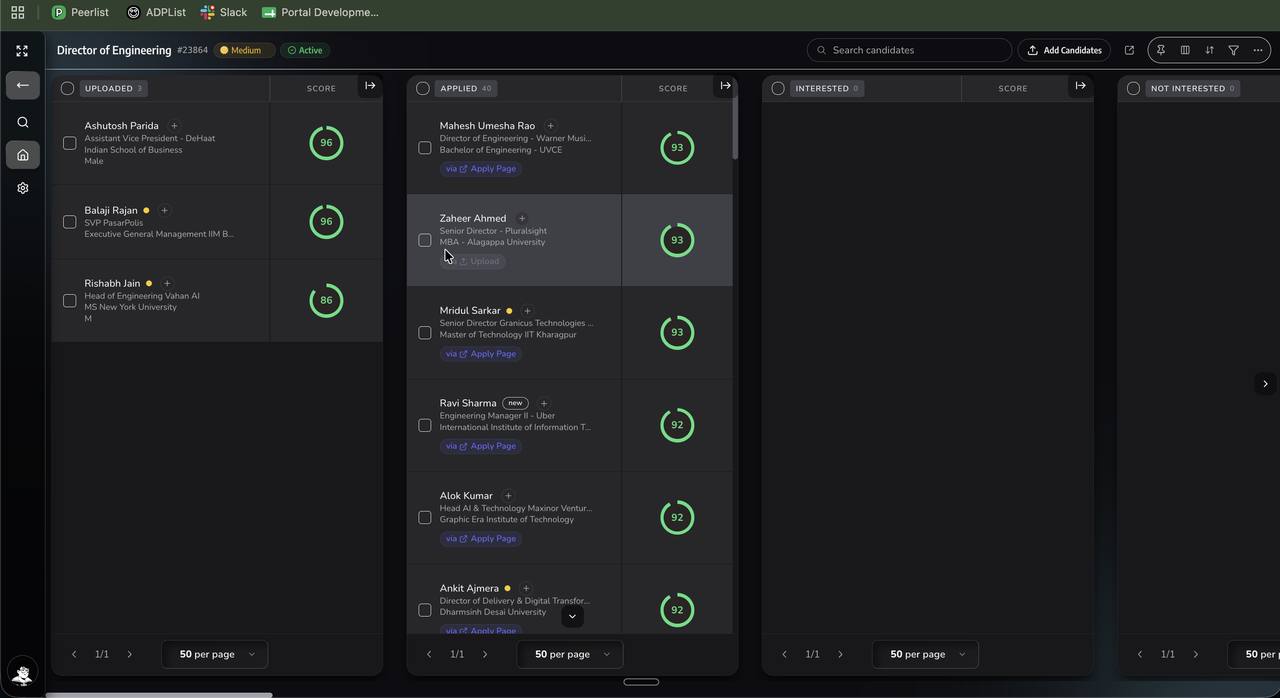
Every report leadership actually looks at must come out of the new system. Pipeline reviews, desk performance, forecasting, commission calculation. If any of them still accept numbers assembled elsewhere, then working outside the platform remains free, and the people most likely to do it are the ones you most need inside it.
The change is not technical. It is that a recruiter whose work is invisible in the system becomes invisible in the review, which is a management decision rather than a software setting.
What to do when somebody opts out
Somebody will. Three responses, in order.
Find out what the actual objection is. Frequently it is one specific thing the platform does worse than their existing habit, and it is often fixable. If it is genuinely missing, it can be built during the migration window rather than added to a roadmap.
Make the cost of staying outside visible. Not punitive, factual. Their pipeline does not appear in the review because it is not in the system.
Accept a partial adopter if the alternative is losing them. A biller using search but not screening is a better outcome than a biller who left. Adoption is a direction, not a binary.
Frequently asked questions
Why do AI rollouts fail in staffing firms?
Almost always on adoption rather than capability. Industry reporting shows a wide gap between firms claiming AI usage and firms with it genuinely embedded, and the cause is that teams were asked to change everything at once rather than one habit at a time.
What should you enforce first in an AI rollout?
One workflow, usually search. Every new role starts with a search of your own database before anybody opens a job portal. It is measurable, enforceable and produces a visible result within days, which is what buys the credibility for the next change.
How do you get a top biller to adopt new software?
Give them the first win rather than the first training session, by running their hardest live role through the platform with help. Then ask what would have to be true for it to be worth their time. Mandating it and hoping does not work.
What should you measure during a software rollout?
Five leading indicators before ROI appears: percentage of roles starting with a database search, active users per week rather than licences issued, records touched per user, time from brief to first submission, and job portal spend per role.
How long does AI adoption take in a recruitment team?
Around ninety days to a genuine change in behaviour, with one workflow enforced in the first month and a second added around week five. The final month is about making the system the source of truth for reporting.
What do you do if a recruiter refuses to use the new system?
Find the specific objection first, since it is often one fixable thing. Make the cost of staying outside visible rather than punitive. And accept partial adoption if the alternative is losing a strong biller, because adoption is a direction rather than a binary.
The decision to make before day one
Decide now which single workflow you will enforce in month one, and who is accountable for the number that measures it. Not the platform owner, a person with a desk and a target.
Rollouts without a named owner and a single measurable habit produce logins rather than change, and ninety days later the conclusion is that the software did not work.
See the first ninety days planned out
Bring your team size and desk structure and we will map the rollout, including which workflow to enforce first.
Book a demoFounder of Sortinghat, an AI-native ATS and CRM for staffing, search and RPO firms. Writes about recruiter capacity, sourcing economics and what actually changes when AI reaches a delivery desk. More about the author
Related reading
Staffing KPIs: The Four Numbers a Firm Owner Should Check Every Day
OpinionEveryone Bought AI. Almost Nobody Uses It. The Adoption Gap in Staffing
AI ImpactHow AI Changed Sourcing: From Three Qualified Candidates a Day to Thirty
WorkflowHigh Volume Recruiting: What One Screening Day Actually Produces