Why GCC Hiring Is a Different Sport, and What AI Changes About It
Volume and specificity at the same time is the combination most recruiting processes handle badly. GCC mandates are built entirely from it.
A GCC mandate can be 200 seats where every one carries a narrow requirement. Volume desks treat candidates as interchangeable and search-led desks treat volume as an edge case, so most processes fail at one end or the other. That combination, rather than the size of the market, is what makes GCC hiring genuinely different, and it is the specific problem automation is well suited to.
Last reviewed July 2026. Delivery observations from Sortinghat customer base, stated as directional.
Key takeaways
- The hard part is volume and specificity together. Not one or the other, which is what most delivery processes are built for.
- Criteria have to be generated per role, not reused. The same title at two GCCs is two different jobs, with different parent expectations behind it.
- Reporting goes to a multinational parent. The standard is set outside India and it is higher than most local clients apply.
- Speed is measured against the internal team. Your submission timeline is compared to what the client's own recruiters achieve, not to other agencies.
Why standard processes break on GCC mandates
A volume process optimises for throughput by loosening criteria. It works when roles are genuinely interchangeable and produces rejection after rejection when they are not.
A search process optimises for precision by working few roles carefully. It produces good candidates at a rate that cannot fill 200 seats to a deadline.
GCC mandates demand both, and the resolution is not effort. It is that the filtering has to be precise and automated at the same time, which is a tooling question rather than a process discipline question.
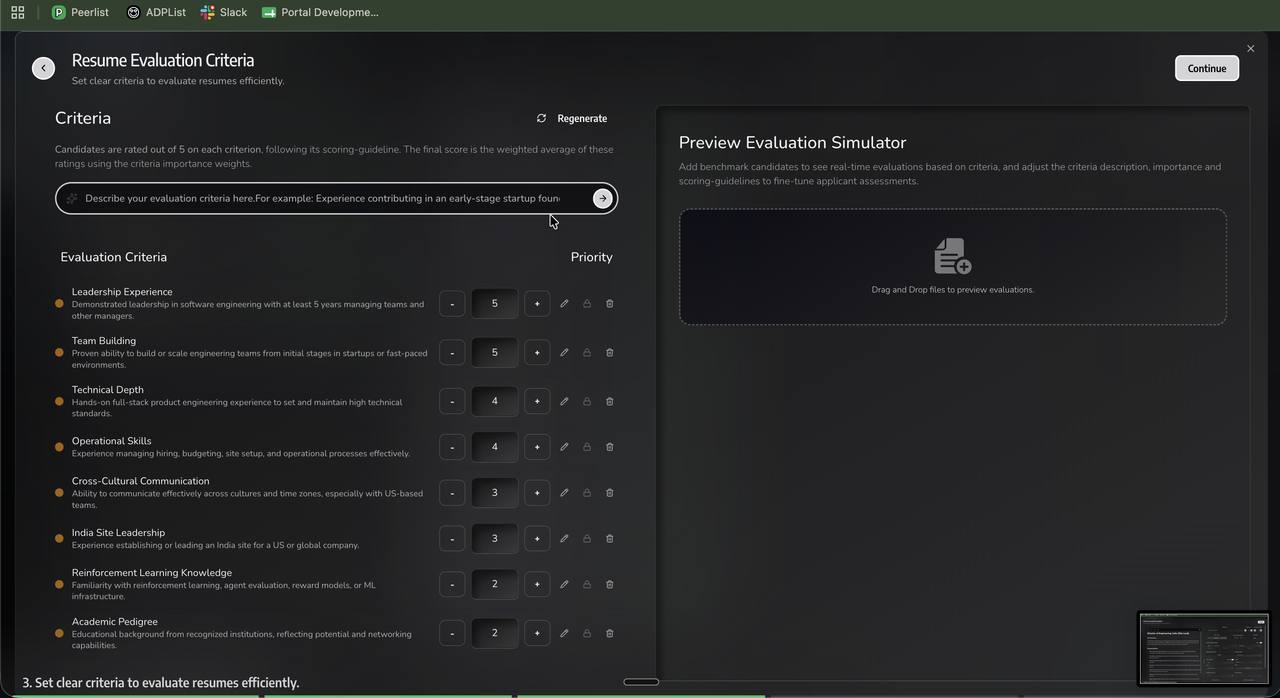
Why criteria must be generated per role
Two GCCs hiring the same title are hiring for different jobs. One is standing up a new function where the person must build from nothing. The other is adding to a mature team where fitting an existing system matters more.
A reused scorecard cannot express that difference, so it scores both candidates identically and one of the two clients rejects the shortlist.
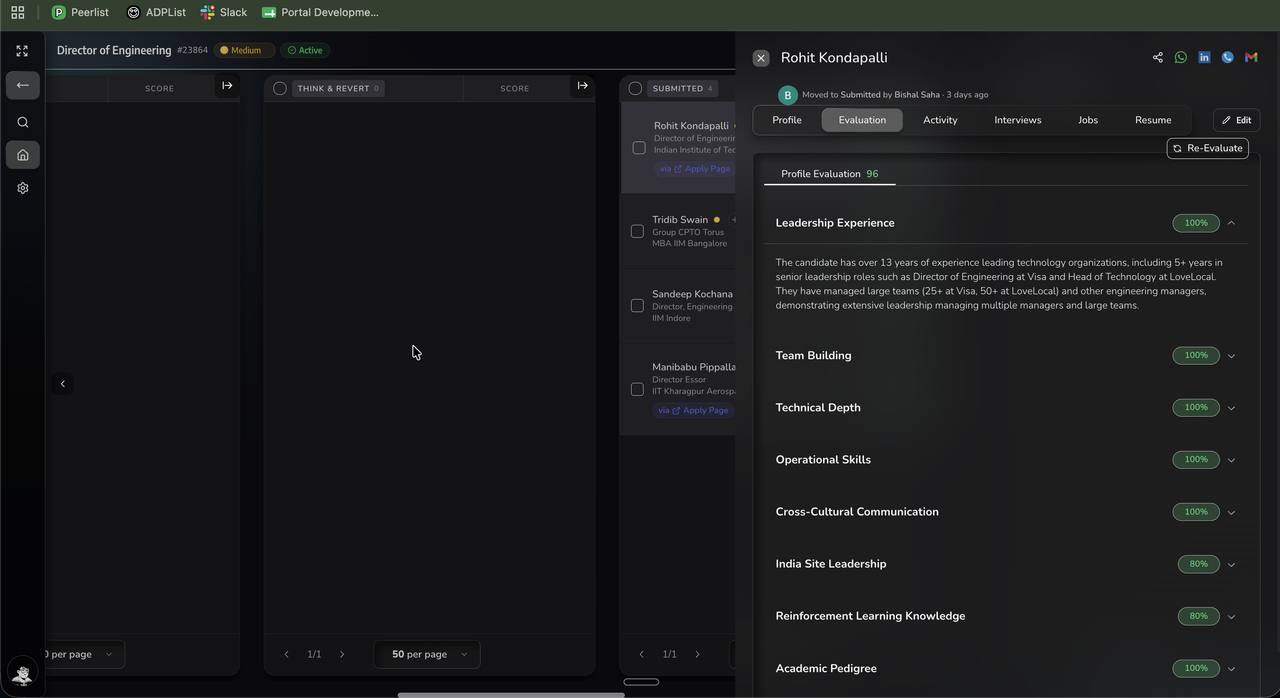
Criteria generated from the specific job description, with weights the recruiter can adjust, produce different scores for the same candidate at two clients. That is not a quirk. On GCC work it is the requirement.
The reporting standard is set elsewhere
A local hiring manager may be relaxed about reporting. The parent function they report into is not, because it compares your performance against the same roles being filled in three other countries.
What that demands: SLA performance per role, pipeline health, time to submit, in a consistent format, on a schedule nobody has to request. An agency reporting by email attachment when chased is signalling something about how it operates, and the signal travels upward.
The practical requirement is that reporting comes out of the system rather than out of a coordinator's week.
Your competition is the internal team
A GCC has its own talent function, usually a capable one. Your timeline is benchmarked against theirs rather than against other agencies.
If the internal team fills a role in three weeks, a four-week agency process is a difficult sell whatever the quality argument. If you can submit an evidenced shortlist in days, you are solving a capacity problem for a team that has one, which is a completely different conversation from competing on fee.
That is why throughput is the commercial argument on GCC work rather than reach or relationships.
Where automation does not help
Genuinely scarce skills. If forty people in the country can do the job, a faster process reaches the same forty. That is search work and it should be priced as such.
Leadership hires. The first senior appointments at a new site are relationship work with long timelines, and running them at volume signals the role is not serious.
A brief that has not been agreed. Screening 300 people against criteria the client has not signed off produces a fast, confident, wrong shortlist.
Frequently asked questions
How is GCC hiring different from IT staffing?
It combines high volume with narrow requirements simultaneously. Volume processes loosen criteria to hit throughput and search processes work too few roles to hit deadlines, so most delivery models fail at one end or the other.
Why do GCC clients reject shortlists that look fine?
Usually because the criteria were reused rather than generated for that specific role. Two GCCs hiring the same title are frequently hiring for different jobs, one building a function from nothing and one adding to a mature team.
What reporting do GCC clients expect?
SLA performance per role, pipeline health and time to submit, in a consistent format on a schedule they do not have to request. The standard is set by a parent function comparing your performance against the same roles in other countries.
Who does a staffing firm compete with on GCC work?
The client's own internal talent team, which is usually capable and well-tooled. Your submission timeline is benchmarked against theirs rather than against other agencies, which makes throughput the commercial argument.
Can AI fill niche GCC roles faster?
Not if the supply genuinely does not exist. If forty people in the country can do the job, a faster process reaches the same forty. That is search work and should be priced accordingly rather than delivered as volume.
How many candidates can be screened for a GCC mandate?
On a volume role, a pool search surfaces around 1,200 relevant profiles, narrows to a ranked 300 contacted in parallel, and produces roughly 10 submission-ready profiles in hours. On a high-volume QA requirement we submitted 120 in a single day.
The question to ask your GCC client
Ask the talent lead what their parent function measures them on. That answer, rather than the job description, is what your delivery should be built around, and almost no agency asks it.
Then ask how long their internal team takes to fill the same role. That number is your actual benchmark, and it is usually more informative than anything a competitor is doing.
See criteria generated per role
Bring two GCC job descriptions for the same title and we will show you why the same candidate should score differently against each.
Book a demoFounder of Sortinghat, an AI-native ATS and CRM for staffing, search and RPO firms. Writes about recruiter capacity, sourcing economics and what actually changes when AI reaches a delivery desk. More about the author
Related reading