How to Get Onto a VMS as a Supplier
Getting onto a vendor programme is an onboarding process. Getting requisitions from it is a separate problem that nobody explains beforehand.
Vendor management systems are how large enterprises buy contingent labour, and getting onto one is the standard route into enterprise contract staffing. It is also where a lot of agency capacity goes to die, because being onboarded and receiving requisitions worth working are different achievements. The tier you enter at determines your economics before you compete on anything.
Last reviewed August 2026. Structural summary. Verify programme specifics with the MSP before signing.
Key takeaways
- Onboarding and receiving work are separate problems. Most suppliers solve the first and never solve the second.
- Tier position decides requisition quality. A lower tier works roles the top tier could not fill, at the same rate card.
- The MSP is the relationship, not the client. Which changes who you build a relationship with and how.
- Some programmes are not worth entering. And the arithmetic to decide is available before you sign.
What a VMS actually is, from the supplier side
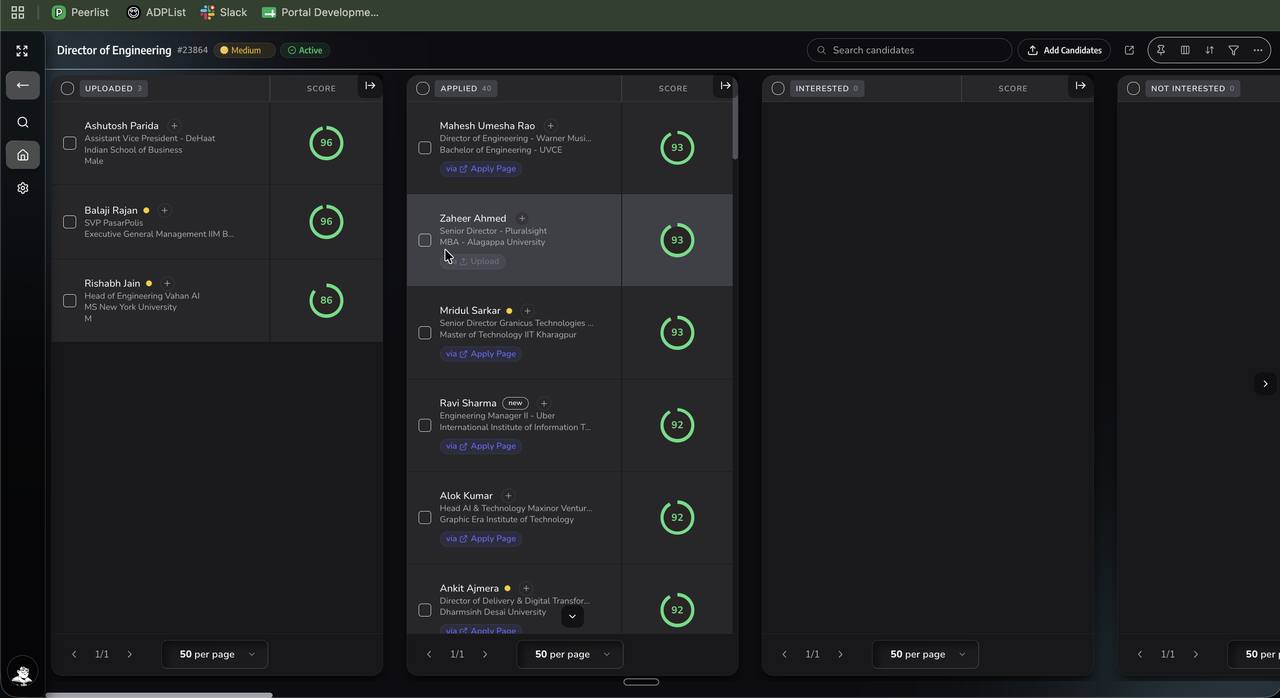
A vendor management system is software the client uses to manage contingent labour and its supplier base. Requisitions are released through it, candidates are submitted through it, rate cards are enforced automatically, and timesheets and invoices flow back through it.
Frequently an MSP, a managed service provider, runs the programme on the client's behalf and sits between the client and suppliers. That is a material detail: your relationship is with the MSP, not with the hiring manager, and the MSP's incentives are cost control and supplier management rather than fill speed.
The margin consequences are covered in VMS margin compression.
The onboarding process
Supplier onboarding is a procurement exercise and it fails on documentation more often than on capability.
Expect requests for insurance certificates, financial statements, compliance documentation, data protection position, references, and agreement to the programme's terms and rate card. In India that includes contract labour documentation, per contract labour compliance.
Two things speed this up. Having the folder assembled before you apply rather than during. And asking the MSP directly what causes suppliers to fail onboarding, which they will usually tell you.
Tier position, and why it decides everything
Most programmes release requisitions in tiers. Tier one suppliers see a requisition first and hold it for a defined window before it goes wider.
A tier two supplier is therefore systematically working roles that tier one could not fill in the first window, at the same rate card. That is a worse requisition mix at the same price, which is a structural margin reduction expressed as effort rather than as a number.
Ask three questions before signing: what tier you would enter at, what the release window is, and what share of requisitions actually reach your tier. A vague answer to the third is itself an answer.
How to actually receive work
Being listed is not the outcome. Four things move actual requisition flow.
Speed within the release window. The only differentiator the structure exposes, which makes throughput the whole game, per what one screening day produces.
Fill the roles the programme struggles with. Reliably filling hard requisitions is the only route to tier movement that programmes respond to.
Build the MSP relationship deliberately. They control distribution. Most suppliers treat them as an administrative layer, which is a mistake.
Measure fill rate by requisition category. Then stop bidding on the categories you lose, which releases capacity.
When not to join a programme
Two situations where the honest answer is to decline.
Bottom tier of a large panel. Twelve suppliers, tier three, and a release window meaning you only see roles nobody else could fill. That is unpaid capacity with a logo attached.
Rate card below your delivery cost. Winning a place you cannot service profitably is a slow loss, and the programme will not renegotiate for you specifically.
The arithmetic is available before signing: rate card, realistic tier, expected requisition volume, and the fill rate you would need to make it work. If that fill rate exceeds what you achieve outside the programme, the answer is no.
What a programme gives you that is worth having
To be fair to the model, three genuine benefits.
Volume and predictability. A working programme relationship produces consistent requisition flow that direct business development does not.
Enterprise credibility. Being an approved supplier at a recognisable client is a reference that opens other doors.
Administrative simplification. One contract, one invoicing route, one set of terms, rather than negotiating separately with each business unit.
Those are real. They are worth having at the right tier and rate, and they are not worth having at the wrong one.
Five checks worth running on your own desk
Everything above is context. These five turn it into something you can act on, and each takes under an hour.
1. Where did your last twenty placements come from?
Split them by source: your own database, a job portal, a referral, outbound sourcing. Most firms are surprised by how much they paid a portal for people already in their records. An audit of one firm's 3 million candidates found roughly 80 percent were real people whose records had simply gone out of date, covered in the database-first audit.
2. What is your actual time from brief to shortlist?
Measured from when the client briefed you, not from when the requisition was created in your system. In contingency work the firm that submits first usually gets paid, so this is a direct predictor of fill rate. Whether that bet still works is a separate question.
3. What share of gross profit sits with your largest client?
Concentration is the most common structural weakness in a staffing firm and the one founders notice last, usually when the account moves. It is also the single biggest discount on a valuation.
4. What is your response rate by channel?
Against your own baseline rather than a published benchmark. On strong roles we see roughly 40 responses per 100 contacted by phone, 25 on WhatsApp and 12 to 15 by email, broken down in our channel benchmarks. The ordering surprises teams who assumed messaging had replaced calling.
5. How many roles can one recruiter genuinely carry?
Not how many they are assigned, how many they can work properly. A recruiter running manual screening manages around 40 calls a day and finds three or four people worth submitting. That is the ceiling, and every growth plan sits on top of it. Filtering before dialling changes the arithmetic.
Frequently asked questions
What is a VMS from a supplier's point of view?
Software the client uses to manage contingent labour and its supplier base. Requisitions are released through it, candidates submitted through it, and rate cards enforced automatically. Frequently an MSP runs the programme and becomes your actual relationship.
How do you get onto a vendor management programme?
Through a procurement onboarding process requiring insurance certificates, financial statements, compliance documentation, data protection position, references and agreement to the rate card. Most suppliers fail on documentation rather than capability.
Why do suppliers get listed but receive no requisitions?
Because requisitions are released in tiers and a lower-tier supplier sees them only after the top tier has had a window, meaning they work roles the top tier could not fill at the same rate card.
How do you move up a supplier tier?
By reliably filling the requisitions the programme struggles with, and by speed within the release window, which is the only differentiator the structure actually exposes.
When should a staffing firm decline a VMS programme?
When entering at the bottom tier of a large panel where the release window means you only see unfillable roles, and when the rate card sits below your cost of delivering properly.
What benefits does a VMS programme genuinely offer?
Consistent requisition volume that direct business development does not produce, enterprise credibility as an approved supplier, and administrative simplification through one contract and one invoicing route.
The arithmetic before you sign
Rate card, realistic tier position, expected requisition volume reaching that tier, and the fill rate you would need for it to be profitable. Compare that required fill rate to what you achieve outside the programme.
If you would need to be better inside the panel than outside it, the programme is not an opportunity regardless of the client's name on it.
See fill rate by requisition category
Bring your programme data and we will show you which categories earn and which consume capacity.
Book a demoFounder of Sortinghat, an AI-native ATS and CRM for staffing, search and RPO firms. Writes about recruiter capacity, sourcing economics and what actually changes when AI reaches a delivery desk. More about the author
Related reading