AI in RPO Delivery: What Changes When You Are Embedded in the Client
An RPO cannot grow revenue by adding headcount without destroying its own margin. That single constraint makes automation a commercial requirement rather than a preference.
An agency grows by placing more people at the same fee. An RPO usually cannot, because the contract fixes the price. Growth has to come from delivering more with the same team, which makes throughput a margin question rather than a productivity one. That is the structural reason automation matters more in RPO than in contingency, and it is also why RPO tooling requirements are genuinely different.
Last reviewed July 2026. Delivery observations from Sortinghat customer base, stated as directional.
Key takeaways
- RPO margin is a throughput problem, not a pricing one. The contract fixes the fee, so every additional role delivered by the same team is margin.
- You work inside someone else's process and brand. Which means configuration per account matters more than any single feature.
- Client separation is a hard requirement. One account's candidates and data must not be visible to a team working another.
- Reporting is contractual, not optional. SLA performance assembled by a coordinator every week is a permanent cost against your margin.
Why the economics are different
In contingency work, more placements means more revenue. Effort and income move together, which means adding recruiters is a rational growth path even at flat productivity.
In RPO the fee is agreed in advance for a scope. Delivering the scope with eight recruiters instead of twelve is the entire margin story. That inverts how tooling should be evaluated: a platform that costs more per seat and lets you run the account with fewer seats is straightforwardly cheaper.
Most RPO providers still evaluate software the way an agency does, on licence cost per user, which is exactly the wrong lens for their own P&L.
Working inside the client's process
An agency runs its own process and presents the output. An RPO adopts the client's, which creates requirements no agency platform was designed for.
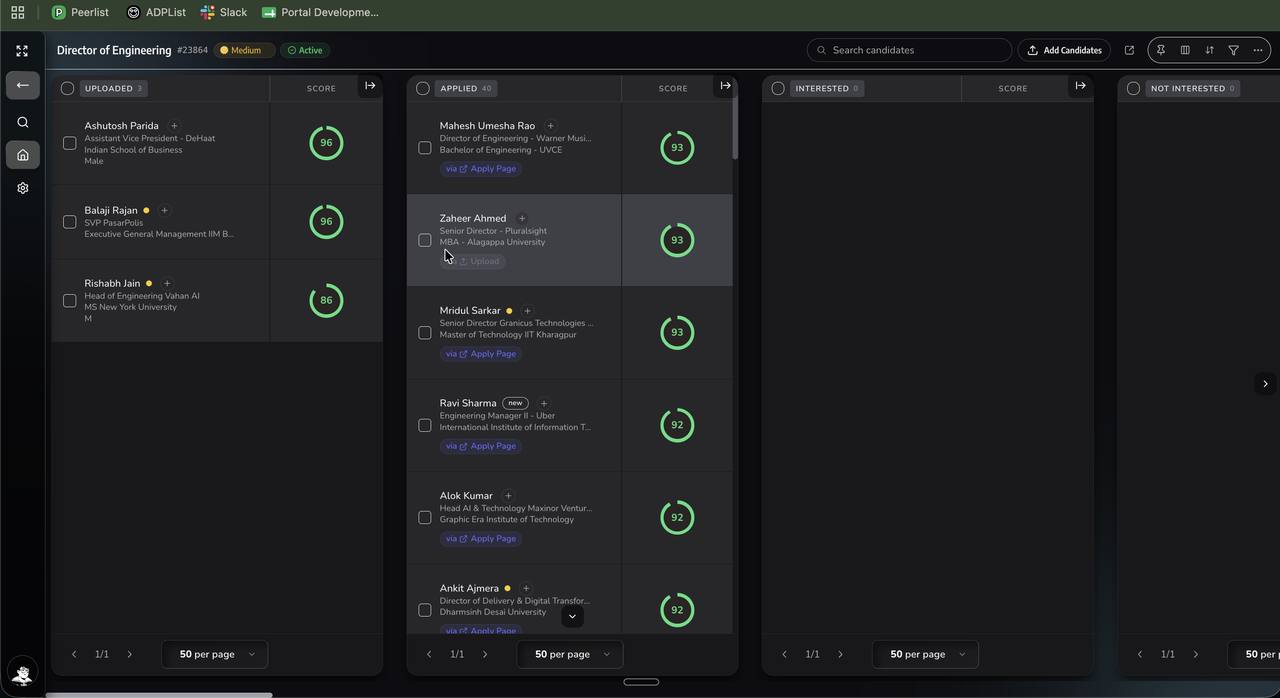
Per-account configuration. Each client has its own stages, scorecards and submission formats. A platform with one global workflow forces every account into the same shape and quietly loses you the account that does not fit.
Client-branded candidate experience. The candidate believes they are talking to the client, not to you, which affects every touchpoint including automated ones.
Their approval chain, not yours. Delivery speed depends on a decision process you do not control, which makes your own speed the only variable you can improve.
Separation, and why it is a contractual issue
Permissions in an agency are about commission. In RPO they are about contract compliance.
A recruiter working Client A must not see Client B's candidates, pipeline or notes. That is frequently written into the agreement and it is checked in audits. A permission model that only separates by desk rather than by account is insufficient, and discovering that during a client review is expensive.
The workable answer is configuration at organisation level, set by your own management team to reflect the contracts you have actually signed rather than a vendor's default.
Where automation genuinely moves the number
Sourcing and first-pass screening. A recruiter running manual screening manages around 40 calls a day and finds three or four worth submitting. Filtering first produces roughly 10 submission-ready profiles in hours. On an RPO account that is the difference between eight recruiters and twelve.
Reporting. SLA performance assembled weekly by a coordinator is a permanent cost. Generated from pipeline data it is free, and more accurate in front of the client.
Record keeping. Notes written automatically from calls and messages means an account survives a recruiter leaving, which matters more in RPO because the client notices immediately.
What automation does not fix in RPO
A badly scoped contract. If the fee was wrong at signature, throughput improvements only reduce the loss. Scope discipline is upstream of everything here.
A slow client. If the approval chain takes three weeks, submitting in four hours does not shorten time to hire. What it does is remove any argument that the delay is yours.
Stakeholder management. An RPO relationship involves more people with more opinions than an agency one, and none of that is automatable.
What this changes on a staffing desk
Market analysis is only useful if it changes something on Monday. Four practical consequences that follow from everything above.
Your prospect list is probably built from history
Most staffing firms sell to the accounts they already know, which means the client list reflects where demand was five years ago rather than where it is now. Rebuilding a prospect list against current hiring activity rather than past relationships is unglamorous and it is usually the highest-return week a founder can spend.
Speed matters more than it used to
In contingency and RPO, the firm that submits first usually gets paid. A recruiter working manually manages around 40 calls a day and finds three or four people worth submitting. Filtering before dialling changes that arithmetic: a pool search on a volume role surfaces around 1,200 relevant profiles, narrows to a ranked 300 contacted across call, WhatsApp and email in parallel, and produces roughly 10 submission-ready profiles in hours.
Your own database is the cheapest source you have
An audit of one firm's 3 million records found roughly 10 percent duplicates, 10 percent unusable and 80 percent real people whose records were simply out of date. Making that 80 percent findable took job portal spend from about $100 a role to $60. Most firms are paying to source strangers while sitting on people who already know them.
Definition beats effort
Most wasted submissions are a briefing failure that surfaced three weeks later, not a sourcing failure. Generating weighted evaluation criteria from the job description, and agreeing them with the client before the search starts, removes more waste than any increase in activity.
Frequently asked questions
How is RPO delivery different from agency recruiting?
The fee is fixed by contract for an agreed scope, so growth comes from delivering more with the same team rather than from placing more at the same rate. That makes throughput a margin question and automation a commercial requirement.
What does an RPO need from recruitment software?
Per-account workflow configuration, strict client separation enforced at account level rather than desk level, client-facing SLA reporting generated from pipeline data, and enough throughput that the account runs with fewer recruiters.
Why does client data separation matter more in RPO?
Because it is frequently a contractual obligation rather than an internal preference, and it is checked in client audits. A permission model that separates only by desk rather than by account will not satisfy it.
How should an RPO evaluate software cost?
On cost per account delivered rather than licence cost per user. A platform that costs more per seat but lets you run the same scope with fewer seats is cheaper against an RPO P&L, which is the opposite of how agencies evaluate.
Can automation improve RPO time to hire?
Only the portion you control. If the client's approval chain takes three weeks, submitting in four hours does not shorten the overall timeline, though it does remove any argument that the delay originated with you.
What is the biggest cost in RPO delivery?
Recruiter hours, since the fee is fixed. Anything that reduces hours per role delivered goes directly to margin, which is why manual sourcing and screening are more expensive in RPO than anywhere else.
The calculation worth doing on your largest account
Take your biggest RPO account and work out the fully loaded cost per role delivered. Then work out how many of those hours went to sourcing and first-pass screening rather than to judgement, client conversation or candidate management.
That percentage is your margin opportunity, and on most accounts it is considerably larger than anything available through renegotiation.
See what an RPO account looks like automated
Bring one account and we will show you the delivery model with sourcing and screening removed from the recruiter's day.
Book a demoFounder of Sortinghat, an AI-native ATS and CRM for staffing, search and RPO firms. Writes about recruiter capacity, sourcing economics and what actually changes when AI reaches a delivery desk. More about the author
Related reading