The Recruiter Productivity Myth
Every metric a staffing firm uses to manage recruiters measures how busy they were, not whether it mattered.
Calls made, CVs sent, candidates added, roles worked. Every one of these is an activity count, and every one of them can be maximised by somebody doing worse work faster. Firms know this and use them anyway, because activity is easy to measure and outcomes take three months to appear. The result is a management system that reliably rewards the wrong behaviour and then wonders why conversion is falling.
Last reviewed August 2026. Assessment drawn from Sortinghat delivery observations.
Key takeaways
- Activity metrics are gameable by definition. Any count can be raised by lowering the standard of what gets counted.
- The classic dysfunction is submission volume. Rewarding CVs sent produces more CVs and a worse submission-to-interview ratio.
- Ratio metrics resist gaming. Because improving them requires the work to actually be better.
- Some activity measurement is still necessary. A new recruiter with no outcomes yet needs a leading indicator, honestly labelled.
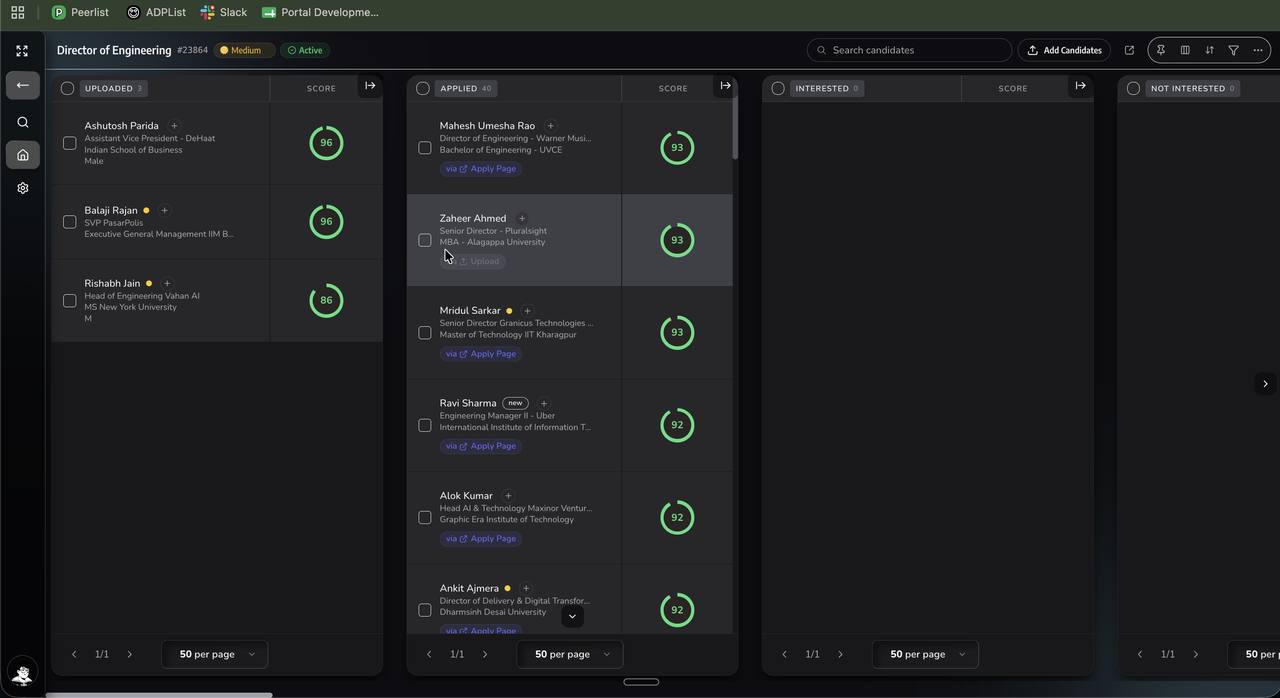
How each metric gets gamed
Not by dishonest people. By reasonable people responding to what is measured.
Calls made. Raised by making shorter, shallower calls. A recruiter who spends fifteen minutes properly qualifying somebody makes fewer calls than one who spends three.
CVs sent. Raised by lowering the submission bar. This is the most damaging one, because the cost lands on the client relationship rather than internally.
Candidates added. Raised by adding records nobody will work, which then degrades search quality for everyone.
Roles worked. Raised by taking every requirement, including the ones with eight agencies and no chance.
Why firms use them anyway
Three defensible reasons rather than laziness.
They are available immediately. A placement takes weeks and a call count is visible today. A manager needs something to manage with.
They work for new recruiters. Somebody eight weeks in has no outcomes to assess, and activity is a genuine leading indicator of whether they are engaged.
They correlate weakly but positively. Recruiters who do nothing do not place anyone. The correlation is real; it is just weak enough that optimising for it is counterproductive.
What to measure instead
Ratios rather than counts, because a ratio cannot be improved by doing more bad work.
Submission to interview. The single most useful number on a staffing desk. It measures whether your judgement matches the client's, and it cannot be inflated by sending more.
Interview to offer. Measures how well the role was qualified and how well the candidate was prepared.
Offer to join. Measures whether the closing work is happening.
Time from brief to first submission. The number clients actually notice, and it is covered in the four numbers to check daily.
The metric that quietly damages client relationships
Of all the activity counts, submission volume does the most harm because the cost lands outside the building.
A recruiter under pressure on CVs sent lowers the bar, and the client receives eight candidates where three were worth reading. The client does not complain, they simply start reading the shortlist less carefully and briefing somebody else first on the next role.
That damage is invisible internally for months. By the time it surfaces as a lost account, the activity report for that period looks excellent, which is how firms conclude their strongest performer was let down by the market.
The measurement nobody wants
Roles declined.
A recruiter who works every requirement offered is not showing commitment, they are showing an inability to qualify. The most profitable desks decline more than they accept, and no firm measures it because it looks like laziness on a report.
Measuring it changes behaviour in a specific direction: recruiters start asking harder questions at intake, because they now have permission to conclude that a role is not worth working. That single permission does more for a desk's economics than any activity target.
What good measurement looks like in practice
Ratios for experienced recruiters, activity for new ones, and say which is which openly rather than pretending both are performance.
Report ratios by client, not in aggregate. Most firms are excellent with two clients and poor with three, and the average hides both.
Make the data automatic. Any metric a recruiter has to enter manually is a metric that is partly fiction, which is one of the arguments in recruiter admin time.
Review monthly, not weekly. Ratio metrics are noisy over short periods and weekly review produces panic rather than management.
Five checks worth running on your own desk
Everything above is context. These five turn it into something you can act on, and each takes under an hour.
1. Where did your last twenty placements come from?
Split them by source: your own database, a job portal, a referral, outbound sourcing. Most firms are surprised by how much they paid a portal for people already in their records. An audit of one firm's 3 million candidates found roughly 80 percent were real people whose records had simply gone out of date, covered in the database-first audit.
2. What is your actual time from brief to shortlist?
Measured from when the client briefed you, not from when the requisition was created in your system. In contingency work the firm that submits first usually gets paid, so this is a direct predictor of fill rate. Whether that bet still works is a separate question.
3. What share of gross profit sits with your largest client?
Concentration is the most common structural weakness in a staffing firm and the one founders notice last, usually when the account moves. It is also the single biggest discount on a valuation.
4. What is your response rate by channel?
Against your own baseline rather than a published benchmark. On strong roles we see roughly 40 responses per 100 contacted by phone, 25 on WhatsApp and 12 to 15 by email, broken down in our channel benchmarks. The ordering surprises teams who assumed messaging had replaced calling.
5. How many roles can one recruiter genuinely carry?
Not how many they are assigned, how many they can work properly. A recruiter running manual screening manages around 40 calls a day and finds three or four people worth submitting. That is the ceiling, and every growth plan sits on top of it. Filtering before dialling changes the arithmetic.
Frequently asked questions
What should you measure on a recruitment desk?
Ratios rather than counts. Submission to interview, interview to offer, offer to join, and time from brief to first submission. A ratio cannot be improved by doing more low-quality work, which is what makes it resistant to gaming.
Why are recruiter activity metrics misleading?
Because every count can be raised by lowering the standard of what gets counted. More calls means shorter calls, more CVs sent means a lower submission bar, and more candidates added means records nobody will work.
Is measuring calls made ever useful?
For new recruiters with no outcomes yet, activity is a genuine leading indicator of engagement. The mistake is treating it as a performance measure for experienced recruiters, where it actively rewards shallower work.
What is the most useful single recruitment metric?
Submission to interview ratio, reported by client rather than in aggregate. It measures whether your judgement matches the client's and it cannot be inflated by submitting more people.
Why should staffing firms measure roles declined?
Because a recruiter who works every requirement offered is demonstrating an inability to qualify rather than commitment. Measuring it gives permission to conclude a role is not worth working, which changes intake behaviour immediately.
How often should recruitment metrics be reviewed?
Monthly for ratio metrics, since they are noisy over shorter periods and weekly review produces reaction rather than management. Daily review suits leading indicators such as time to first submission.
The change worth making this quarter
Add submission-to-interview ratio by client to your monthly review and remove one activity target. Not all of them, one, so the change is manageable and the effect is visible.
Most firms discover within two months that their highest-activity recruiter is not their most effective one, and that the person who was quietly declining bad roles was right.
See ratios by client, not in aggregate
Bring your submission history and we will show you where your judgement matches the client's and where it does not.
Book a demoFounder of Sortinghat, an AI-native ATS and CRM for staffing, search and RPO firms. Writes about recruiter capacity, sourcing economics and what actually changes when AI reaches a delivery desk. More about the author
Related reading